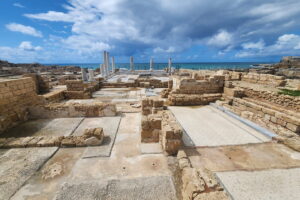
Al Jazzar Mosque Acco is Israel's largest mosque outside Jerusalem, built in 1781 by Ottoman governor Ahmad Pasha Al-Jazzar using materials from ancient ruins of Caesarea and medieval Acre.
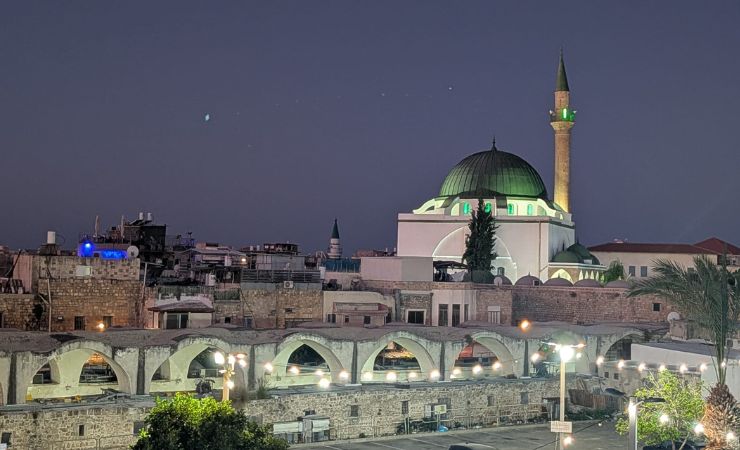
Al Jazzar Mosque Acco stands as Israel’s largest mosque outside of Jerusalem, dominating the skyline of Acre’s Old City with its distinctive green dome and slender minaret. Built in 1781 by Ahmad Pasha Al-Jazzar, an Ottoman Bosnian governor, this architectural masterpiece was completed within the same year of its construction. The mosque takes its name from Al-Jazzar, whose nickname “the Butcher” reflected his harsh rule over the region.
The mosque represents a fascinating blend of architectural traditions, constructed using materials salvaged from ancient ruins of Caesarea, Atlit, and medieval Acre. Today, it serves as both an active place of worship and a significant tourist attraction, welcoming non-Muslim visitors who wish to explore one of the region’s most historically important Islamic structures.
Historical Background
The construction of Al Jazzar Mosque Acco began and concluded in 1781 under the commission of Ahmad Pasha Al-Jazzar, who governed Acre during the Ottoman period. Al-Jazzar chose to build his grand mosque over the ruins of the Crusader church of Santa Croce, which itself had been constructed over earlier Muslim prayer houses, creating layers of religious history beneath the current structure.
The rapid construction timeline of just one year was achieved through the systematic reuse of ancient building materials. Historical records indicate that workers transported marble columns, decorative stones, and architectural elements from the ruins of Caesarea Maritima, the Crusader fortress at Atlit, and various medieval structures throughout Acre. This practice of architectural recycling was common in Ottoman construction but rarely executed on such a grand scale.
Ahmad Pasha Al-Jazzar ruled Acre from 1775 until his death in 1804, during which time he transformed the city into a major regional power center. His most famous military achievement was successfully defending Acre against Napoleon’s siege in 1799, just 18 years after completing his mosque. Upon his death, Al-Jazzar was buried in a mausoleum adjacent to the mosque, alongside his successor Suleiman Pasha.
The mosque has undergone various restoration efforts over the centuries, with documenting structural conditions and implementing rehabilitation measures to maintain its architectural integrity. The building’s significance extends beyond its religious function, serving as a symbol of Acre’s multicultural heritage and Ottoman architectural influence in the region.

Who is Al Jazzar?
Ahmad Pasha Al-Jazzar emerged from modest origins in Bosnia to become one of the most powerful Ottoman governors in 18th-century Palestine. Born around 1720, he began his career as a Mamluk in Egypt before rising through the military ranks to eventually control much of southern Syria and northern Palestine from his base in Acre. His Arabic nickname “Al-Jazzar” translates to “the Butcher,” a reference to his reputation for swift and often brutal justice against opponents and subordinates alike.
Al-Jazzar’s rule over Acre from 1775 to 1804 marked a period of unprecedented prosperity and military strength for the coastal city. He systematically fortified Acre’s defenses, rebuilt much of the urban infrastructure, and established the city as a major trading hub connecting Damascus with Mediterranean ports. His administrative skills matched his military prowess, as he efficiently collected taxes from across his territory while maintaining relative stability in a region often plagued by tribal conflicts and political upheaval.
The pasha’s most celebrated achievement came in 1799 when his forces, supported by British naval power, successfully repelled Napoleon’s two-month siege of Acre. This victory effectively ended French ambitions in the Levant and contributed to Napoleon’s eventual withdrawal from the region. Al-Jazzar’s defiance of the French emperor elevated his status throughout the Ottoman Empire and secured his legacy as a defender of Islamic territory against European expansion. His architectural patronage, including the construction of his namesake mosque, reflected both his personal piety and his desire to leave lasting monuments to his rule in Acre.
Inside Al Jazzar Mosque Acco: What to See
Visitors entering Al Jazzar Mosque Acco encounter a masterpiece of Ottoman religious architecture that seamlessly blends Islamic design principles with recycled elements from earlier civilizations. The mosque complex offers multiple areas of interest, from its impressive prayer hall to underground cisterns that reveal centuries of architectural evolution.
The building’s layout follows traditional Ottoman mosque design, centered around a spacious courtyard surrounded by covered prayer areas and auxiliary structures. Every element within the complex tells a story of Acre’s layered history, from Roman columns to Crusader foundations.
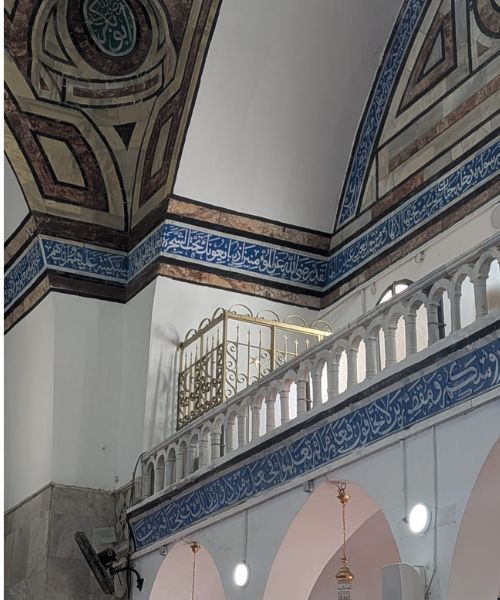
Main Prayer Hall — The heart of the mosque features an impressive Ottoman interior with soaring ceilings supported by recycled Roman and Byzantine columns. The marble minbar (pulpit) and mihrab (prayer niche) showcase intricate craftsmanship, while the walls display decorative Arabic calligraphy on blue and green tiles. The prayer hall can accommodate hundreds of worshippers, with carpeted floors and strategically placed windows that filter natural light throughout the space.
Courtyard and Roman Columns — The walled courtyard serves as the mosque’s central gathering area, surrounded by salvaged Roman columns that Al-Jazzar’s builders transported from Caesarea Maritima. These ancient marble columns, some dating back nearly 2,000 years, support covered walkways around the courtyard’s perimeter. Palm trees planted throughout the courtyard provide shade and create a peaceful atmosphere for reflection and conversation.
Green Dome and Minaret — The mosque’s most recognizable features are its distinctive green-painted dome and slender minaret, both visible from miles away across Acre’s landscape. The dome, originally silvery-white, was painted green in later renovations to match Islamic color traditions. Visitors can climb the minaret’s 124 steps for panoramic views of Acre, the Mediterranean coastline, and the Galilee hills, though access may be restricted during prayer times.
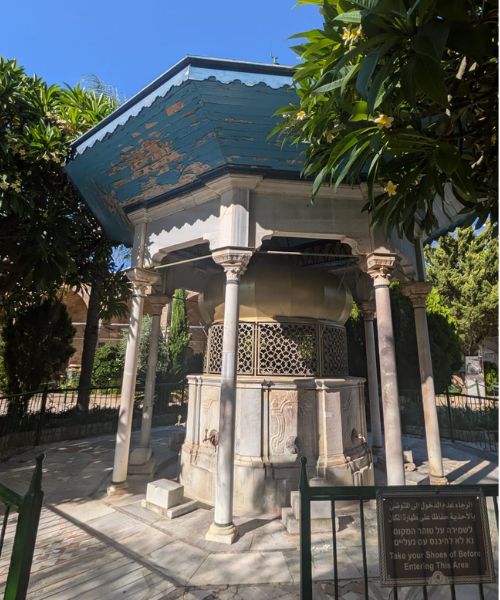
Ottoman Sabil — At the courtyard entrance stands an ornate Turkish Rococo-style water kiosk topped with its own green dome. Built in 1900 by Sultan Abd al-Hamid II, this sabil provided free drinking water to travelers and locals, following Islamic traditions of charitable public service. The structure features decorative stonework and Arabic inscriptions celebrating the sultan’s generosity.
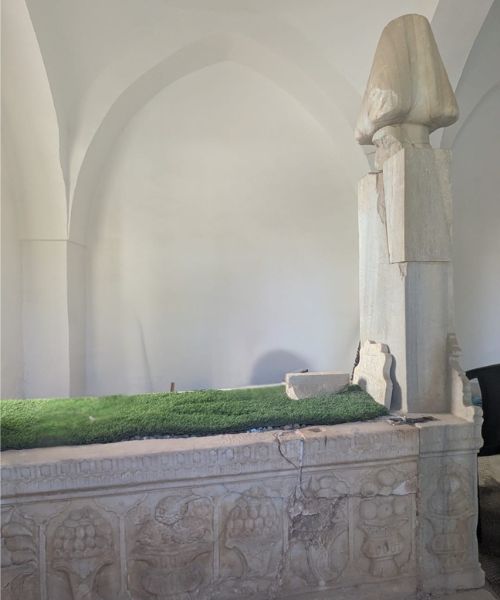
Mausoleum Complex — Adjacent to the main mosque, a double-domed mausoleum houses the tombs of Ahmad Pasha Al-Jazzar, his successor Suleiman Pasha, and several family members. The burial chamber features marble sarcophagi covered with traditional Islamic geometric patterns and Quranic verses. The mausoleum’s architecture mirrors the main mosque’s design while maintaining the intimate scale appropriate for a burial site.
Crusader Cisterns — Beneath the mosque lie remarkable underground barrel-vaulted cisterns from the original Santa Croce church. These stone-lined chambers, completed in 1782, were repurposed to collect and store rainwater for the mosque’s needs. The cisterns demonstrate medieval engineering expertise and provide a tangible connection to the site’s Crusader past.
Sacred Relic Display — The mosque houses the Sha’r an-Nabi, a lock of hair believed to be from Prophet Muhammad’s beard, displayed in a glass cabinet within the prayer hall. This sacred relic is shown to the congregation during special religious occasions and represents one of the mosque’s most treasured possessions. The relic’s presence elevates the mosque’s spiritual significance for Muslim pilgrims visiting the Holy Land.
Visiting Al Jazzar Mosque Acco: Practical Information
Al Jazzar Mosque Acco welcomes non-Muslim visitors daily except during Friday prayer services, typically between 8:00 AM and sunset. Modest dress is required for all visitors, with clothing covering shoulders, arms, and legs. Women must cover their hair with a scarf, and shoe removal is mandatory before entering the prayer hall.
The official Acre tourism website provides current visiting hours and any temporary restrictions.
Additional Information
- Al Jazzar Mosque Acco — Official Website — Official site
- Preservation Survey and Situation Assessment Acre’s El-Jazzar Mosque — Academic paper on damage survey and rehabilitation measures for El-Jazzar mosque structural conditions and architectural preservation
- Site-Seeing: El-Jazzar’s Architectural Gem – Biblical Archaeology Society — Biblical Archaeology Society article on the mosque’s architecture, history, and significance as the most historically significant mosque open to non-Muslim visitors in Israel
- El-Jazzar Mosque – Wikipedia — Comprehensive historical and architectural details
Frequently Asked Questions
Can non-Muslims visit Al Jazzar Mosque Acco?
Yes, Al Jazzar Mosque Acco welcomes non-Muslim visitors daily except during Friday prayer services. Visitors must dress modestly with clothing covering shoulders, arms, and legs. Women are required to cover their hair with a scarf, and all visitors must remove shoes before entering the prayer hall. Photography may be restricted in certain areas, particularly during active worship times. The mosque serves as both an active place of worship and an important tourist attraction, making it one of the most accessible Islamic religious sites for non-Muslim visitors in Israel.
What makes this mosque architecturally unique?
Al Jazzar Mosque Acco stands out for its remarkable use of recycled ancient materials, including Roman columns transported from Caesarea Maritima and stones from medieval Acre structures. Built in just one year (1781), the mosque combines Ottoman Islamic architecture with elements spanning nearly 2,000 years of history. The building sits atop layers of previous religious structures, including the Crusader church of Santa Croce and earlier Muslim prayer houses. Beneath the mosque lie preserved barrel-vaulted cisterns from the Crusader period, demonstrating medieval water management techniques that were integrated into the Ottoman design.
What is the Sha’r an-Nabi housed in the mosque?
The Sha’r an-Nabi is a sacred relic consisting of a lock of hair believed to be from Prophet Muhammad’s beard, displayed in a glass cabinet within the mosque’s prayer hall. This treasured possession significantly elevates the mosque’s spiritual importance for Muslim pilgrims and worshippers. The relic is shown to the congregation during special religious occasions and represents one of the most sacred objects in any Israeli mosque. Its presence at Al Jazzar Mosque makes the site not just architecturally significant but also spiritually important for Muslims visiting the Holy Land, contributing to the mosque’s status as a pilgrimage destination.
Who was Ahmad Pasha Al-Jazzar and why is the mosque named after him?
Ahmad Pasha Al-Jazzar was an Ottoman Bosnian governor who ruled Acre from 1775 until his death in 1804, commissioning the mosque’s construction in 1781. His nickname “Al-Jazzar” means “the Butcher,” reflecting his reputation for harsh rule and swift justice. Al-Jazzar transformed Acre into a major regional power center and is most famous for successfully defending the city against Napoleon’s siege in 1799. Upon his death, he was buried in a mausoleum adjacent to the mosque alongside his successor Suleiman Pasha. The mosque bears his name as its founder and patron, representing his most enduring architectural legacy in the city he governed for nearly three decades.
Can visitors climb the minaret for views?
Yes, visitors can typically climb the mosque’s slender minaret, which contains 124 steps leading to panoramic viewing areas. The climb offers spectacular views of Acre’s Old City, the Mediterranean coastline, and the Galilee hills stretching inland. However, access to the minaret may be restricted during prayer times, particularly during the five daily prayers and Friday services. The minaret, along with the mosque’s distinctive green dome, serves as a landmark visible from miles away. Visitors should check with mosque staff about current access policies, as security considerations or maintenance work may occasionally limit minaret climbing. The physical demands of the 124-step climb should also be considered when planning a visit.
What are the underground cisterns and can they be visited?
The underground cisterns beneath Al Jazzar Mosque are barrel-vaulted chambers from the original Crusader church of Santa Croce, repurposed for the mosque’s water storage needs when construction was completed in 1782. These stone-lined chambers demonstrate medieval engineering expertise and follow Anatolian architectural water management traditions. The cisterns collected and stored rainwater for the mosque complex, representing a practical integration of Crusader infrastructure into Ottoman religious architecture. Access to the cisterns varies depending on tour availability and safety considerations, so visitors should inquire at the mosque entrance about current accessibility. When open for tours, the cisterns provide a unique glimpse into the layered history beneath the mosque, connecting visitors directly to the site’s Crusader past.
Nearby Sites
- Acre’s Crusader City: Underground halls and tunnels from the medieval Crusader period, located beneath the Ottoman city.
- Acre’s Old City Walls: Massive fortifications built by Al-Jazzar and later reinforced, offering walking paths with sea views.
- Khan al-Umdan: The largest and best-preserved caravanserai in Israel, featuring a distinctive clock tower from 1906.
- Bahai Gardens Acre: The shrine of Bahá’u’lláh, founder of the Bahai faith, located in nearby Bahji.
- Acre Marina: The modern harbor area with restaurants, shops, and boat tours of the coastline.
- Turkish Bath (Hammam al-Pasha): A restored 18th-century Ottoman bathhouse now serving as a museum.
Keep reading
Part of our Galilee & Northern Israel Guide →