St. Anne's Church, Jerusalem is the best-preserved Crusader church in the Holy City, built 1131-1138 over the traditional birthplace of the Virgin Mary. Located near the Pool of Bethesda, it survived because Saladin converted it to an Islamic school in 1192, preserving its remarkable Romanesque architecture.
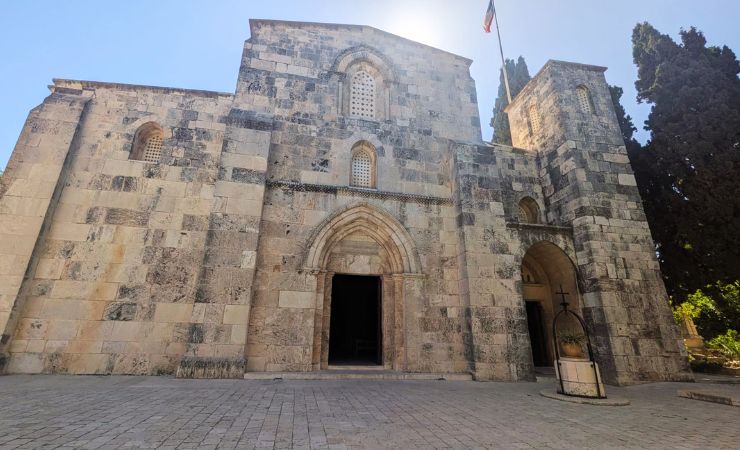
St. Anne’s Church, Jerusalem stands as the best-preserved Crusader church in the Holy City, built between 1131 and 1138 over the traditional birthplace of the Virgin Mary. Located in the Muslim Quarter of Jerusalem’s Old City, this remarkably intact 12th-century structure was built over the ruins of a 5th-century Byzantine basilica that was partially destroyed by the Persians in 614.
The church is named after Saint Anne, the mother of the Virgin Mary according to Christian tradition. Today it serves as French national property, administered by the White Fathers (Missionaries of Africa), and contains the adjacent Pool of Bethesda mentioned in John’s Gospel where Jesus healed a paralytic.
Historical Background
The historical background of St. Anne’s Church, Jerusalem reveals a complex layering of civilizations across nearly two millennia. The site began as a Roman pagan shrine dedicated to Asclepius or Serapis, the god of healing, strategically positioned near the Pool of Bethesda where people sought miraculous cures.
In the 5th century, Byzantine Christians constructed a basilica over this pagan site, recognizing it as the traditional location of Saints Joachim and Anne’s home where the Virgin Mary was born. This Byzantine structure served the growing Christian population until 614 CE, when Persian invaders partially destroyed it during their conquest of Jerusalem. The ruins lay abandoned for over 500 years until the arrival of the Crusaders.
Between 1131 and 1138, Crusader architects and craftsmen constructed the present church under the patronage of Queen Melisende of Jerusalem. Built around 1140, this Romanesque basilica represented the pinnacle of Crusader ecclesiastical architecture in the Holy Land. The church served as the center of a Benedictine convent until Saladin’s reconquest of Jerusalem in 1187.
Following Islamic rule’s restoration, Saladin converted St. Anne’s Church into an Islamic law school called Madrasa al-Salahiyya in 1192. This transformation, ironically, preserved the structure from destruction or major alteration. The church’s preservation resulted directly from Saladin’s conversion to a madrasa, as Islamic educational institutions required substantial, well-built structures.
The Ottoman Empire donated the property to France in 1856 as a gesture of gratitude for French support during the Crimean War. The church’s status as French territory, offered by the Ottoman Empire in 1856, has occasionally created diplomatic tensions, including notable incidents involving French presidents in 1996 and 2020. Since 1877, the White Fathers have administered the site, conducting archaeological excavations and maintaining both the church and adjacent Pool of Bethesda ruins.
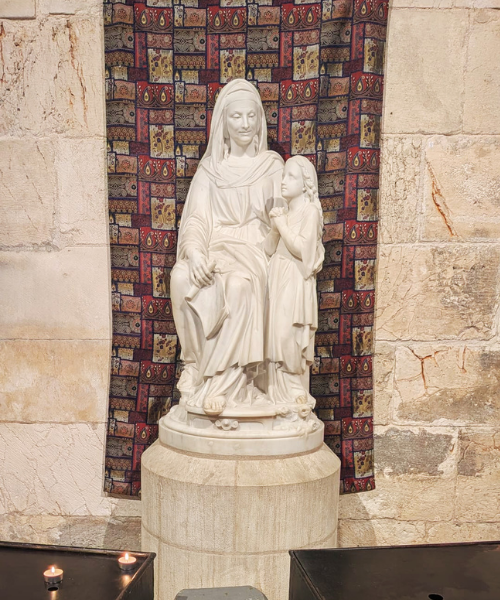
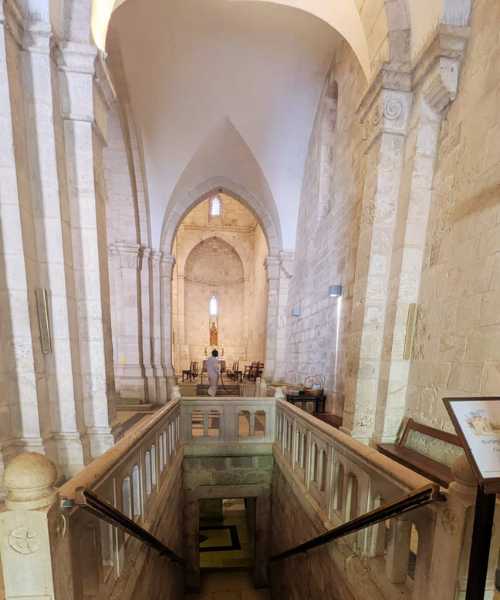
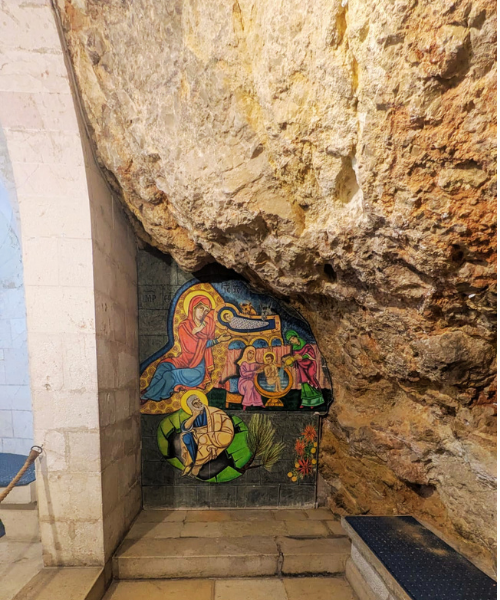
Inside St. Anne’s Church, Jerusalem: What to See
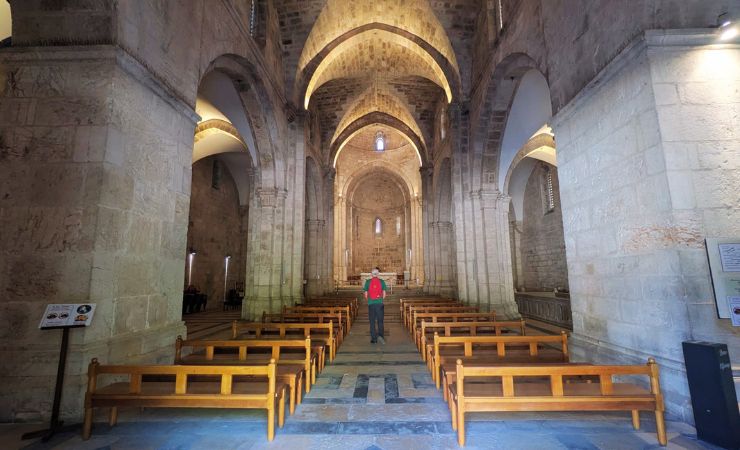
The interior of St. Anne’s Church, Jerusalem presents visitors with one of the most authentic Crusader experiences available in the Holy Land. The austere stone interior reflects pure Romanesque architectural principles, with massive pillars supporting barrel vaults that create an atmosphere of medieval devotion. The church’s extraordinary acoustics transform even whispered prayers into resonant sounds that seem to emerge from the very stones.
The church’s five distinct areas each tell part of Jerusalem’s layered religious history, from Roman paganism through Byzantine Christianity to Crusader devotion. Archaeological excavations have revealed how each successive civilization built upon its predecessor’s foundations, creating a vertical timeline of faith and conquest.
Romanesque Basilica — The main worship space showcases 12th-century Crusader craftsmanship at its finest, with thick stone walls rising to barrel-vaulted ceilings that create exceptional acoustic properties. The nave’s austere beauty reflects Crusader architectural taste, avoiding Byzantine decoration in favor of structural grandeur. Visitors often test the remarkable acoustics by singing or speaking, discovering how the stone architecture amplifies and enriches sound in ways that modern buildings cannot replicate. The original Crusader floor lies several feet below the current level, revealed through archaeological windows that show the church’s medieval foundation stones.
Crypt of Mary’s Birthplace — Beneath the main altar, a narrow stone staircase descends to the traditional grotto where the Virgin Mary was born according to the 2nd-century Proto-Evangelium of St. James. This small, cave-like chamber features ancient stone walls and a simple altar marking the exact spot venerated by Christians for nearly two millennia. Pilgrims often leave flowers and prayers in this intimate space, where the low stone ceiling and flickering candles create an atmosphere of profound reverence. The crypt’s authenticity as a 1st-century dwelling site aligns with archaeological understanding of residential construction in ancient Jerusalem.
Pool of Bethesda Ruins — Adjacent to the church, extensive archaeological excavations have revealed the biblical pool with its five porticoes mentioned in John 5:2, where Jesus healed a paralytic man who had been ill for 38 years. The excavated pools show two large rectangular basins separated by a central dam, with surrounding colonnaded porticoes where sick people gathered seeking healing. Visitors can walk among the ancient stone foundations and see the sophisticated water management system that supplied this healing sanctuary. Information panels explain how the site functioned as both a Jewish ritual bath and a center for medical treatment in Jesus’ time.
Byzantine Basilica Remains — Scattered throughout the complex, ruins of the 5th-century Byzantine church reveal colorful mosaic fragments and foundation stones that predate the Crusader construction by 600 years. These remains show how Byzantine Christians first transformed the Roman pagan shrine into a place of Christian worship, establishing the tradition that Saints Joachim and Anne lived on this site. Visitors can trace the Byzantine church’s original dimensions and see how Crusader architects incorporated existing walls into their new design. The layered construction demonstrates Jerusalem’s continuous religious evolution across changing empires and faiths.
High Altar Reliefs — French sculptor Philippe Kaeppelin created the modern altar’s three relief panels depicting the Nativity, Descent from the Cross, and Annunciation, connecting St. Anne’s role as Mary’s mother to Christ’s birth and death. These contemporary works blend seamlessly with the medieval architecture while providing focal points for modern worship and contemplation. The central Nativity scene particularly emphasizes St. Anne’s importance in salvation history as the grandmother of Jesus. Each relief uses traditional Christian iconography rendered in a style that complements rather than competes with the ancient stone surroundings.
“Now there is in Jerusalem near the Sheep Gate a pool, which in Aramaic is called Bethesda and which is surrounded by five covered colonnades. Here a great number of disabled people used to lie—the blind, the lame, the paralyzed.” (NIV, John 5:2-3)
This biblical passage describes the exact location where Jesus performed one of his most significant healing miracles. The archaeological remains visible today confirm the Gospel account’s accuracy, showing the pool’s five porticoes where disabled people gathered hoping for healing.
Practical Information
Visiting St. Anne’s Church, Jerusalem requires entering through the Lion’s Gate (St. Stephen’s Gate) in the Old City’s eastern wall. Opening hours are typically 8:00 AM to 5:00 PM in summer and 8:00 AM to 4:00 PM in winter, though these may vary on religious holidays.
Admission includes entry to both the church and the Pool of Bethesda archaeological site, with tickets purchased at the entrance gate. The official website provides current visiting information and special event schedules.
Visitors should allow 45-60 minutes to explore both the church interior and the extensive Pool of Bethesda excavations, as the archaeological site covers a significant area with multiple levels and viewing platforms.
Additional Information
- St. Anne’s Church, Jerusalem — Official Website — Official site
- Site-Seeing: Colorful Crusader Churches – The BAS Library — Academic overview of St. Anne’s as pristinely preserved 12th-century Crusader church in Romanesque style, mentions grotto tradition and Pool of Bethesda ruins
- What Were the Crusades and How Did They Impact Jerusalem? – Biblical Archaeology Society — Historical context of St. Anne’s construction during Crusader period, built around 1140 under Queen Melisende’s patronage, Ottoman donation to France and restoration
- Church of Saint Anne, Jerusalem – Wikipedia — Comprehensive historical overview and architectural details
Why is St. Anne’s Church considered the best-preserved Crusader church in Jerusalem?
St. Anne’s Church earned this distinction because Saladin converted it into an Islamic law school (madrasa) in 1192 rather than destroying it, which preserved the original 12th-century Romanesque architecture. Unlike other Crusader churches that were demolished, heavily modified, or left to decay, St. Anne’s maintained its structural integrity and architectural features for over 800 years. The conversion to educational use required maintaining the building’s solid construction, keeping the stone walls, barrel vaults, and overall medieval character intact. When France regained control in 1856, the church required minimal restoration compared to other Crusader sites.
What is the significance of the crypt beneath St. Anne’s Church?
The crypt beneath St. Anne’s Church marks the traditional birthplace of the Virgin Mary according to Christian tradition dating to the 2nd-century Proto-Evangelium of St. James. This small grotto is believed to be part of the original house where Saints Joachim and Anne lived, making it one of Christianity’s most venerated sites related to Mary’s early life. Pilgrims have visited this underground chamber for nearly two millennia, and archaeological evidence suggests the site was used for Christian worship from the early centuries. The crypt’s simple stone altar and ancient walls create an intimate space for prayer and reflection on Mary’s role in Christian salvation history.
Can visitors see the actual Pool of Bethesda mentioned in the Bible?
Yes, extensive archaeological excavations adjacent to St. Anne’s Church have revealed the actual Pool of Bethesda with its five porticoes described in John 5:2. Visitors can walk among the excavated stone foundations, see the two large rectangular basins separated by a central dam, and explore the surrounding colonnaded areas where disabled people gathered seeking healing.
What makes the acoustics inside St. Anne’s Church so remarkable?
The exceptional acoustics result from the church’s 12th-century Romanesque design featuring thick stone walls, barrel-vaulted ceilings, and precise architectural proportions that naturally amplify and enrich sound. The Crusader builders created a space where even whispered prayers resonate throughout the nave, and singing takes on an almost ethereal quality.
How did St. Anne’s Church survive through different religious conquests of Jerusalem?
St. Anne’s Church survived because each conquering power found practical uses for the well-constructed building rather than destroying it. After Saladin’s conquest in 1187, he converted it into Madrasa al-Salahiyya in 1192, an Islamic law school that required a substantial, permanent structure. This Islamic educational use preserved the building through 600+ years of Ottoman rule, as destroying a functioning madrasa would have been wasteful and potentially controversial. When the Ottoman Empire donated the property to France in 1856 as thanks for Crimean War support, the French found a structurally sound medieval church requiring only minor restoration rather than complete rebuilding.
Nearby Sites
- Pool of Siloam: Ancient pool in the City of David where Jesus told a blind man to wash and receive sight.
- Ecce Homo Convent: 19th-century convent built over Roman pavement traditionally associated with Pilate’s judgment of Jesus.
- The Little Western Wall: Intimate prayer site offering closer access to the Temple Mount’s western wall.
- Antonia Fortress Ruins: Archaeological remains of the Roman fortress where Jesus may have been tried before Pilate.
- The Rockefeller Museum: Archaeological museum housing artifacts from excavations throughout historic Palestine.
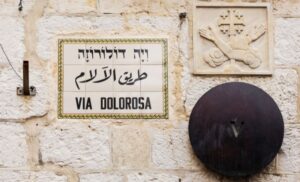
- Monastery of the Flagellation: Franciscan chapel commemorating Jesus’s scourging, marking the traditional start of the Via Dolorosa.
Keep reading
Part of our Christian Pilgrimage Guide →