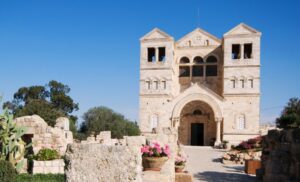
Simon the Tanner's House in Jaffa is a significant Christian pilgrimage site where the Apostle Peter received a divine vision on the rooftop. According to Acts 10, this revelation showed Peter that God's salvation extended to all people, not only Jews but Gentiles as well, marking a pivotal moment in early Christianity's expansion beyond Judaism.
Along the ancient waterfront of Jaffa, one of the world’s oldest port cities, the traditional site of Simon the Tanner’s house is located. According to the Acts of the Apostles, it was on this rooftop that Peter received a vision that reshaped the early church’s understanding of who belonged within God’s plan of salvation, Jews and Gentiles alike.
House Location
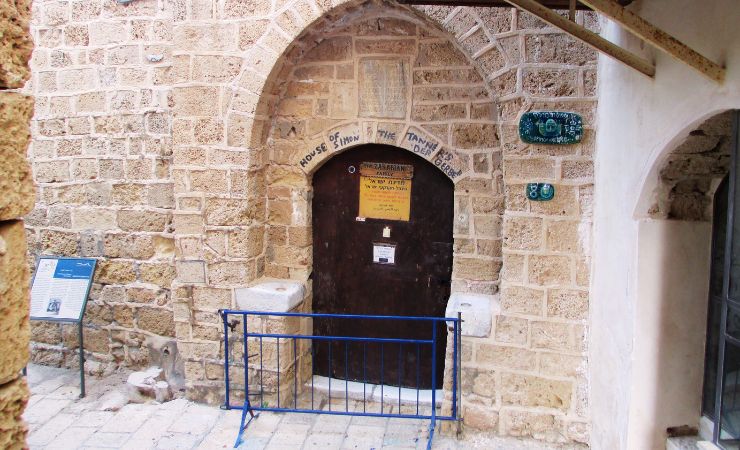
The address is on Shimon HaBurski Street in Old Jaffa, a short walk from the Jaffa flea market and the Clock Tower. Though the original first-century structure no longer stands, visitors can see the traditional location where one of the most pivotal events in the New Testament took place.
Biblical Context
The house of Simon the Tanner holds a pivotal place in Christian history because of the transformative vision Peter received while staying there. Acts 10 sets the scene carefully: Peter had traveled from Lydda (modern Lod) to Jaffa after raising a woman named Tabitha from the dead, and he remained in Jaffa for several days as the word spread. He was lodging with Simon, a tanner by trade, whose house stood beside the sea. Tanners occupied a particular social position in the ancient world. Their work with animal hides made them ritually unclean under Jewish law, requiring frequent washing and keeping them on the margins of respectable society. The fact that Peter, a devout Jew, was already staying with a tanner signals that his boundaries were beginning to shift even before the vision arrived.
Around noon on the day his vision occurred, Peter went up to the rooftop to pray. He was hungry, and while food was being prepared below, he fell into a trance. He saw heaven opened and a large sheet descending by its four corners, filled with all kinds of four-footed animals, reptiles, and birds. A voice instructed him to kill and eat. Peter refused, saying he had never eaten anything impure or unclean. The voice responded: “Do not call anything impure that God has made clean.” The exchange happened three times before the sheet was taken back up. The vision symbolizes God’s message not to consider any person impure or unclean, and it arrived at precisely the moment that messengers from the Roman centurion Cornelius were approaching Jaffa. This sequence of events led directly to the inclusion of Gentiles into the early Christian community, a turning point described in detail across Acts 10 and 11.
About noon the following day as they were on their journey and approaching the city, Peter went up on the roof to pray. He became hungry and wanted something to eat, and while the meal was being prepared, he fell into a trance. He saw heaven opened and something like a large sheet being let down to earth by its four corners. It contained all kinds of four-footed animals, as well as reptiles and birds. Then a voice told him, ‘Get up, Peter. Kill and eat.’ ‘Surely not, Lord!’ Peter replied. ‘I have never eaten anything impure or unclean.’ The voice spoke to him a second time, ‘Do not call anything impure that God has made clean.’ This happened three times, and immediately the sheet was taken back to heaven.
The events that unfolded at Simon the Tanner’s house mark a significant departure from Jewish dietary laws and purity traditions. Early church writers including Origen and Eusebius referenced Jaffa as the setting for this episode, and the site attracted Christian pilgrims as early as the Byzantine period. The vision’s implications extended far beyond the table: Peter’s subsequent baptism of Cornelius and his household became the scriptural foundation for the church’s universal mission, cited repeatedly in early theological debates about the boundaries of the covenant community.
The Current House
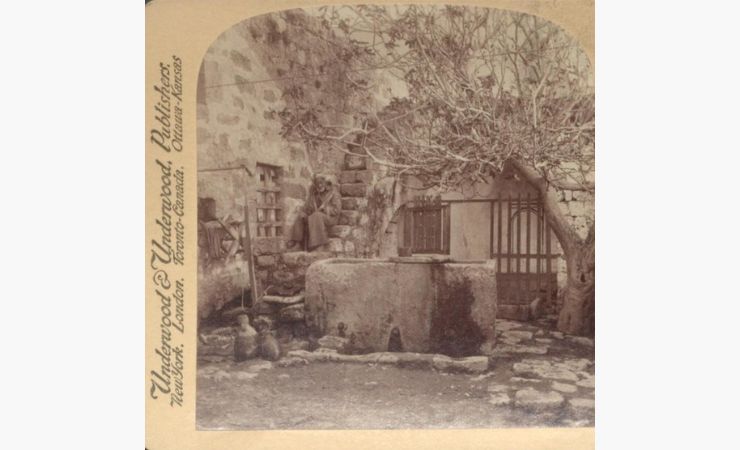
The property currently owned by an Armenian family, held across multiple generations, is claimed to be the site of Simon the Tanner’s residence. The family keeps the site private, with no regular access for tourists and no opportunity for archaeologists to examine physical evidence within the walls. From the lane outside, visitors can see the stone facade and courtyard gate, which has become a quiet pilgrimage stop in its own right.
The tradition connecting this location to the biblical narrative rests on several interlocking factors:
Biblical Description: The Acts of the Apostles describes Simon the Tanner’s house as being “by the sea” (Acts 10:6). The traditional site sits on a hill in Jaffa overlooking the Mediterranean, fitting that geographical detail precisely. Tanners in the ancient world also required large quantities of water for curing hides, making a coastal or riverside location practically necessary for the trade, which lends additional plausibility to the identification.
Historical Continuity: The association of this location with Peter’s vision is supported by centuries of Christian pilgrimage. Byzantine-era pilgrims referenced Jaffa as the site of the episode, and the tradition was reinforced through the medieval and Ottoman periods as Christian communities maintained a presence in the city.
Cultural and Religious Significance: Jaffa ranks among the oldest continuously inhabited port cities in the world, with a documented history stretching back more than 3,500 years. Its prominence in both Christian and Jewish tradition as a site of miracles, departures, and arrivals, from Jonah’s embarkation to Peter’s ministry, lends credibility to the presence of significant biblical figures here.
Artistic and Literary References: From the medieval period onward, European artists depicted Peter’s vision specifically in Jaffa, drawing on early pilgrimage accounts that fixed the scene at this location. Those artistic traditions reinforced and were reinforced by the pilgrimage routes themselves, embedding the site in the collective religious consciousness of Western Christianity.
Practical Information
The site is privately owned and not open to the public for interior visits. There is no admission fee to view the exterior from the street.
The site is not accessible to wheelchairs.
Additional Information
Who was Simon the Tanner in the Bible?
Simon the Tanner was a resident of Jaffa mentioned in the Acts of the Apostles (Acts 9:43 and 10:6). He practiced the trade of tanning, the curing of animal hides into leather, a profession that made him ritually impure under Jewish law because of constant contact with dead animals. The Apostle Peter lodged with him in Jaffa, and it was on Simon’s rooftop that Peter received the famous vision described in Acts 10.
Where exactly is Simon the Tanner’s house in Jaffa?
The traditional site is located on Shimon HaBurski Street in Old Jaffa, on a hill near the southern edge of the ancient city overlooking the Mediterranean Sea. The property is privately owned by an Armenian family and is not open for interior visits, but the stone exterior and courtyard gate are visible from the street. The site is roughly a 10-minute walk from the Jaffa Clock Tower and the port area.
Can you go inside Simon the Tanner’s house?
No. The building is private residential property held by an Armenian family, and there is no regular public access to the interior. Visitors can view the exterior from the lane outside and pause at the entrance, which many pilgrims use as a place for prayer or scripture reading.
Is there archaeological evidence connecting this site to the New Testament?
No archaeological excavation has been conducted inside the property, because the Armenian family has not permitted access to researchers. The identification of this location with Simon the Tanner’s biblical home rests on centuries of Christian pilgrimage tradition rather than physical evidence.
Nearby Sites
- St. Peter’s Church: Close to Simon the Tanner’s House, this church is a significant landmark in Jaffa, commemorating the apostle Peter’s vision.
- The Andromeda Rock: This natural feature is linked to the myth of Andromeda.
St. Nicholas Monastery: This Armenian monastery is a complex that includes an Armenian church and living quarters. It is where Napoleon Bonaparte and his soldiers stayed during their campaign in the city in the late 18th century. .
The Clock Tower: The Clock Tower was built in the early 20th century to mark the silver jubilee of Ottoman Sultan Abdul Hamid II and to celebrate Jaffa’s modernization.
Keep reading
Part of our Tel Aviv & Jaffa Guide →