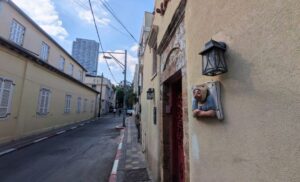
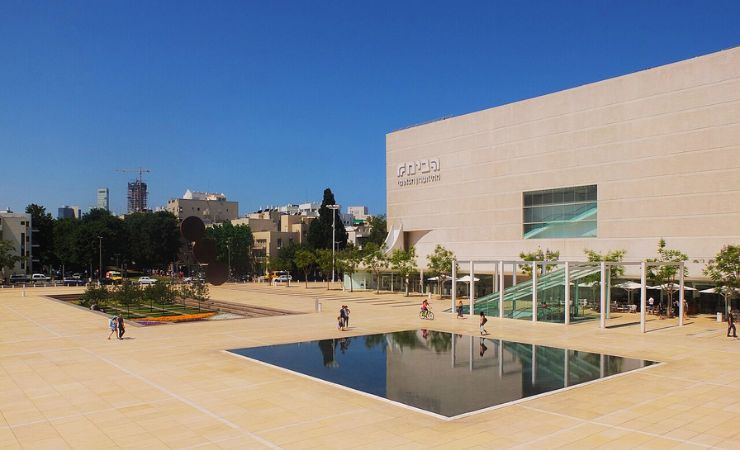
Habima Square is a major public plaza in central Tel Aviv, home to the Habima National Theatre (Israel's national theatre), the Charles Bronfman Auditorium (home of the Israel Philharmonic Orchestra), and the Eyal Ofer Pavilion for Contemporary Art. Its buildings form part of Tel Aviv's UNESCO White City heritage site.
Before you fly to Israel, three things matter more than anything on a packing list: your ETA-IL travel authorization, the rhythm of Shabbat in Israel, and the fact that this is a small country where you can pray at the Western Wall in the morning and float in the Dead Sea by afternoon. I am Ken, a licensed Israeli guide, and I have watched hundreds of first-time visitors arrive either well prepared or scrambling. This guide covers what actually shapes your trip: entry paperwork, timing, money, transport, and the cultural details that let you feel at home rather than lost.habb
Do You Need a Visa? Sort Out Your ETA-IL First
Do you need a visa to visit Israel? Since January 1, 2025, most visitors do not need a traditional visa, but you do need an ETA-IL, an electronic travel authorization linked to your passport. It costs 25 shekels, roughly 7 US dollars, covers stays of up to 90 days, and stays valid for two years or until your passport expires. Apply at least 72 hours before you fly, because airlines will deny boarding without an approved authorization. This applies to citizens of about 96 visa-exempt countries, including the United States, United Kingdom, European Union states, Canada and Australia, and to every traveler including minors.
Apply only through the official government portal at israel-entry.piba.gov.il. Plenty of copycat sites charge a markup to submit the same free form, so go straight to the source. Approval usually lands by email within 72 hours and links to your passport electronically, which means no stamp: Israel issues a small blue entry card instead, so your visit will not complicate later travel to other countries. The authorization allows multiple entries, so one approval covers a two-year run of trips.
When to Visit: Weather and the Holiday Calendar
When is the best time to visit Israel? For comfortable weather and open trails, aim for spring, March to May, or autumn, September to November, when daytime temperatures sit in the low to high 20s Celsius and rain is rare. Summer is hot, climbing above 30 in the center and closer to 40 by the Dead Sea and Eilat. Winter is mild but wet, with occasional storms and even snow in Jerusalem. The bigger planning factor is the Jewish holiday calendar.
Passover in spring, and the September cluster of Rosh Hashanah, Yom Kippur and Sukkot, raise prices and fill hotels, so book months ahead and expect crowds at the major sites if your trip overlaps them. These same holidays also close businesses and transport, which I cover in the planning section below. For great weather with thinner crowds, aim for early May or late October.
Plan Around Shabbat and the Jewish Holidays
What happens in Israel on Shabbat? From Friday sundown to Saturday nightfall, the country changes gear. In Jerusalem and most of the country, public buses and trains stop, many restaurants and shops close, and there are no scheduled El Al flights. Tel Aviv is the exception, staying lively with open cafes, beaches and sherut shared taxis. This weekly rhythm catches out more visitors than anything else, so plan your Friday afternoon arrivals and departures around it and stock up on essentials before Friday evening.
The Jewish holidays work the same way, only bigger. Passover in spring, and the autumn run of Rosh Hashanah, Yom Kippur and Sukkot, close many businesses and public transport for a day or more, and Yom Kippur brings the entire country to a standstill with no flights and empty roads. Book well ahead if your trip overlaps them, and build a flexible day or two into your itinerary. Rather than fighting these closures, plan with them: a hushed Old City at dawn or a long, unhurried holiday meal is often the highlight of a trip.
To see exactly what stays open, where to eat and how to get around on a given Shabbat or holiday, click on my Shabbat and holiday planner below.
Money, Cards and Tipping
What currency does Israel use, and can you pay by card? The currency is the Israeli new shekel (ILS). Cards are accepted almost everywhere, contactless is standard, and you rarely need much cash. Keep a small amount of shekels for open-air markets, small kiosks and tips. Restaurant tipping runs about 10 to 15 percent and is often not included in the bill, so check before you add it.
ATMs are widespread. When you withdraw or pay, choose to be charged in shekels rather than your home currency to avoid poor conversion rates on dynamic currency conversion. Tell your bank you are traveling so a foreign transaction does not freeze your card, and carry a backup card. Israel is not an especially cheap destination: expect European-level prices for hotels and dining, and budget accordingly.
How much should you budget for Israel? Israel is expensive, closer to Western Europe than to its neighbors, and Tel Aviv regularly ranks among the priciest cities in the world. As a rough 2026 guide, budget travelers manage on about 60 to 100 US dollars a day, mid-range visitors spend 150 to 300, and comfortable or private-tour travel runs higher. Street food like falafel or shawarma costs 6 to 15 dollars, a restaurant main 20 to 30, and a mid-range hotel room often 200 to 300 a night. Many of the best sites, including the Western Wall and Tel Aviv’s beaches, are free. Prices climb over holidays and fall in winter, so timing shapes your budget as much as taste does.
What to Eat, and How Israelis Dine
What is the food like in Israel? Israeli food is one of the trip’s real pleasures, built around fresh produce, olive oil and a Middle Eastern love of small plates. Hummus is everywhere, often a meal in itself with warm pita, and falafel and shawarma make cheap, excellent street lunches. Meals are usually ordered to share, so expect a table covered in mezze, salads and dips rather than one plate each. Ordering a single main just for yourself is unusual here, so come hungry and share.
The one thing to understand is kosher dining. Many restaurants are kosher, which among other rules means they do not mix meat and dairy, so you will not find a cheeseburger at a meat restaurant, and kosher places close for Shabbat. Plenty of Tel Aviv spots are not kosher and stay open all week. Vegetarians and vegans do exceptionally well in Israel, since the vegetable-forward, dairy-friendly tradition suits them perfectly.
Getting Around: Airports, Distances and Transport
How do you get around Israel? Most visitors arrive at Ben Gurion Airport (TLV) near Tel Aviv, while a second international gateway, Ramon Airport (ETM), serves the south near Eilat. Distances are short. Jerusalem to Tel Aviv is about 60 kilometers, roughly an hour, and you can cross the country in a single day, which means you lose very little time in transit. Expect thorough airport security at both ends of your trip: screening and questioning at Ben Gurion are more detailed than most travelers are used to, so arrive about three hours before an international departure and answer questions calmly and honestly.
Intercity trains and buses are cheap, modern and reliable on every day except Shabbat. A rechargeable Rav-Kav card covers most public transport. Renting a car opens up Sea of Galilee, the Negev and the Dead Sea on your own schedule, though city parking is tight and drivers are assertive. For the Jerusalem Old City and dense city centers, your own two feet beat any vehicle, so pack for walking.
Staying Connected: SIM, eSIM and Apps
How do you stay connected in Israel? The simplest option is an eSIM you buy before you fly and activate on landing, giving you data the moment you clear the airport. Local physical SIM cards are inexpensive and sold at the airport and in city shops if your phone is not eSIM ready. Wifi is common in hotels, cafes and many public spaces.
Download a few apps before you go: Moovit for public transport routing, an offline-capable maps app, and Gett for taxis, since Uber does not operate in Israel. During tense periods, the official Home Front Command alert app gives real-time, location-based safety notifications and is worth having even if you never need it. Israel’s country code is +972, and emergency numbers are 100 for police, 101 for ambulance and 102 for fire.
What to Pack for Israel
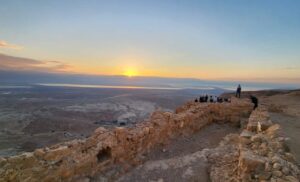
What should you pack for Israel? Pack for sun and stone. Comfortable, broken-in walking shoes are essential for the uneven streets of the Old City and for archaeological sites like Masada. Bring a hat, high factor sunscreen and a refillable water bottle, since tap water is safe to drink and dehydration is the most common tourist complaint.
Add a light layer for cool desert evenings and strongly air conditioned interiors. For holy sites, carry clothing that covers shoulders and knees, plus a scarf for women visiting mosques or churches. A modest swimsuit works for both the Mediterranean and the Dead Sea, though bring water shoes for the salty, rocky Dead Sea shore. Israel uses 230 volt outlets with the type H three prong plug, so pack a universal adapter.
Cultural Etiquette and Dress at Holy Sites
How should you dress and behave at Israel’s holy sites? Modest dress is the rule at religious sites of every faith: cover shoulders and knees. At the Western Wall, men and women pray in separate sections and men cover their heads, with paper kippot provided at the entrance. In churches and mosques, keep your voice low and ask before photographing people at prayer.
Timing helps: mosques are busiest on Fridays, synagogues on Saturdays, and churches on Sundays, so plan visits around prayer times for a calmer experience. Israelis are famously direct and warm, and this bluntness is not rudeness. A little Hebrew goes a long way, but English is widely spoken, so you will never feel stuck. Security checks at malls, stations and attractions are routine and quick; carry ID and follow staff instructions.
Tel Aviv sits at the opposite end of the spectrum from religious Jerusalem, and its beaches show it. Some are designated for particular groups, including a religious beach with separate hours for men and women, alongside LGBT, dog and family beaches, so ask which is which before you settle in. Tel Aviv is also one of the world’s most LGBT-friendly cities and hosts a Pride parade that draws hundreds of thousands of people each summer.
Health, Water and Safety Basics
Is Israel safe, and what health basics should you know? Israel has excellent hospitals, a pharmacy in every town, and tap water that is safe to drink nationwide. No special vaccinations are required for a standard visit. On safety, the honest answer is that the main tourist regions, Jerusalem, Tel Aviv, the Dead Sea and the Galilee, are calm and well policed, while a small number of border zones should be left off any itinerary.
Because conditions in this region can change with little warning, I always recommend comprehensive travel insurance that includes medical cover and, ideally, cancellation. Check your government’s current advisory close to your departure date rather than relying on older headlines.
How Many Days Do You Need?
How long should you spend in Israel? A focused first trip works well in 7 to 10 days: about three days for Jerusalem and Bethlehem, two for the Dead Sea, the lowest point on Earth at around 430 meters below sea level, and Masada, and the rest for Tel Aviv, the Galilee and the coast. With only a long weekend, base yourself in Jerusalem and take day trips out from there.
Because the country is compact, transit eats very little of your time, which means more hours at the places themselves. Build in at least one slower day. The density of history here rewards pausing to absorb a single site rather than racing through a checklist. Preparation is what turns a complicated destination into an easy one: sort your ETA-IL early, respect the rhythm of Shabbat, pack light and modest, and keep your plans flexible. When you are ready to see the country through the eyes of someone who lives it, I would be glad to help you plan your route or guide you in person.
Frequently Asked Questions
1. Do I need a visa to travel to Israel?
Most visitors from the roughly 96 visa-exempt countries, including the US, UK, EU, Canada and Australia, do not need a traditional visa. Since January 1, 2025 you do need an ETA-IL, an electronic authorization linked to your passport. It costs 25 shekels, about 7 US dollars, covers stays up to 90 days, and stays valid for two years. Apply at least 72 hours before you fly.
2. When is the best time to visit Israel?
Spring, March to May, and autumn, September to November, offer the most comfortable weather, with mild temperatures and little rain. Summer is hot and winter is mild but wet. Major Jewish holidays such as Passover and the September cluster of Rosh Hashanah, Yom Kippur and Sukkot raise prices and fill hotels, so book months ahead if you travel then.
3. What happens in Israel on Shabbat?
From Friday sundown to Saturday nightfall, much of the country slows down. Public buses and trains stop, many shops and restaurants close, and there are no scheduled El Al flights. Tel Aviv is the exception and stays lively. Plan Friday arrivals and departures around this and stock up on essentials before Friday evening.
4. What currency is used in Israel, and can I pay by card?
The currency is the Israeli new shekel (ILS). Cards, including contactless, are accepted almost everywhere, so you rarely need much cash. Keep a small amount of shekels for markets and tips. Restaurant tipping runs about 10 to 15 percent and is often not included, so check the bill.
5. Is tap water safe to drink in Israel?
Yes. Tap water is safe to drink across Israel, so bring a refillable bottle. Dehydration is one of the most common complaints among visitors, especially in summer and in desert areas like the Dead Sea and the Negev, so drink more than you think you need.
6. Do I need to speak Hebrew to travel in Israel?
No. English is widely spoken in hotels, restaurants, attractions and among younger Israelis, and most signs include English. Learning a few words such as shalom for hello and toda for thank you is appreciated as a courtesy, but you will manage comfortably in English throughout a standard trip.