Dizengoff Square is a historic circular plaza in central Tel Aviv, built in 1934 and named for Zina Dizengoff, wife of the city's first mayor. It forms the centrepiece of Tel Aviv's UNESCO-listed White City Bauhaus district and is home to Yaacov Agam's iconic Fire and Water Fountain.
Transport in Israel covers buses, trains, light rail, shared taxis, and private car rental across a country roughly the size of New Jersey. The network is more extensive than most visitors expect, connecting Ben Gurion Airport directly to Tel Aviv, Jerusalem, and Haifa by rail. Honestly, public transportation is not as seamless as you might expect from a first-world country, but the rail system is limited in reach but fairly good, and using an app makes the whole thing much simpler.
The basics
The Moovit app is the standard tool for navigating Israeli public transport. It works in English and gives real-time updates for buses, trains and light rail. Download it before you arrive.
Alternatively, you can use a physical contactless smart card, Rav-Kav that is accepted on all buses, Israel Railways, both light rail systems and the Haifa Carmelit. An anonymous card costs 5 NIS and is sold at Ben Gurion Airport’s Public Transport Information Center, central bus terminals and Israel Railways counters. It gives you free transfers between buses within a 90-minute window, and you can top it up through the Rav-Kav Online app. Cash has not been accepted on Israeli buses since January 2019, so sort this out on landing.
Buses and sheruts
Egged, in green livery, covers intercity routes; Dan covers much of the Tel Aviv metropolitan area. Between them the network runs over 1,000 routes nationwide. Pay with a Rav-Kav or with the HopOn app, which generates a QR code you scan at the driver’s terminal or scan the QR code on the bus once you get on.
The sherut (called “Moniyot Sherut” in Hebrew) is the fallback that makes Shabbat workable. It is a 9 to 10-seat minivan running a fixed route, but unlike a bus you can hail it anywhere along that route and get off wherever you ask. Sheruts run 24/7. The Tel Aviv–Jerusalem sherut leaves from near the Central Bus Station in each city at a fare close to the bus price.
Trains
For Tel Aviv to Jerusalem, the train beats the bus by a wide margin: the high-speed line runs from Ben Gurion Airport station and Tel Aviv HaHagana into Jerusalem–Yitzhak Navon in about 32 minutes, skipping the road congestion that makes bus times unpredictable. Rav-Kav works on all Israel Railways services too.
For all public transportation, you should check Friday afternoon and holiday timetables carefully. Most stop before Shabbat and holy days, and the exact cutoff varies by line and by season.
You can use the Shabbat & Holiday Planner for Israel tool we created below to help you plan your trip:
Taxis and ride-hailing
Licensed taxis run on a regulated meter, with higher rates at night, on weekends and on holidays. Uber and Lyft do not operate in Israel. The main apps are Gett (largest in the category) and Yango, and both dispatch licensed metered cabs rather than private drivers. Taxis keep running on Shabbat and holidays when trains and buses stop.
Driving and car-sharing
A valid foreign licence is accepted for up to 12 months, though carrying an International Driving Permit alongside the original is strongly recommended. Minimum rental age at the major agencies is 21. Traffic drives on the right. Highway 6, the country’s only toll road, is fully electronic with no barriers, and rental companies bill the toll to the card on file. The default of many navigation apps is to drive you through Highway 6. Check the updated tariffs and decide if you would like to pay. Roads in and around Tel Aviv and Jerusalem clog badly during morning and evening rush hours, so budget generous travel time.
You can use the Israel Driving Distance Calculator to estimate the travel time based on your expected travel date and departure time:
Getting around Tel Aviv
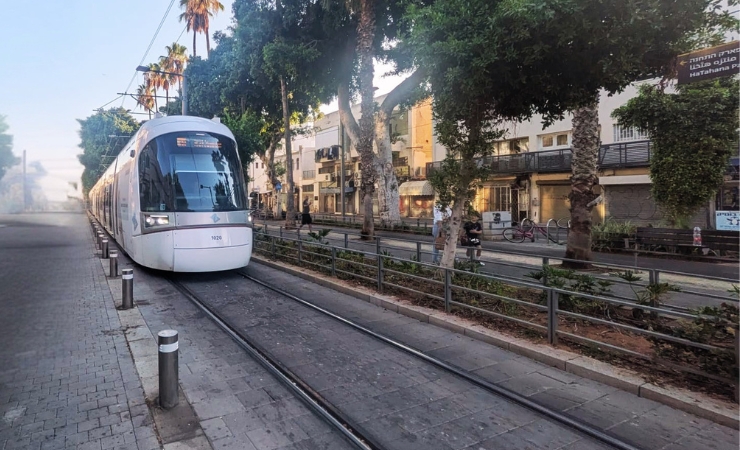
The Red Line light rail opened on 18 August 2023 and runs the length of the metropolitan area from Petah Tikva to Bat Yam. It is the fastest way across the city but it is a single line, hence limited.
The rest of the network is still years out. The Green Line’s southern section is currently estimated for 2028 and its northern section for 2030, while the Purple Line is under construction with an estimated opening in late 2027. Either way, it will not affect your trip, but it explains the fenced-off streets and diverted traffic you will run into all over the city.
For bikes, Metrofun runs over 400 docking stations across Tel Aviv and Herzliya, with classic and electric bikes released through the app. A few companies hold permits for shared e-scooters in Tel Aviv-Yafo: Bird, Lime, and Dott, each through its own app. Riders must be 18 or over, helmets are required, and scooters must be parked in marked bays or the municipality confiscates them. Other cities run their own tenders, so the operators change once you leave Tel Aviv.
What makes this genuinely worth doing rather than merely convenient is the infrastructure. The city has about 190 km of dedicated bike lanes, continuous and connected, heading for roughly 250 km by 2030. You can cross most of the city without ever mixing with traffic. Ride the Tel Aviv promenade along the seafront and you get the whole coastline on one side and the city on the other. It is beautiful in daylight and better still at sunset, when the light comes off the water and half of Tel Aviv is out on the same path. Do it once in the evening even if you take buses everywhere else.
For short trips without a full rental, Autotel rents cars by the minute, booked and unlocked entirely through its app, with the densest coverage in Tel Aviv.
Parking curb colors are the quick reference: blue and white means paid parking, red and white means no parking at any time.
Getting around Jerusalem
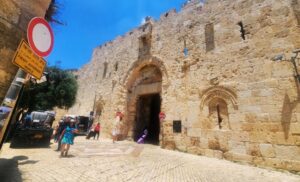
The light rail is the best way to move around the city. The Red Line, open since 2011, was extended at both ends in February 2025, reaching Neve Yaakov in the north and Hadassah Ein Kerem in the southwest. It runs along Jaffa Road through the city centre and passes close to Damascus Gate, one of the main entrances to the Old City.
The first section of the Green Line, the L3, opened on 21 August 2026, connecting HaTurim station on Jaffa Road with the Malha area in the southwest. It runs about 7 km with 13 stations, at roughly eight-minute intervals in peak hours. Extensions toward Mount Scopus and toward Givat Shaul and Har Nof are planned through 2027. For the first time, Jerusalem has a connecting network rather than a single line.
Ride it at any hour and you will see Haredi Jews, secular Israelis, Arab Muslims and Palestinian commuters sharing the same car. It is a mix rarely captured in news coverage of the city, and it says something real about daily life here.
Driving in the Old City area is impractical: narrow lanes, restricted zones and very limited parking near the main sites. Light rail and taxis are the reliable options for reaching the historic center.
Visiting getting around in Israel: practical information
The Moovit app is the standard tool for navigating Israeli public transport and works in English with real-time updates for buses, trains, and light rail. Download it before you arrive. Alternatively, you can purchase a Rav-Kav card as soon as you land at Ben Gurion Airport for 5 NIS at the Public Transport Information Center, load credit onto it immediately, and use it for every journey. Check Friday afternoon timetables carefully; most buses and trains suspend service before Shabbat, and the exact cutoff varies by line and season. For planning destinations and understanding which sites to combine on a single day.
Frequently Asked Questions
How do you pay for public transport in Israel?
The Rav-Kav contactless smart card is the standard payment method, accepted on all buses, trains, light rail lines, and the Haifa Carmelit. The Moovit (or HopOn) app is an alternative for bus travel. Cash has not been accepted on Israeli buses since January 2019.
Is the Jerusalem light rail free?
No, the Jerusalem Light Rail is not free. Fares are paid using a Rav-Kav card or the HopOn app. The Rav-Kav allows free transfers to connecting buses within a 90-minute window from the first tap, which can significantly reduce the cost of a journey combining tram and bus travel across the city.
What is the best app for public transportation in Israel?
Moovit is the most widely used transport planning app in Israel and works in English. It provides real-time arrival times and route planning for buses, trains, and light rail. For payment, the HopOn app covers bus and light rail fares via a QR code.
Do you tip taxi drivers in Israel?
Tipping taxi drivers is not obligatory in Israel and is not a standard expectation. Licensed taxis use a regulated meter, and fares are fixed by law. Rounding up to the nearest convenient amount is common but not required. Higher meter rates apply automatically at night, on Shabbat, and on public holidays without any surcharge being added manually.
How do you travel between Tel Aviv and Jerusalem without a car?
The fastest option is the direct train on the high-speed Jerusalem to Tel Aviv line, which takes 32 minutes and departs from Ben Gurion Airport station and Tel Aviv HaHagana. Intercity Egged buses run the same route but take longer due to traffic. Sheruts depart frequently from near the Central Bus Stations in both cities and run on Shabbat when trains and buses do not.
Can tourists drive in Israel on a foreign license?
Yes. A valid foreign driver’s license is accepted in Israel for up to 12 months. Carrying an International Driving Permit alongside the original license is strongly recommended. The minimum rental age at all major agencies is 21. Traffic drives on the right, and Highway 6 tolls are charged electronically to the rental car’s registered credit card.