The Tower of Tancred stands in the northwest corner of Jerusalem's Old City as a Crusader-era fortification named after Tancred, a prominent leader of the First Crusade. Also known as Goliath's Tower, this stone structure represents the military architecture and historical legacy of the Crusader period in Jerusalem.
The northwest corner of Jerusalem’s Old City holds a remarkable piece of Crusader history: the Tower of Tancred Jerusalem. This medieval fortification, named after one of the most skilled military commanders of the First Crusade, marks the precise spot where Christian forces breached the city’s defenses in July 1099. The tower also bears the alternative name “Goliath’s Tower,” rooted in the legend that King David buried the giant’s head at this very location after their famous battle.
Tancred Tower's Location
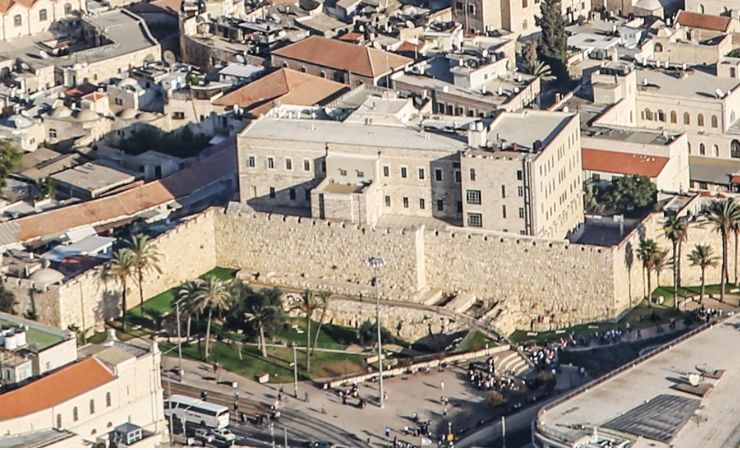
The Tower of Tancred Jerusalem once dominated the northwest corner of Jerusalem’s Old City, where the modern walls converge between New Gate and Jaffa Gate. Most of the original structure lies buried beneath the Collège des Frères of the De La Salle Brothers, a Christian educational institution established in the 19th century. Visitors can observe the tower’s remaining foundations protruding approximately 3 meters from the external base of the 16th-century Ottoman city wall.
Who was Tancred
Tancred of Hauteville (1075-1112) emerged as one of the most capable military leaders of the First Crusade, earning recognition for both tactical brilliance and personal courage. Born into a Norman family in southern Italy, he joined his uncle Bohemond on the expedition to the Holy Land in 1096. After distinguishing himself in battles across Anatolia and Syria, Tancred commanded a critical assault force during the siege of Jerusalem in July 1099. His soldiers breached the Fatimid defenses at the northwest corner of the city walls, creating the opening through which the Crusaders captured Jerusalem. Following the conquest, Tancred became Prince of Galilee and later served as regent of the Principality of Antioch until his death in 1112. The tower bears his name because his forces achieved their decisive breakthrough at this precise location.
The Historical Context of Tancred's Tower
Construction of the tower likely began during the 11th-century Fatimid period as part of strengthened city defenses. The Fatimid caliphs, who controlled Jerusalem from 969 to 1099, invested heavily in fortifying the city against Byzantine and later Crusader threats. After the Crusader conquest, the tower served various military and religious functions throughout the 12th century. Around 1130, it housed the crusading military order of Saint Lazarus, which cared for knights suffering from leprosy and other diseases. Following Saladin’s reconquest of Jerusalem in 1187, the Ayyubid dynasty significantly expanded the tower’s defensive capabilities, recognizing its strategic importance for controlling the northwestern approach to the city. The structure faced partial destruction around 1219, possibly during the Fifth Crusade campaigns, when defensive positions throughout the region were systematically dismantled to prevent their use by opposing forces.
Archaeological Evidence
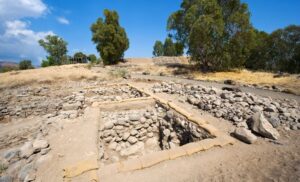
Archaeologists Dan Bahat and Menashe Ben-Ari conducted systematic excavations of the Tower of Tancred Jerusalem in the early 1970s, revealing crucial details about its construction and layout. Their recent archaeological research investigations uncovered a massive square structure measuring approximately 35×35 meters, making it one of the largest defensive towers in medieval Jerusalem. The excavated foundations showed sophisticated masonry techniques, with large ashlar stones forming the base courses and smaller stones filling the interior sections. The tower stood as a freestanding fortification, separated from the adjacent city wall by streets on both its north and west sides, allowing defenders to move around the structure independently of the main defensive line.
The archaeological evidence confirms the tower’s multiple construction phases, with distinct building materials and techniques corresponding to different historical periods. Fatimid-era foundations display characteristic masonry patterns, while later Ayyubid additions show different stonework styles and mortar compositions. These findings provide concrete evidence for the written historical accounts of the tower’s expansion and modification over two centuries of use. The excavations also revealed traces of internal chambers and stairways, suggesting the tower contained multiple levels for storage, accommodation, and defensive positions. Unfortunately, modern development has limited further archaeological investigation, leaving many questions about the tower’s internal organization and daily life unanswered.
Practical Information
The Tower of Tancred Jerusalem is accessible from the outside of the Old City walls and can be viewed at any time without admission fees. The best viewing points are along the path between New Gate and Jaffa Gate, where the protruding foundations are clearly visible. While the interior remains largely buried beneath the De La Salle Brothers school, visitors can examine the external stonework and foundations that extend from the Ottoman wall.
Additional Information
Where exactly is the Tower of Tancred located in Jerusalem?
The Tower of Tancred Jerusalem is located at the northwest corner of the Old City walls, between New Gate and Jaffa Gate. The remaining foundations protrude from the external base of the Ottoman city wall, while most of the original structure lies beneath the Collège des Frères school building.
Why is the Tower of Tancred also called Goliath’s Tower?
The tower bears the alternative name “Goliath’s Tower” due to an ancient legend claiming that King David buried the giant Goliath’s head at this location after their famous battle. This biblical tradition predates the Crusader period and reflects the site’s long-standing religious significance in Jerusalem.
What role did Tancred play in capturing Jerusalem during the First Crusade?
Tancred of Hauteville commanded the assault force that breached Jerusalem’s defenses at this northwestern point in July 1099. His troops created the crucial opening through which the Crusaders entered the city, making him instrumental in the Christian capture of Jerusalem during the First Crusade.
Can visitors enter the Tower of Tancred today?
Visitors cannot enter the original tower structure, as most of it lies buried beneath the De La Salle Brothers school. However, the external foundations and protruding stonework can be viewed and photographed from the pathway along the city walls at any time without admission fees.
What archaeological discoveries were made at the Tower of Tancred?
Excavations in the early 1970s by archaeologists Dan Bahat and Menashe Ben-Ari revealed a massive 35×35 meter square tower with sophisticated masonry construction. The dig uncovered evidence of multiple building phases, including Fatimid foundations and later Ayyubid expansions, confirming the tower’s evolution over two centuries.
Nearby Sites
- Jaffa Gate: Locate in the eastern wall. Jaffa Gate is one of the eight gates in Jerusalem’s Old City walls.
- New Gate: The newest gate in the city’s walls, providing access to the Christian Quarter.
- Damascus Gate: A grand entrance leading to the Muslim Quarter. Known for its impressive architecture and bustling market area.
- The Garden Tomb: A rock-cut tomb considered by some as the site of Jesus’ burial and resurrection.
- The Mamilla Reservoir: An ancient water reservoir, showcasing the advanced water system of the historical city
Keep reading
Part of our Jerusalem Travel Guide →