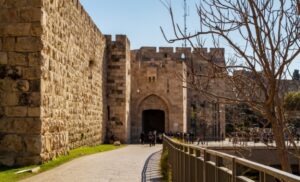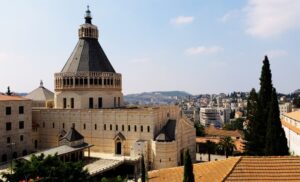
The Convent of the Sisters of Zion in Ein Karem is a 19th-century religious retreat located in this historic Jerusalem village. Founded by the Sisters of Zion congregation, the convent serves as a spiritual center and offers visitors a peaceful sanctuary with gardens, chapels, and stunning views of the surrounding hills.
Hidden in the scenic hills of Ein Karem, just west of Jerusalem, the Convent of the Sisters of Zion Ein Karem has served as a center of interfaith dialogue and education for over 160 years.
Location
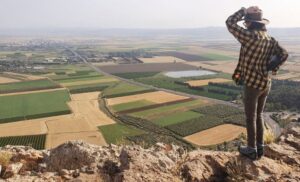
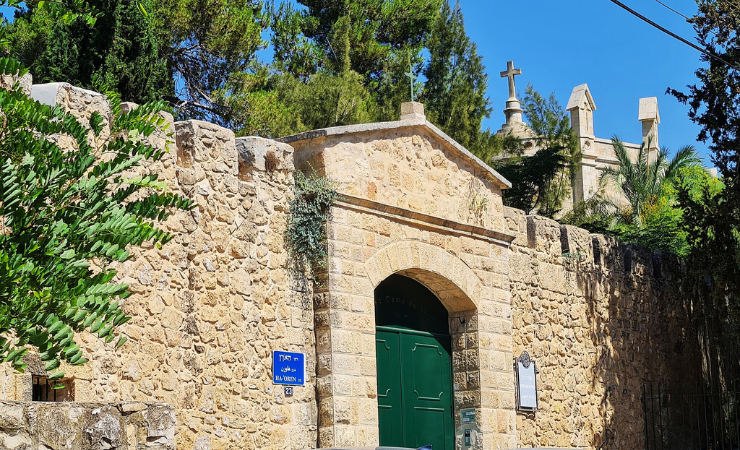
The Sisters of Zion Ein Karem sits on HaMa’ayan Street in Ein Karem, a historic village that became part of Jerusalem’s municipal boundaries after 1967. Located approximately 8 kilometers southwest of Jerusalem’s Old City, Ein Karem occupies terraced hillsides in the Jerusalem Mountains.
History of the Convent of the Sisters of Zion
Alphonse Ratisbonne established the Sisters of Zion Ein Karem in 1861, following his dramatic conversion from Judaism to Catholicism in Rome’s Church of Sant’Andrea delle Fratte in 1842. Born into a prosperous Jewish banking family in Strasbourg, Ratisbonne collaborated with his brother Théodore to create the Congregation of Notre-Dame de Sion, dedicated to fostering understanding between Jews and Christians. The Ein Karem convent initially served as an orphanage for girls displaced by sectarian violence in Lebanon, housing up to 60 children at its peak operation.
The convent transformed into an educational institution for young Arab women during the 1870s, offering instruction in French language, needlework, and domestic skills alongside religious education. The Ottoman Empire’s capitulation system provided crucial legal protection for the French sisters, allowing them to acquire property and operate freely despite the region’s complex political landscape. French diplomatic support proved essential when local Muslim authorities challenged the convent’s expansion in 1884, ultimately permitting the sisters to purchase adjacent land for their growing community.
During the British Mandate period (1920-1948), the Sisters of Zion Ein Karem expanded their educational programs while maintaining their commitment to interfaith dialogue. The establishment survived both World Wars, the 1948 Arab-Israeli War, and the subsequent demographic changes that transformed Ein Karem from a Palestinian village into a Jerusalem neighborhood. The convent continues its educational mission while welcoming pilgrims and researchers interested in its unique historical role bridging Jewish and Christian communities in the Holy Land.


The Building and Its Architecture
The Sisters of Zion Ein Karem exemplifies 19th-century institutional architecture adapted to Jerusalem’s mountainous terrain. Local limestone quarried from Ein Karem’s hills forms the convent’s thick walls, while traditional red clay roof tiles protect against winter rains and summer heat. French architectural influences appear in the building’s symmetrical facades, arched windows, and central courtyard design, reflecting the sisters’ origins while accommodating regional building practices mandated by Ottoman construction codes.
The complex spans approximately 2 acres of terraced hillside, incorporating both functional and spiritual spaces designed for communal religious life. Stone-paved paths connect the main residential building with ancillary structures, while retaining walls create level areas for gardens and outdoor activities. Iron grillwork on ground-floor windows combines security with ventilation, a practical necessity in the convent’s isolated location during the Ottoman period.
What Can Be Seen
- Chapel of the Visitation: The convent’s intimate chapel features limestone walls, wooden pews for 40 worshippers, and acoustic properties that enhance liturgical singing. Stained glass windows depict scenes from Mary’s visitation to Elizabeth, while the altar incorporates marble sourced from Italian quarries.
- Memorial Gardens: Century-old cedar trees anchor landscaped grounds that include native olive trees, pomegranate bushes, and seasonal wildflowers. The gardens feature original 1860s stone benches and a central fountain fed by Ein Karem’s natural springs.
- Ratisbonne Museum: Located in the former novice quarters, this small museum displays period photographs, documents in French and Arabic, religious artifacts from the convent’s founding era, and examples of needlework created by students in the 1880s.
- Guest Quarters: The convent maintains 12 guest rooms for visitors seeking spiritual retreat, featuring simple furnishings, private bathrooms, and windows overlooking the Judean hills. Accommodations include continental breakfast and access to chapel services.
Additional Information
What is the history behind the Sisters of Zion Ein Karem convent?
The Sisters of Zion Ein Karem was founded in 1861 by Alphonse Ratisbonne, a French Jewish convert to Christianity, as part of his mission to foster Jewish-Christian understanding. The convent initially served as an orphanage for Lebanese refugee girls before evolving into an educational institution for young Arab women. The order was established alongside Ratisbonne’s brother Théodore, creating a unique religious community dedicated to bridging interfaith divides in 19th-century Palestine.
Can visitors stay overnight at the Sisters of Zion Ein Karem?
Yes, the Sisters of Zion Ein Karem operates a guesthouse with 12 rooms available for spiritual retreats and pilgrim accommodation. Guests receive simple but comfortable lodging with private bathrooms, continental breakfast, and access to chapel services.
Nearby Sites
- Church of the Visitation: A beautiful church commemorating the visit of Mary to Elizabeth, offering stunning views of the Judean hills.
- Church of St. John Ba Harim : Believed to be the birthplace of John the Baptist, this church is a significant pilgrimage site.
- Hadassah Medical Center: Known for its Chagall stained glass windows, the medical center is a blend of medical excellence and artistic beauty.
- Mary’s Spring: A historical site where Mary is believed to have drunk water during her visit to Ein Karem.
Keep reading
Part of our Christian Pilgrimage Guide →