Ramla's Pool of Arches is an 8th-century underground water reservoir built during the early Islamic period. Located beneath street level in central Ramla, this vaulted cistern still holds water today and visitors can row small boats through its arched chambers, experiencing infrastructure that has functioned for over 1,200 years.
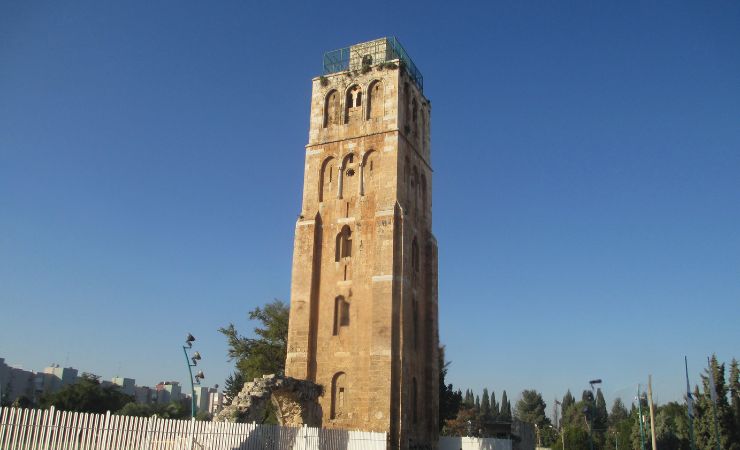
Rising from a modest park in central Ramla, an elegant stone structure draws visitors to one of Israel’s most intriguing medieval monuments. The White Tower Ramla, a 13th-century minaret built by the powerful Mamluk Sultan Baybars, represents the architectural legacy of a city that once served as the administrative capital of Jund Filastin (the Palestine district) during the early Islamic period. This solitary tower now serves as a silent witness to Ramla’s remarkable history as a crossroads of civilizations.
Location
The White Tower Ramla stands in HaShuk Square (Market Square) in the city center, adjacent to the extensive ruins of the Great Mosque of Ramla. The tower complex sits approximately 15 kilometers southeast of Ben Gurion Airport and 20 kilometers inland from the Mediterranean coast, making it easily accessible for visitors traveling between Jerusalem and Tel Aviv.
Why “White” — and Who Are the Forty?
The tower, constructed from coarse, grayish-brown kurkar limestone typical of the region, displays the weathered, earth-toned appearance characteristic of medieval structures that have endured centuries of exposure to the elements. The stone shows no resemblance to white coloring.
Several theories attempt to explain this naming puzzle. Archaeological evidence suggests that many medieval Islamic structures were originally covered with a fine white lime plaster, applied both for protection against weathering and for aesthetic purposes. This coating would have given the tower a brilliant white appearance visible from great distances across the coastal plain. Alternative explanations propose that the name derives from symbolic or religious significance, possibly connected to Islamic concepts of purity and sanctity.
The tower’s alternative name, “Tower of the Forty Martyrs” or “Burj al-Arba’in,” reflects a deeply embedded Islamic tradition. According to local folklore preserved in medieval Islamic sources, forty companions (sahabah) of the Prophet Muhammad were buried in the vicinity of this site. While no archaeological excavations have confirmed these burials, the tradition remains significant to Muslim pilgrims and local residents. Some historical accounts suggest these may have been early Islamic warriors who died during the conquest of Palestine in the 7th century, though the specific identities and circumstances remain matters of religious tradition rather than historical documentation.
A Brief History of the White Tower of Ramla
Sultan al-Zahir Baybars commissioned the White Tower Ramla in 1268 CE (666 AH in the Islamic calendar) as part of a comprehensive urban renewal project that transformed the city following decades of Crusader-Ayyubid warfare. Baybars, who earned the title “Crossbow of the World and Faith” for his military victories, had captured most Crusader strongholds in Palestine and sought to establish lasting Islamic institutions in strategic locations. His choice of Ramla reflected the city’s importance as a waystation on the Jerusalem road between Cairo and Damascus, as well as its historical significance as the only city founded by the early Islamic caliphate in Palestine.
The tower served multiple functions within Baybars’s urban plan. Archaeological analysis and historical chronicles indicate it functioned primarily as a minaret for the adjacent Great Mosque, calling the faithful to prayer with its muezzin’s calls audible across the coastal plain. However, its exceptional height and strategic location also made it an effective watchtower, allowing guards to monitor approaching caravans, pilgrims, and potential military threats from the Mediterranean ports or the Judean hills. The tower formed part of a larger complex that included administrative buildings, a hammam (bathhouse), and commercial structures that revitalized Ramla’s economy.
The structure survived numerous natural disasters and military campaigns that destroyed much of medieval Ramla. The devastating earthquake of 1546, which toppled buildings throughout the region, left the tower standing though damaged. Ottoman tax records from the 16th century mention repairs to the minaret, indicating its continued importance to the local Muslim community. During World War I, Ottoman forces used the tower as an observation post to monitor British movements in the coastal plain, demonstrating its enduring strategic value across seven centuries.
What You’ll Find at the Site Today
The White Tower Ramla rises 30 meters above the surrounding plaza, its interior containing a spiral staircase of 111 stone steps that wind upward to a observation platform. The climb, while moderately challenging due to the narrow stone steps worn smooth by centuries of use, rewards visitors with panoramic views extending from the Mediterranean coastline to the Judean foothills. On exceptionally clear days, the skylines of both Tel Aviv and Jerusalem become visible from the summit.
The architectural experience includes several distinct features:
- The Tower Structure: The minaret follows classic Mamluk design principles with a square base transitioning to an octagonal upper section. The exterior displays typical Mamluk stonework, including decorative bands of contrasting light and dark stone courses, pointed arch windows, and carved geometric patterns near the summit. The internal staircase features small slit windows that provided light and ventilation for those ascending.
- Great Mosque Ruins: The extensive remains of Baybars’s mosque spread across the adjacent courtyard area. Visitors can examine massive stone walls reaching heights of 8-10 meters, pointed arch doorways, and remnants of the mihrab (prayer niche) that indicated the direction of Mecca. The mosque’s foundations reveal earlier Crusader stonework, including carved crosses and Latin inscriptions that were reused in the Islamic construction, providing tangible evidence of the site’s layered history.
- Archaeological Features: Scattered throughout the site are carved stone capitals, decorative elements, and inscriptions in Arabic that reference Quranic verses and commemorate Sultan Baybars’s construction project.
What You’ll Find at the Site Today
Opening Hours: Visit should be coordinated in advance for Sunday through Thursday 9:00 AM to 4:00 PM, Friday 9:00 AM to 1:00 PM, closed Saturdays and Jewish holidays.
Admission: Entry to the tower costs 15 NIS (approximately $4.50 USD) for adults, with discounts available for students, seniors, and children under 12.
Accessibility: The site is not wheelchair accessible due to the narrow spiral staircase.
Additional Information
How tall is the White Tower Ramla and how many steps are there?
The White Tower rises 30 meters (approximately 98 feet) above the surrounding plaza and contains 111 stone steps in its spiral staircase. The climb typically takes 10-15 minutes depending on fitness level and includes small rest areas at the slit windows along the way.
Why is it called the White Tower when the stone appears brown?
The tower was likely originally covered with white lime plaster that gave it a brilliant white appearance visible across the coastal plain. This protective coating was common in medieval Islamic architecture but has worn away over the centuries, revealing the natural grayish-brown kurkar limestone beneath.
Can you climb to the top of the White Tower Ramla?
Yes, visitors can climb the 111 stone steps to reach the observation platform at the summit. The climb requires moderate fitness and is not suitable for wheelchairs or visitors with mobility restrictions. The panoramic views extend from the Mediterranean coast to the Judean hills on clear days.
What is the significance of the “Forty Martyrs” name?
The tower’s alternative name, “Tower of the Forty Martyrs” or “Burj al-Arba’in,” refers to local Islamic tradition that forty companions of Prophet Muhammad were buried in the vicinity. While archaeological evidence has not confirmed these burials, the tradition remains significant to Muslim pilgrims and reflects the number forty’s spiritual importance in Islamic culture.
Nearby Sites
- The Pool of Arches – A beautiful, underground 8th-century water reservoir where you can paddle a rowboat beneath stone arches and soft lighting.
- Ramla Museum – A small but rich museum covering the city’s diverse past: Islamic, Crusader, Jewish, and Christian.
- St. George’s Church – Located in nearby Lod, believed to house the tomb of St. George, patron saint of many nations.
- Ramla Market – An authentic, buzzing local shuk with everything from baklava to Persian rugs. Great for lunch or snacks.
Keep reading
Part of our Shephelah & Central Israel Guide →