Yarkon Park is a 375-hectare urban park along the Yarkon River in northern Tel Aviv, officially named Ganei Yehoshua. It attracts around 16 million visitors annually and includes botanical gardens, archaeological sites, sports facilities, a water park, wildlife habitats, and two major outdoor concert venues.
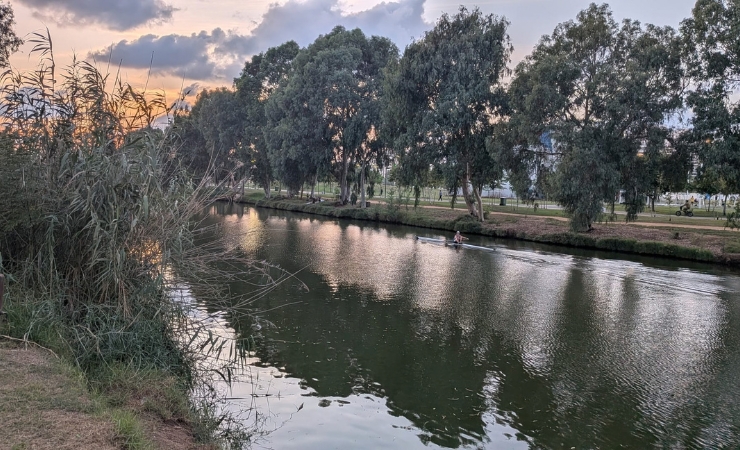
Yarkon Park is a 375-hectare green corridor along the Yarkon River in northern Tel Aviv, and it pulls roughly 16 million visitors a year. I forgot I was in Tel Aviv: lakes, dirt roads, wooden lunch tables, and the Yarkon River full of colorful canoes paddling up and down the stream drew a landscape that was more rural than urban. That feeling surprises almost everyone who comes here for the first time.
What is Yarkon Park and where is it?
Yarkon Park (Hebrew: פארק הירקון, Park HaYarkon) is officially named Ganei Yehoshua. It covers 3.5 km², which is slightly larger than Central Park in New York and roughly double the size of Hyde Park in London. The park sits in northern Tel Aviv and stretches along the Yarkon River from the Mediterranean coast eastward to ancient springs.
The park takes its popular name from the Yarkon River, whose Hebrew name derives from yaroq, meaning green. In Arabic the river is known as Nahr Al-ʿAwjāʾ, the Tortuous River, a reference to its winding course to the sea. The official name Ganei Yehoshua honors Mayor Yehoshua Rabinovich, who led Tel Aviv from 1969 to 1974, though virtually everyone uses the name Yarkon Park.
The park divides into two administrative zones. The western, urban section, Ganei Yehoshua, is managed by a municipal company under the Tel Aviv-Yafo Municipality and holds the main gardens, sports facilities, concert venues, and family attractions. The eastern section is part of Yarkon National Park, managed by the Israel Nature and Parks Authority, and splits further between the Yarkon River Source springs area and the Tel Afek (Antipatris) area to the east. Together they form a continuous green corridor from the Mediterranean shoreline to the ancient springs that feed the river.
What can you see and do in Yarkon Park?
The park rewards repeated visits. Its western reaches hold formal gardens, family attractions, and concert arenas, while the eastern sections preserve archaeological monuments, ancient springs, and quiet natural trails. A family at the water park, a birdwatcher at dawn by the lily ponds, a history enthusiast at the Ottoman fortress, and a concert-goer at an evening show are all, technically, in the same park. Allow at least half a day for the Ganei Yehoshua section; add another half day if you plan to visit the Tel Afek area to the east.
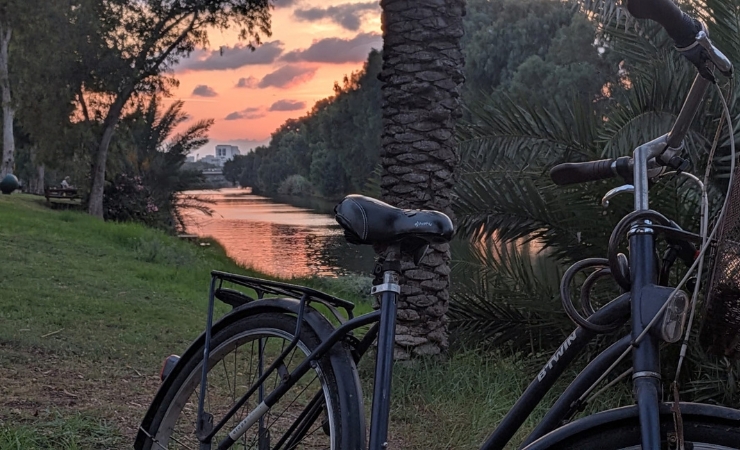
Yarkon Park is a haven for cyclists and joggers. Lots of people use the numerous sports facilities while others simply enjoy a jog along the river path.
The Yarkon River — The river is the spine of the entire park, flowing from ancient springs in the east to the Mediterranean in the west. Following the post-1997 rehabilitation program, it now supports a genuine ecosystem: water fowl, golden jackals, porcupines, mongoose, and the endemic Yarkon Bream (Acanthobrama telavivensis), a fish species that exists nowhere else on earth and came close to extinction during the river’s worst years of pollution. Rowing boats and pedalo craft can be hired along the urban stretch, and on a warm afternoon the water is busy with colorful canoes paddling up and down the stream.
Rock Garden (Gan HaSlaim) — At 4 hectares (10 acres), this is one of the largest rock gardens in the world. Around 3,500 plant species are displayed among rock formations sourced from across Israel, and more than 2.4 hectares are dedicated to cacti and succulents. Many of the rock formations carry labels identifying their region of origin, so a slow walk through the garden doubles as an informal survey of Israeli geology.
Tropical Garden (HaGan HaTropi) — This 5-acre enclosed garden holds over 3,000 plant species, including palms, orchids, and climbing vines. A wooden elevated boardwalk threads through vegetation dense enough to feel genuinely rainforest-like, passing a waterfall, a small pond with swans, and areas where parrots fly freely among the canopy. The shade it provides is a real relief on a hot Tel Aviv afternoon.
Tzapari Bird Park — This dedicated bird sanctuary is home to thousands of exotic birds, among them flamingos, pelicans, herons, swans, and parrots sourced from Indonesia, West Guinea, and Senegal. Interactive exhibits make it one of the park’s most popular family destinations. The name in Hebrew, tzipori, simply means birds.
Seven Mills (Sheva Tahanot) — Along the Yarkon’s banks, this historic site preserves the remains of a flour-milling complex active from the Ottoman period until 1936. At least eleven pairs of millstones once turned here, driven entirely by the river’s current. Archaeological excavation and partial restoration between 2000 and 2001 exposed the millstone remnants and associated infrastructure. The name Seven Mills reflects local memory rather than the full count; the physical evidence points to considerably more.
Tel Gerisa (Napoleon’s Hill) — This archaeological mound of approximately 40 dunams rises from the Yarkon’s southern bank and holds evidence of continuous occupation from the Early Bronze Age through the Early Islamic period. Scholars Benjamin Mazar and Yohanan Aharoni identified the site with the biblical Levite city of Gath-Rimmon. Eliezer Sukenik, Yigal Yadin, and Ze’ev Herzog each led excavation campaigns here. Napoleon’s army camped on the mound during the 1799 siege of Jaffa, which gave it its popular French-era nickname. A detailed overview of the site’s findings is available from Biblical Archaeology: Maps and Findings.
Antipatris Fort (Binar Bashi) — Located within the Tel Afek area of Yarkon National Park, this Ottoman fortress was built between 1572 and 1574 to guard the Afek Passage, a critical section of the ancient Via Maris route connecting Egypt to Mesopotamia. The Turkish name Binar Bashi means Head of the Springs, a reference to the Yarkon’s source nearby. The fort stands atop a tel that also holds the remains of the Roman city of Antipatris, founded by Herod the Great and mentioned in the Acts of the Apostles as a staging post between Jerusalem and Caesarea. Bronze Age Canaanite, Hellenistic, Roman, Byzantine, and Ottoman layers compress millennia into a single hilltop.
Water-lily ponds and Yarkon Bream conservation pool — In the national park’s springs area, a series of lily ponds feature the yellow water lily (Nuphar lutea), which thrives in slow-moving spring-fed water. A dedicated conservation pool adjacent to the ponds protects a breeding population of the Yarkon Bream, the endemic fish that came within years of extinction during the river’s most polluted decades. The recovery of both the river and this fish is one of the quieter environmental success stories in modern Israel.
Sportek and Meymadion Water Park — Sportek is a large outdoor complex with rock climbing walls, football pitches, basketball courts, a skatepark, and Australian rules football courts. Meymadion, one of Israel’s largest water parks, operates within the park grounds and features water slides, a wave pool, and a toddlers’ pool, drawing large crowds through the summer months. The two facilities sit side by side in the Ganei Yehoshua section.
Outdoor concert venues and memorial gardens — The park holds two large open-air concert arenas that have hosted some of the most significant performances ever staged in Israel. Michael Jackson performed here in 1993; Paul McCartney, Madonna, Ed Sheeran, and Jennifer Lopez (2019) have all played the same stages. For Tel Aviv’s centenary celebrations, La Scala performed Verdi’s Requiem outdoors to an audience of 100,000 people. Two memorial gardens offer quieter spaces: Gan HaBanim honors fallen soldiers, and Gan Nifga’ei HaTeror commemorates victims of terrorism.
Additional Information
How big is Yarkon Park?
Yarkon Park covers 375 hectares (3.5 km²). That is slightly larger than Central Park in New York and roughly double the size of Hyde Park in London. The figure combines both the municipal Ganei Yehoshua section and the adjacent Yarkon National Park managed by the Israel Nature and Parks Authority.
What are the best things to do in Yarkon Park?
Hire a rowing boat or pedalo on the river, walk the Rock Garden’s 3,500 plant species, visit Tzapari Bird Park’s flamingos and pelicans, and explore the Ottoman-era Seven Mills site. Cyclists and joggers use the river path throughout the week, and Meymadion Water Park is open in summer.
Is Yarkon Park free to enter?
Entry to the park itself is free. Individual attractions charge separately: Meymadion Water Park, Tzapari Bird Park, and the Rock Garden each set their own seasonal fees. Check current prices on the official Yarkon Park website before you go, as rates change between summer and winter seasons.
What hidden gems does Yarkon Park have?
The British Mandate concrete pumping house built in 1912, the first all-concrete structure in Israel, sits quietly in the springs area along the Romantic Path. The Yarkon Bream conservation pool nearby holds a breeding population of a fish found nowhere else on earth, a story most visitors walk straight past.
Are the national park sections of Yarkon open to visitors?
Yes. The Tel Afek (Antipatris) section and the Yarkon Springs area are open to the public. They operate under Israel Nature and Parks Authority hours and charge a separate admission. The Antipatris Ottoman fortress, built between 1572 and 1574, is the main draw in the eastern section.
What major concerts have been held at Yarkon Park?
Michael Jackson performed at the park’s open-air arenas in 1993. Later performers include Paul McCartney, Madonna, Ed Sheeran, and Jennifer Lopez in 2019. La Scala performed Verdi’s Requiem there for Tel Aviv’s centenary, drawing an audience of 100,000 people to the outdoor venue.
How do you get to Yarkon Park and when should you go?
The main Ganei Yehoshua section is open year-round. Entry to the park itself is free. Individual attractions, including Meymadion Water Park, Tzapari Bird Park, and the Rock Garden, charge separate admission fees that vary by season. Full details of current opening hours, seasonal programming, and ticket prices are on the official Yarkon Park website.
The park is accessible from multiple entry points along Rokach Boulevard to the north and Ibn Gvirol Street to the south. Paid parking is available at several lots around the perimeter. The Tel Afek (Antipatris) section of Yarkon National Park lies further east and requires a separate visit; opening hours and admission for that section are on the Israel Nature and Parks Authority website. The best months to visit the gardens and river trails are October through May, when temperatures are moderate. Summer visits are most comfortable in the early morning.
Nearby Sites
- Park HaTachana: This complex occupies Tel Aviv’s original Ottoman railway station, built in 1892 as the southern terminus of the Jaffa-to-Jerusalem line.
- Park HaMesila: This linear park follows the same Jaffa-to-Jerusalem railway track southward through the Florentine and Jaffa neighborhoods, converting the disused rail corridor into a traffic-free path for cyclists, walkers, and families.
- Old Jaffa: The ancient port district at the southern edge of Tel Aviv has been continuously inhabited for more than 4,000 years.
- Eretz Israel Museum: Located on Haim Levanon Street in northern Tel Aviv, this museum campus spreads across 14 permanent pavilions covering archaeology, ethnography, crafts, and the natural sciences.
Keep reading
Part of our Tel Aviv & Jaffa Guide →