The American-German Colony is a small historic neighborhood in Jaffa, southern Tel Aviv. It was founded in 1866 by 157 American Christian settlers from Maine, who shipped prefabricated wooden houses across the ocean. After their colony failed, German Templers took over the site from 1869. Surviving wooden houses, the Neo-Gothic Immanuel Church, and the restored Hotel Drisco mark the area today.
The American-German Colony is a quiet cluster of streets just outside the old city of Jaffa, in what is now southern Tel Aviv, and it holds one of the strangest stories in the country. It was founded in September 1866 by 157 American Christians from Maine, who shipped their houses across the ocean cut into numbered pieces, and it was rebuilt three years later by German Templers after the Americans gave up. The neighborhood’s double name records both waves of settlers.
Overview of the American-German Colony Jaffa
Known in Hebrew as HaMoshava HaAmerika’it-Germanit, the colony occupies a compact grid centered on Auerbach Street and Be’er Hoffman Street. Its defining feature is a run of roughly ten original two-story wooden clapboard houses, with wraparound porches and carved New England detailing, assembled from prefabricated timber that arrived from Maine in 1866. Wooden buildings are rare in a country built of stone and concrete, and these are among the only surviving nineteenth-century American prefabricated houses anywhere in the world. Walking in from the noise of Jaffa, the first thing you notice is the quiet, and then the porches, which belong to a Maine fishing town rather than the Mediterranean.
The neighborhood also holds a Neo-Gothic stone church finished in 1904, a nineteenth-century hotel restored as a luxury boutique property, and a community guesthouse that once put up a German emperor. The area is small enough to walk in two to three hours, and its layers of history, American, German, British Mandate, and Israeli, give it a density of story unusual even by Jaffa’s standards. Current visitor details are kept on the official American-German Colony website.
Even the name carries the history. The American settlers called their settlement Adams City, after their leader George J. Adams. When the colony collapsed, German Templers bought up the abandoned properties from 1869 onward and built their own community on the same streets, and in time both phases were folded into the neighborhood’s official Hebrew name
Historical Background of the American-German Colony Jaffa
The colony grew out of a nineteenth-century Christian restorationist belief that settling the Holy Land would hasten the Second Coming. The story begins in Maine, in the summer of 1866.
On August 11, 1866, 157 men, women, and children boarded the three-masted sailing ship Nellie Chapin under George J. Adams, leader of a sect called the Church of the Messiah, or Christian Lovers of Zion, that had broken from mainstream Protestantism. Their stated mission was to develop the Land of Israel in preparation for the return of the Jewish people, which they believed would speed the Second Coming. The ship’s hold carried farming tools, seed potatoes, window frames, doors, and the prefabricated timber for twenty-two houses, cut at the Whitneyville sawmill in Maine and meant to be assembled on arrival. After forty-two days at sea, they landed at Jaffa on September 22, 1866.
The colony failed with painful speed. Cholera and dysentery killed a number of the settlers in the first year. The soil resisted the crops they knew how to grow, Ottoman administrative obstruction made legal land tenure precarious, and internal disputes fractured the community while Adams himself sank into alcoholism. By late 1867, barely fourteen months after they had landed, most of the colonists were destitute or gone. When Mark Twain passed through Jaffa in September 1867, on the voyage he later turned into The Innocents Abroad, he called the colony “a complete fiasco.” The description was accurate.
From 1869 a very different group moved into the empty houses. The German Templers, members of the Tempelgesellschaft, a pietist sect that had broken from the Lutheran Church in Wurttemberg in 1861, were led by Georg David Hardegg and Christoph Hoffmann. Where the Americans had come with millennial urgency and little preparation, the Templers came with craft skills, business sense, and long plans. They bought the American wooden houses, raised new stone buildings beside them, opened a school, a church, and a hotel, and worked the surrounding land. Their oranges were among the first to carry the Jaffa label, one of the best-known agricultural brands in nineteenth-century Europe and still used to sell Israeli citrus today.
The Templers’ most prominent patron was Baron Plato von Ustinov, grandfather of the British actor Peter Ustinov, who bought property beside the Templer headquarters and turned it into the Hotel du Parc. On October 27, 1898, the German Emperor Kaiser Wilhelm II and his wife stayed there during his famous pilgrimage to the Holy Land. In three decades the neighborhood had gone from a field of abandoned wooden shacks to a stop for European royalty.
The Second World War ended the German chapter. British Mandate authorities identified many Templers as Nazi sympathizers, interned them, and deported most to Australia or exchanged them for Allied prisoners sent back to Germany. After Israel was established in 1948, the former Templer secular properties were nationalized. For the full arc, from the Nellie Chapin to the deportations, the Times of Israel account by licensed guides Aviva and Shmuel Bar-Am remains the most thorough telling in English.
Prominent Figures in the Colony
Behind the wooden houses and the stone church, the colony produced and drew in a handful of people whose lives ran well beyond its narrow streets.
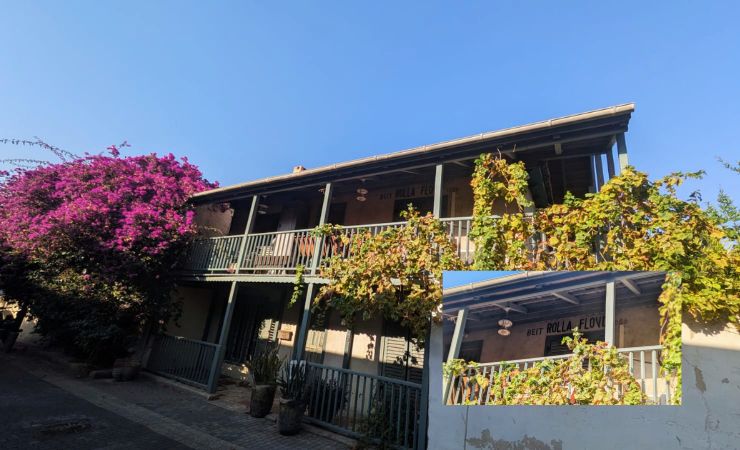
Rolla Floyd arrived on the Nellie Chapin in 1866 and, unlike most of his fellow settlers, chose to stay when the community fell apart around him. Instead of sailing home in defeat, he became Palestine’s first Western tour operator, opening a stagecoach line between Jaffa and Jerusalem in 1869 and building a guiding practice that brought him into the company of former U.S. President Ulysses S. Grant and Kaiser Wilhelm II. His former house still stands at 16 Be’er Hoffman Street.
Hubert Clark, a naturalist connected to Harvard University, used the colony as a base for fieldwork in the early twentieth century, collecting marine specimens along the coast that fed Harvard’s zoological collections, a quiet reminder that the neighborhood drew researchers as well as pilgrims and entrepreneurs.
Theodor Zandel was a leading figure inside the Templer community, known for managing its communal affairs and property in the settlement’s mature years and giving the colony the organizational steadiness the Americans never found.
Baron Plato von Ustinov, grandfather of the actor Peter Ustinov, arrived in the Templer era and turned the property beside the community headquarters into the Hotel du Parc, grand enough to host Kaiser Wilhelm II in 1898. His ornamental garden, planted with help from graduates of the Mikveh Israel Agricultural School, became one of the finest private gardens in Ottoman Palestine. His mix of hospitality, horticulture, and connections gave the colony a prestige that outlasted the Templer community itself.
Inside American-German Colony Jaffa: What to See
The colony is best walked from the southern end of Auerbach Street heading north, where the wooden houses and the stone hotel form a streetscape that has changed remarkably little since the late nineteenth century. It rewards a slow pace, because nearly every facade carries a story, and the whole thing sits within a two-hundred-meter stretch of two parallel streets.
These are the places to slow down for, in the order a visitor walking north would meet them.
Maine Friendship House Museum (10 Auerbach Street) — The best-preserved of the original 1866 American houses, and the only one open to the public. Built for the Wentworth family and prefabricated at the Whitneyville sawmill in Maine, it was facing demolition in 2002 when the American historian Reed Holmes and his wife Jean Carter Holmes, both descendants of the original colonists, stepped in to restore it. The work was finished in 2004 and won the Maine Preservation Award that year, the first time the award went to a project outside New England. Inside are nineteenth-century farming tools, personal belongings of the settlers, a short film, and a wooden board still scratched with the initials of the Wentworth family.
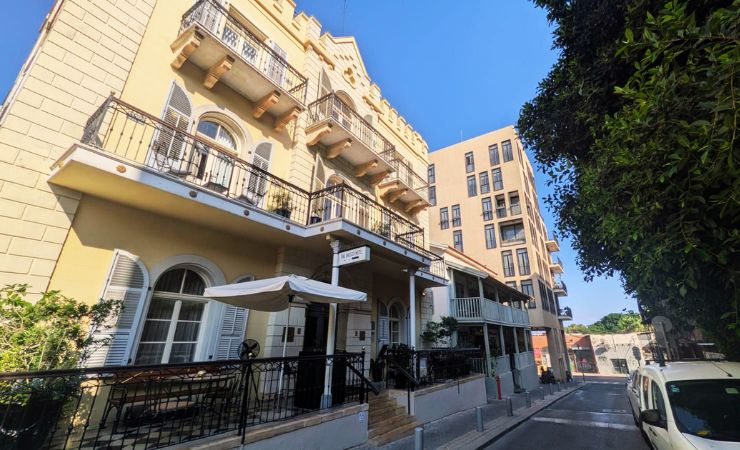
Hotel Drisco, the former Jerusalem Hotel (6 Auerbach Street) — The only stone building the original American colonists managed to raise, put up in 1866 by the brothers John and George Drisco. After the colony collapsed it was bought and renovated by Ernest Hardegg, son of the Templer leader, and run as a luxury hotel from 1870 to 1940, the first hotel built outside Jaffa’s walls. Among its guests was British General Edmund Allenby, who held his victory dinner here in 1918 after the Ottoman surrender of Jerusalem. The building stood deteriorating for decades before an eight-year restoration returned it to use in 2018 as the Hotel Drisco. Its pale stone stands out sharply against the wooden houses on either side.
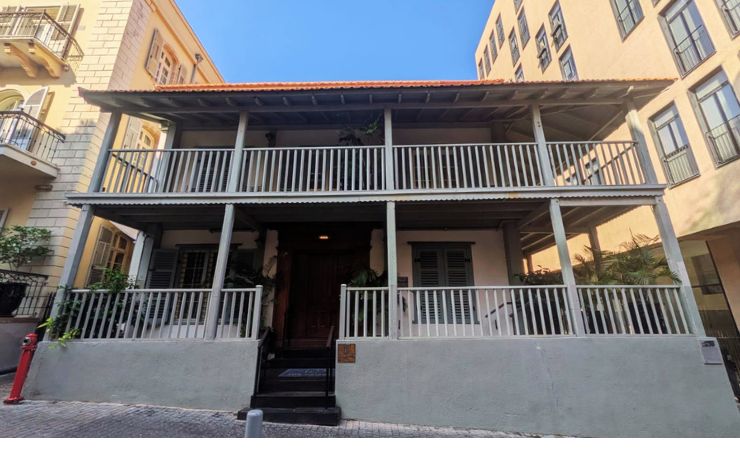
Norton House (4 Auerbach Street) — A two-story wooden house built in 1866 for Captain Ackley Norton, a wealthy ship’s captain who came to Jaffa with his family on the Nellie Chapin. It passed through many hands over the next century: a religious mission in 1926, then from 1954 the home of Maskit, Israel’s first state-sponsored fashion house, founded by Ruth Dayan, and later the celebrated Keren Restaurant. The Norton House is now part of the Hotel Drisco complex and is not open for independent visits, but its clapboard siding and porch columns make its exterior one of the most photographed on the street.
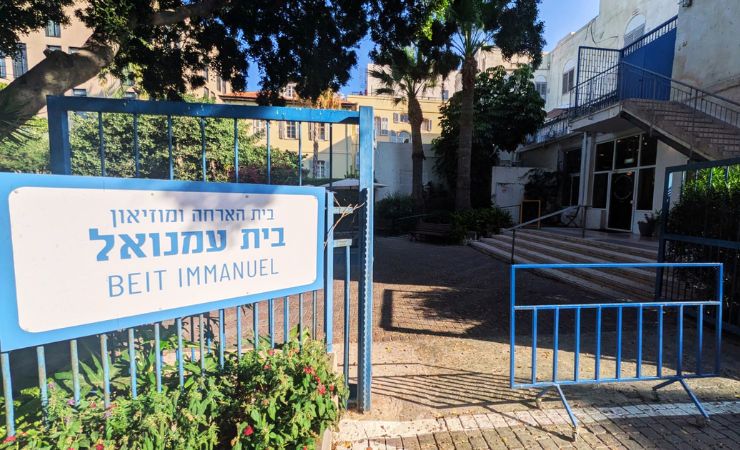
Beit Immanuel Guesthouse and Community Center (8 Auerbach Street) — Built in 1873 as the Tempelstift, this was the Templers’ headquarters, school, and hall, the institutional heart of the German settlement. Baron von Ustinov later took the adjoining property and made it the Hotel du Parc, where Kaiser Wilhelm II and his wife stayed on October 27, 1898. Today the compound runs as a guesthouse and community center, and one room inside is given over to the colony’s history, a useful stop before walking the surrounding streets.
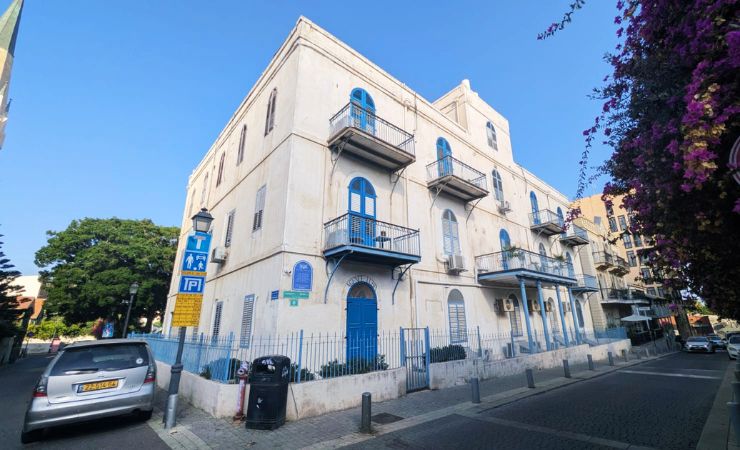
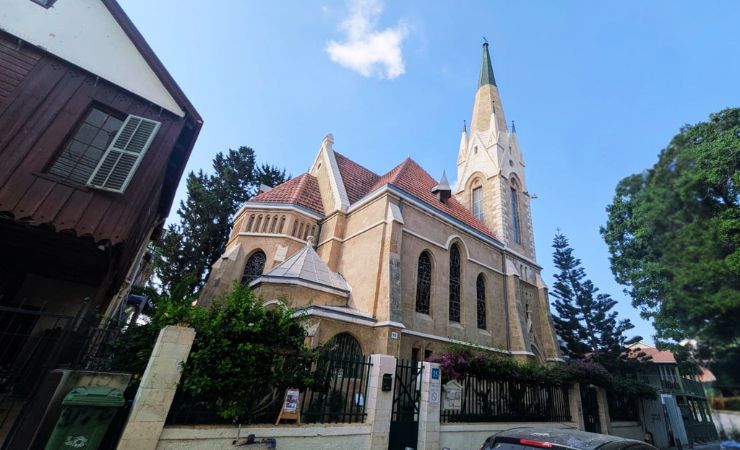
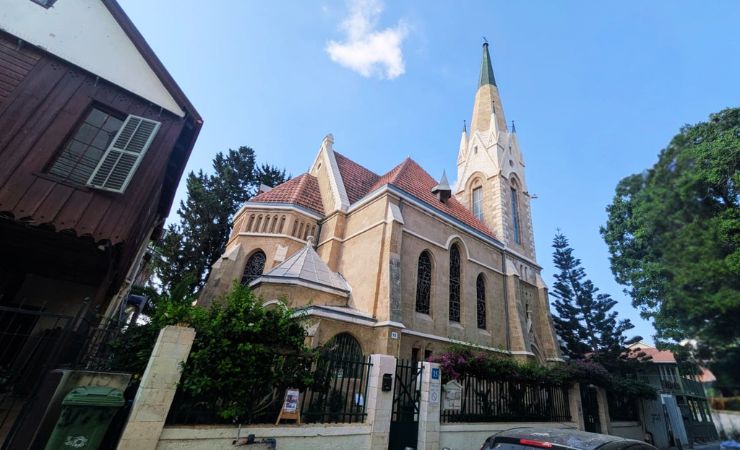
Immanuel Church (15 Be’er Hoffman Street) — The most striking building in the neighborhood, built between 1898 and 1904 in the Neo-Gothic style from local yellow-grey sandstone and Meliki limestone, and inaugurated on June 6, 1904, for the German Evangelical community. Three large stained-glass windows face the street, showing the Crucifixion, the Burning Bush, and Jonah and the Whale, and they catch the afternoon light even when the doors are shut. Inside is a historic pipe organ. The British confiscated the church in 1940 with the other Templer properties, and since 1955 it has been run by the Norwegian Church Ministry to Israel, with several Protestant congregations using it today.
Floyd House (16 Be’er Hoffman Street) — The former home of Rolla Floyd, one of the few American colonists who stayed after the community collapsed and reinvented himself as Palestine’s first Western tour operator. It is a private residence now, but its presence on the street is a tangible link to the unlikely success stories that came out of the colony’s wreckage.
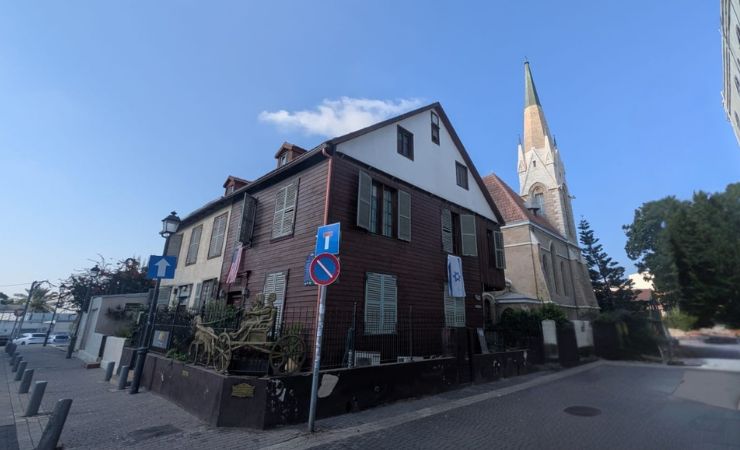
The Surviving Wooden Houses (Auerbach and Be’er Hoffman Streets) — Beyond the named buildings, a cluster of about ten original two-story clapboard houses survives along both streets, most still lived in. Built in the New England style, with symmetrical fronts, covered porches, and simple carved detailing, they were assembled from the same Whitneyville timber that came on the Nellie Chapin. Some have been carefully restored; others keep their weathered original boards, silver-grey with age. Together they form one of the only surviving groups of nineteenth-century American prefabricated architecture outside the United States.
The Baron’s Garden — A surviving remnant of the ornamental garden Baron von Ustinov laid out in the 1870s with help from graduates of the Mikveh Israel Agricultural School. In its prime it was reckoned one of the grandest private gardens in Ottoman Palestine, planted with species gathered from across the world. What remains near the Beit Immanuel compound is a fraction of the original, but its mature specimen trees still give a sense of the ambition the Templer patrons brought to the place.
Visiting American-German Colony Jaffa: Practical Information
The colony sits in the Jaffa district of Tel Aviv-Yafo, on Auerbach and Be’er Hoffman Streets. The streets are freely walkable at any hour and cost nothing to see. The Maine Friendship House Museum are open on rare occasions. The Immanuel Church opens Tuesday to Friday 10:00 to 14:00. The Beit Immanuel history room is open during the guesthouse’s hours, and the Hotel Drisco lobby is accessible to non-guests during business hours.
Additional Information
- American-German Colony Jaffa, official website. Current visitor information for the neighborhood’s sites.
- The Sorry Saga of the American Farmers of Jaffa, Times of Israel. A detailed history by licensed guides Aviva and Shmuel Bar-Am.
- American-German Colony, Wikipedia. Background and a full list of the historic buildings.
What is the American-German Colony Jaffa and why does it have a dual name?
It is a historic neighborhood built outside the walls of Jaffa, founded in September 1866 by 157 American Christian settlers from Maine who named it Adams City after their leader George J. Adams. When the American colony collapsed within about two years, German Templers from Wurttemberg bought the abandoned properties from 1869 and built their own settlement on the same streets. Both phases are preserved in the official Hebrew name, HaMoshava HaAmerika’it-Germanit, which records nearly eighty years of Christian settlement by two very different communities.
Can visitors enter the original wooden American houses?
Most of the surviving 1866 wooden houses are private homes and cannot be entered. The exception is the Maine Friendship House Museum at 10 Auerbach Street, open Fridays 12:00 to 15:00 and Saturdays 14:00 to 16:00, which displays farming tools, settlers’ belongings, a board bearing the Wentworth family’s initials, and a short film. The Norton House at 4 Auerbach Street is part of the Hotel Drisco complex and not independently accessible, though its exterior is fully visible. Every wooden house can be seen and photographed from the public footpath at any time.
What happened to the German Templers who lived in the colony?
During the Second World War, British Mandate authorities identified much of the German Templer community as Nazi sympathizers, interned them, and deported most to Australia or repatriated them to Germany through prisoner exchanges. After Israel was established in 1948, the former Templer secular properties were nationalized. Religious buildings followed different paths: the Immanuel Church, for one, was handed in 1955 to the Norwegian Church Ministry to Israel, which runs it to this day. The Templer community effectively ceased to exist in Palestine after 1948.
Is the Immanuel Church open to tourists, and what is there to see inside?
Yes. The Immanuel Church at 15 Be’er Hoffman Street opens Tuesday to Friday, 10:00 to 14:00. Built between 1898 and 1904 in the Neo-Gothic style from local sandstone and Meliki limestone and inaugurated on June 6, 1904, it holds three large stained-glass windows showing the Crucifixion, the Burning Bush, and Jonah and the Whale, along with a historic pipe organ. Several Protestant congregations use it today. Even outside opening hours the stained glass is partly visible from the street and the stonework rewards a close look.
Did any of the original American colonists stay in Jaffa after the colony failed?
A few did. The most notable was Rolla Floyd, who became Palestine’s first Western tour operator. In 1869 he opened a stagecoach service from Jaffa to Jerusalem, the first regular passenger coach line on that route, and went on to guide famous visitors including former U.S. President Ulysses S. Grant and Kaiser Wilhelm II. His former home survives at 16 Be’er Hoffman Street, now a private residence. His story is a sharp contrast to the collective failure around him, one man’s adaptability where the group had foundered.
How long does it take to visit, and is there an entrance fee?
Walking the streets and seeing the exteriors of the main buildings takes about 45 minutes to an hour. Adding the Maine Friendship House Museum, the Immanuel Church, and the Beit Immanuel history room extends it to two or three hours. There is no fee to walk the neighborhood. The Maine Friendship House charges a small admission, the Immanuel Church is free during opening hours though donations are welcome, and the Hotel Drisco lobby is open to non-guests. The whole colony fits within a short stretch of two streets, so it combines easily with Jaffa’s old city and port, ten to twenty minutes’ walk to the north.
Nearby Sites
- St. Peter’s Church in Jaffa: The landmark Franciscan church overlooking the sea in Old Jaffa, a short walk south.
- Park HaTachana: The restored old Jaffa railway station, now a dining and shopping complex, minutes from the colony.
- Suspended Orange Tree Jaffa: Ran Morin’s living sculpture in the lanes of Old Jaffa, a nod to the Jaffa orange the Templers helped make famous.
- Wishing Bridge Jaffa: The zodiac bridge in the old city, on the way down to the port.
- Tel Aviv Port (Namal): The historic harbor at the city’s northern edge, now a cultural and dining hub.
Keep reading
Part of our Tel Aviv & Jaffa Guide →