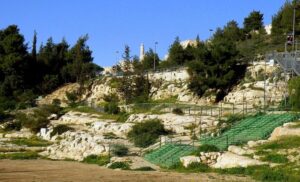
Bet Guvrin features a Roman amphitheater where gladiators once fought and a Crusader citadel built centuries later. Located in the Maresha-Bet Guvrin National Park in the Judean lowlands, the site showcases both Roman entertainment architecture and medieval Crusader fortifications, reflecting its strategic importance across different historical periods.
Bet Guvrin sits at a crossroads of empires. Roman legionaries once filled its amphitheater to watch gladiatorial combat, Byzantine bishops built churches over its ruins, and Crusader knights raised a fortress on the same ancient stones. The Bet Guvrin amphitheater alone is worth the drive, but the Crusader citadel, the Roman bathhouse, and the surrounding cave systems make this one of the most rewarding stops in the Judean lowlands.
Location
Bet Guvrin is part of the Maresha-Bet Guvrin National Park, located along Route 35 in the Judean lowlands, about an hour’s drive southwest of Jerusalem. The site sits roughly 55 kilometers from Jerusalem and about 45 kilometers from Ashkelon.
The History of Bet Guvrin
Bet Guvrin’s history stretches across several eras, revealing layers of Israel’s past that few other single sites can match. Originally known as Eleutheropolis, meaning “City of the Free,” during the Roman era, Bet Guvrin rose to prominence after the destruction of nearby Maresha around 40 BCE. By the 2nd century CE, Emperor Septimius Severus elevated it to the status of a Roman colony, a distinction that brought new public buildings, infrastructure, and settler population to the city. Among those buildings was the Bet Guvrin amphitheater, constructed after the suppression of the Bar Kokhba Revolt (132-135 CE), which could seat around 3,500 spectators and hosted gladiatorial games, public executions, and athletic contests for Roman soldiers and colonists alike. The structure remained in active use until a major earthquake in 363 CE caused significant structural damage.
The city’s prominence continued into the Byzantine period, during which it became a center of Christian worship. Archaeological excavations have uncovered remains of Byzantine churches, including mosaic floors and religious artifacts. By the Crusader era, Bet Guvrin had transformed again. The Crusaders built a fortress here around 1134 and later granted it to the Knights Hospitaller, a military religious order responsible for defending key routes through the Judean lowlands. The Crusaders integrated Roman and Byzantine remains directly into their fortifications, repurposing the amphitheater’s massive stones and the bathhouse complex as part of their citadel walls.
Though the Crusaders lost the fortress in 1187 to Saladin following the catastrophic Battle of Hattin, their modifications remain clearly visible today, offering a rare opportunity to see how successive powers built upon the foundations of their predecessors. After the Crusader period, the region passed to Islamic control, and the settlement, known as Bayt Jibrin, continued to be inhabited until modern times.



What Can be Found at Bet Guvrin?
Excavations led by Israeli archaeologist Amos Kloner in the late 20th century uncovered many of the site’s treasures, including the amphitheater, the citadel, and a Roman bathhouse. Kloner’s work, conducted under the auspices of the Israel Antiquities Authority, brought international attention to the depth and variety of remains preserved at Bet Guvrin, leading eventually to the site’s inscription on the UNESCO World Heritage List in 2014 as part of the Maresha and Bet Guvrin caves complex.
A Roman Legacy: The Amphitheater
The Bet Guvrin amphitheater was constructed in the late 2nd century CE, likely during the reign of Septimius Severus, as part of the broader Romanization of the newly designated colony of Eleutheropolis. The name itself, meaning “City of the Free,” was a deliberate political signal, a reward to the local population that had not joined the Bar Kokhba Revolt against Rome. The amphitheater was the showpiece of that status.
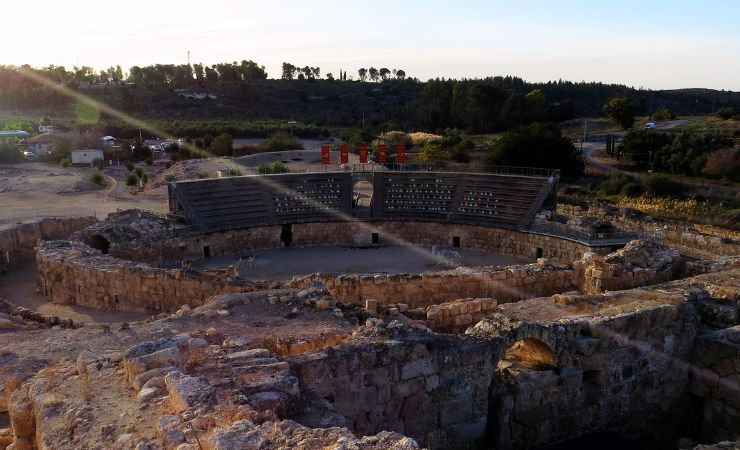
- Architecture: The amphitheater is an oval-shaped structure, typical of Roman design, with rows of stone seats surrounding a central arena. It once held up to 3,500 spectators. Visitors can walk through the vaulted tunnels that gladiators once used to enter the arena floor. Much of the seating and the main entranceways have been restored, allowing visitors to grasp the scale of Roman public entertainment in a provincial city. The cavea, or seating bank, is carved partly into the natural hillside and partly constructed from cut limestone blocks.
- Historical Role: The amphitheater hosted gladiatorial combat, animal hunts known as venationes, and public executions, all standard spectacles of Roman civic life. These events were both for entertainment as well as political instruments that reinforced Roman authority and demonstrated the empire’s reach to soldiers and colonists settled in this frontier region. The structure fell into disuse after the earthquake of 363 CE, but its walls remained largely standing, which is why the Crusaders found so much material ready to reuse centuries later.
The Crusader Citadel
When the Crusaders arrived in the 12th century, the ruined amphitheater and surrounding bathhouse complex offered ready-cut stone and pre-existing walls on an elevated, defensible position overlooking the Judean lowlands. The fortress built here around 1134, later handed to the Knights Hospitaller, controlled the road between the coast and Hebron, a route critical for both commerce and military movement during the Kingdom of Jerusalem.
- Crusader Architecture: The citadel features thick ashlar walls, some rising several meters, along with the bases of corner towers that once anchored the defensive perimeter. The Crusaders incorporated Roman arches, repurposed bathhouse chambers as storage and stabling, and built their own church on the site, traces of which remain visible in the masonry.
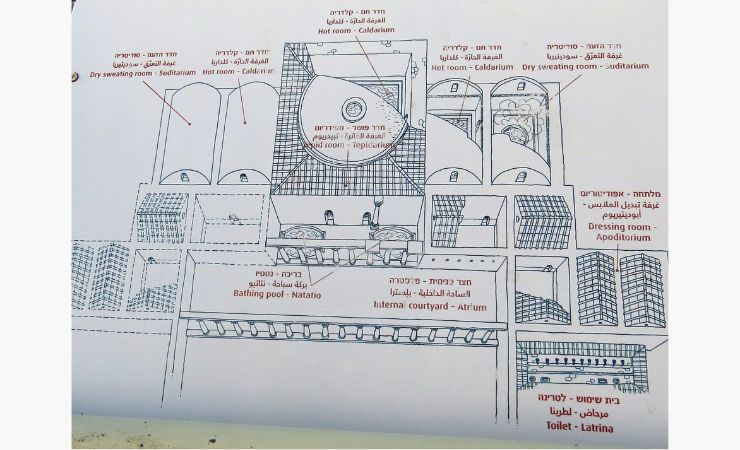
- Roman bathhouse: Integrated into the Crusader citadel, the bathhouse complex reveals both Roman public bathing culture and medieval fortification techniques in a single structure. Remnants of the hypocaust, the underfloor heating system, are still visible in sections of the floor.
- Defending the Lowlands: From this citadel, the Knights Hospitaller controlled a large portion of the Judean lowlands, crucial for trade and military defense. The fortress changed hands multiple times during the turbulent decades of Crusader-Ayyubid conflict before Saladin took it permanently in 1187. The Crusaders’ failure to hold Bet Guvrin reflected the broader collapse of the Kingdom of Jerusalem after the Battle of Hattin that same year.
Practical Information
Maresha-Bet Guvrin National Park is managed by the Israel Nature and Parks Authority. The park is generally open Sunday through Thursday from 8:00 a.m. to 5:00 p.m., and Friday and holiday eves from 8:00 a.m. to 4:00 p.m. Hours extend to 6:00 p.m. between April and September.
Parking is free at the main park entrance off Route 35.
2026 Update: Admission prices and opening hours at Israel Nature and Parks Authority sites are reviewed periodically. Confirm current entry fees and seasonal hours directly with the park before your visit, as figures listed here may no longer reflect current rates.
Additional Information
What is the Bet Guvrin amphitheater and why is it significant?
The Bet Guvrin amphitheater is a Roman-era oval arena built in the late 2nd century CE in the city then known as Eleutheropolis. It could seat approximately 3,500 spectators and hosted gladiatorial combat, animal hunts, and public spectacles. It is one of the few reasonably preserved Roman amphitheaters in Israel and offers visitors a tangible sense of provincial Roman civic life.
How old is the Bet Guvrin amphitheater?
The amphitheater dates to roughly 200 CE, constructed during or shortly after the reign of Emperor Septimius Severus. It was built following the Bar Kokhba Revolt of 132-135 CE, when Rome reorganized this region and elevated Bet Guvrin to colonial status. The structure was in active use for about 160 years before the 363 CE earthquake caused serious damage.
Can you go inside the amphitheater at Bet Guvrin?
Yes. Visitors can walk down into the arena floor and pass through the vaulted access tunnels that gladiators once used to enter the ring. Seating sections and entranceways have been partially restored, making it one of the more accessible and atmospheric ancient structures in the Judean lowlands.
Is Bet Guvrin a UNESCO World Heritage Site?
Yes. The caves of Maresha and Bet Guvrin were inscribed on the UNESCO World Heritage List in 2014. The designation covers the extraordinary underground cave complex carved into the soft chalk bedrock, including the Bell Caves, columbarium caves, and Sidonian burial chambers, alongside the above-ground Roman and Crusader remains.
How long does it take to visit Bet Guvrin?
A visit covering the amphitheater, the Crusader citadel, and a selection of caves typically takes two to three hours. Visitors who want to explore the Bell Caves, the Sidonian burial caves, and Tel Maresha on the same trip should allow a full half-day, or four to five hours. The site involves a fair amount of walking on uneven ground.
Nearby Sites
- Columbarium Caves (Tel Maresha): Unique underground caves used for breeding pigeons during the Hellenistic period, with hundreds of niches carved into the rock.
- Bell Caves: A vast network of enormous limestone caves with stunning acoustics, used historically for quarrying.
- Sidonian Burial Caves: Painted burial chambers adorned with frescoes, featuring figures from mythology and vibrant animal motifs.
- Tel Maresha: An ancient city that offers a deeper dive into Israel’s biblical and Hellenistic history, located nearby within the national park.
Keep reading
Part of our Shephelah & Central Israel Guide →