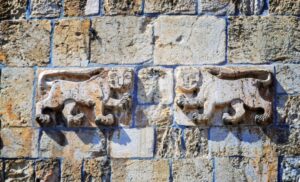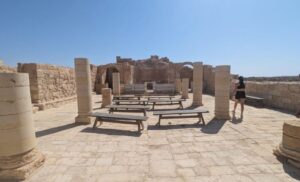
Israel preserves 12 significant Crusader fortifications from the medieval period when European knights controlled the Holy Land. These stone castles and fortresses, built between the 11th and 13th centuries, stand across the country from coastal cities to inland valleys. Visitors can explore well-preserved sites including massive defensive walls, vaulted halls, and strategic battlements that reveal Crusader military architecture and their campaign to control pilgrimage routes to Jerusalem.
Israel preserves 12 significant Crusader fortifications built between the 11th and 13th centuries, when European knights controlled the Holy Land from coastal cities to inland valleys. These castles, massive in scale, sophisticated in engineering, stretch from the sea-facing walls of Atlit to the ridge-top ruins of Montfort, and every one of them is open to visitors today.
What Are the Most Important Castles in Israel?
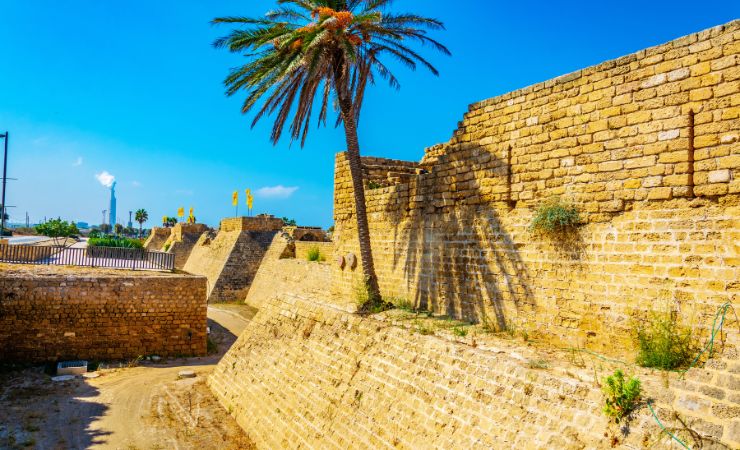
The 12 most significant castles in Israel span the full length of the country. They include Knights Hospitaller headquarters (Acre, Belvoir, Apollonia), Teutonic Knight strongholds (Montfort), Templar fortresses (Château Pèlerin, Safed), Ayyubid-Crusader hybrid sites (Nimrod), and fortified churches and urban citadels (Tower of David, Abu Gosh). Each site dates from the Crusader period, roughly 1099 to 1291 CE.
Knights Hall in Acre: Where the Crusaders Ruled
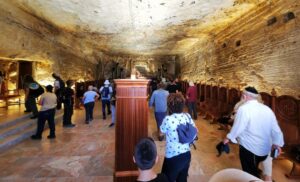
Acre served as the capital of the Crusader Kingdom of Jerusalem from 1191 to 1291, and the Knights Hospitaller headquarters here is the most intact Crusader complex in the country. Walking into the Columns Hall, you hear your own footsteps echo off ribbed stone vaults that rise 8 meters overhead, the same vaulting the knights ate beneath in the 13th century.
The complex contains several distinct halls. The Pillars Hall doubled as a conference room for military planning and a weapons depot. The Columns Hall, the knights’ formal dining room, shows the architectural shift from Romanesque to Gothic through its pointed arches and massive pillars.
Excavations have exposed an advanced sewage system considered revolutionary for the period, along with chambers that sit up to 8 meters below the current street level. The complex functioned as a self-contained city, living quarters, chapels, workshops, and administrative offices, until Mamluk forces under Sultan Al-Ashraf Khalil captured Acre in 1291, ending nearly two centuries of Crusader rule.
The Safed Citadel: The Remains of a Massive Structure
The Knights Templar built this fortress in 1140 on Safed’s highest hill, 900 meters above sea level, to control trade routes between Damascus and the Mediterranean coast. Three concentric walls with towers at regular intervals created overlapping fields of fire that made the site nearly impossible to storm.
Historical records indicate the citadel housed up to 1,700 men during wartime. It withstood Saladin’s initial assault in 1188 before eventually falling to a prolonged siege. Recent archaeological surveys have found evidence of a scriptorium where manuscripts were copied and illuminated, confirming the site’s role as a major administrative center.
The 1837 Galilee earthquake destroyed much of the medieval structure, but the ruins within Citadel Park still reveal the great hall’s foundations, the gatehouse complex, and observation points with sweeping views across northern Israel, southern Lebanon, and the Golan Heights.
Château Pèlerin (Atlit Castle): The Last Crusader Stronghold
Construction of Château Pèlerin began in 1218 under the Knights Templar during the Fifth Crusade. Built on a narrow promontory over the Mediterranean, the fortress featured a land-facing wall 15 meters high and 6 meters thick, punctuated by three enormous rectangular towers, you can still gauge the scale by standing at their base and looking up.
The fortress could hold 4,000 troops during a siege, supplied by underground cisterns, extensive storerooms, and a protected harbor. The Templars relocated their main treasury here from Jerusalem, making Atlit both a military base and a financial center.
Château Pèlerin holds the distinction of being the last major Crusader stronghold to fall, surrendering to Mamluk forces in August 1291, three months after Acre. Unlike most Crusader fortifications, which were systematically demolished, the site remained largely intact until the 1837 earthquake damaged some structures.
Montfort Castle: Built by the Teutonic Knights
Montfort sits on a narrow limestone ridge inside the Nahal Kziv nature reserve, 300 meters above the surrounding valleys. The Teutonic Knights purchased the site from French nobles in 1229 and made it their primary headquarters and administrative center outside Europe. The name translates to “strong mountain,” which earns its meaning the moment you see the intact keep walls rising from the ridge.
Unlike most Crusader fortifications designed for combat, Montfort functioned primarily as an archive, treasury, and bureaucratic hub. The two-story main structure of finely cut limestone blocks contained administrative offices, a scriptorium, and secure vaults for the order’s financial records. German engineering precision is visible in the elongated central hall and tight masonry joints.
Montfort faced multiple sieges despite its civilian purpose, finally falling to Mamluk forces in 1271, twenty years before the last Crusader expulsion. Carved stone details including heraldic designs survive in the ruins, and a challenging hiking trail through the nature reserve approaches the castle from below with views across the Upper Galilee.
Nimrod Fortress: Israel's Largest Medieval Castle
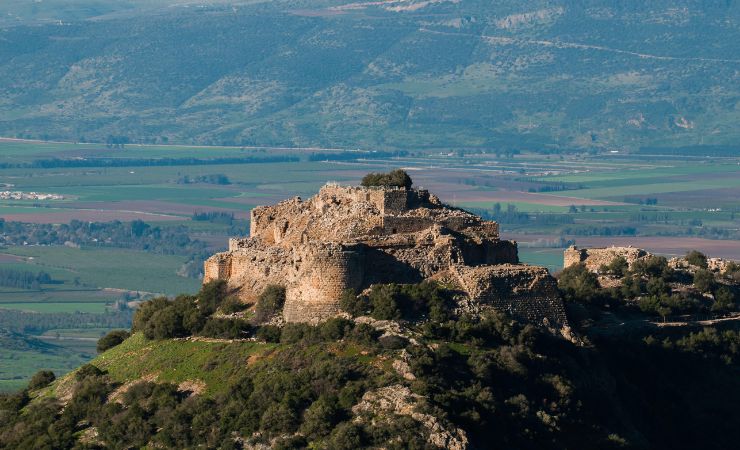
Nimrod Fortress, known to Arab chroniclers as Qal’at al-Subeiba, is the largest and most complex medieval fortification in Israel. Located on the slopes of Mount Hermon at 800 meters elevation, the stronghold began as an Ayyubid fortress around 1228 before incorporating significant Crusader architectural elements during the 13th century. The fortress commands views from the Mediterranean Sea to the Jordan Valley, encompassing northern Israel, southern Lebanon, and the Golan Heights, the exact strategic field of vision that made controlling this ridge so valuable across centuries.
The fortress extends 420 meters along a steep ridge, protected by walls up to 6 meters thick and towers reaching 20 meters in height. Crusader-built sections are identifiable by their carefully fitted ashlar stones and pointed arches, distinct from Ayyubid and Mamluk construction phases. The central keep is accessible through a hidden entrance tunnel carved through solid rock. The tunnel features multiple defensive positions and a complex ventilation system, demonstrating medieval military engineering at its most inventive. Nimrod Fortress has multiple cisterns and an ingenious collection network channeled rainwater from the fortress’s vast roof areas, sustaining garrisons through extended sieges without relying on external sources.
The Nimrod Fortress is manages by the Israeli National Park Authority.
Read our complete article about Nimrod Fortress
Belvoir Castle: The Most Sophisticated Concentric Design
Belvoir Fortress (Jordan Star National Park) commands the Jordan Valley from its strategic perch 500 meters above the river, earning its French name meaning “beautiful view.” The Knights Hospitaller constructed this masterpiece of concentric castle design between 1168 and 1189, creating one of the most sophisticated defensive complexes in the medieval world. The fortress protected the vital Jordan River crossing at Jisr al-Majami, controlling access between the Crusader territories and the Muslim lands beyond.
The castle’s innovative design featured two complete defensive circuits. The outer walls enclosed a rectangular area with towers at each corner and midpoint, while the inner citadel formed a perfect square with its own towers and keep. Between these walls lay a dry moat carved from solid rock, creating an additional barrier against siege engines.
Archaeological excavations have revealed the fortress’s sophisticated infrastructure. Underground cisterns collected and stored rainwater, while extensive storage chambers held supplies for prolonged sieges. The great hall could accommodate the entire garrison for meals and assemblies, with private chambers for the knights and dormitories for sergeants and servants.
Saladin’s forces besieged Belvoir for 18 months before its fall in January 1189.
The ruins visible today, managed by the Israel Nature and Parks Authority, preserve Belvoir’s essential layout.
Read complete article about the Belvoir Castle
Apollonia (Arsuf): A Coastal Fortress Above the Cliffs
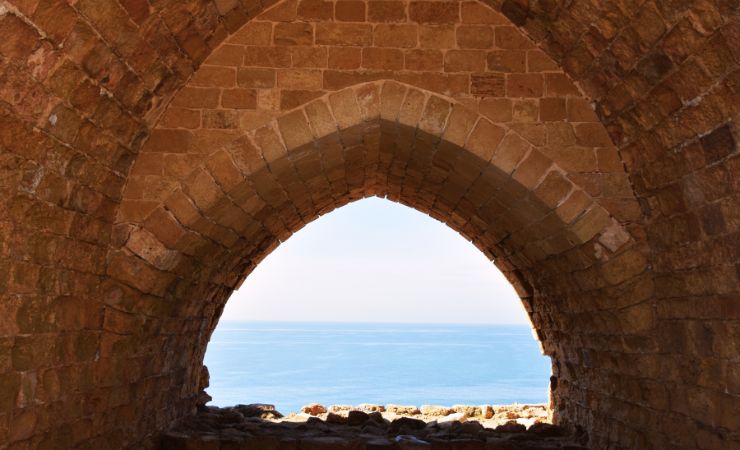
Baldwin I captured the ancient coastal city of Apollonia in 1101, and the Knights Hospitaller assumed control in 1241, immediately building one of the most formidable coastal fortresses in the Holy Land. The site rises 40 meters directly above the Mediterranean on a natural clifftop, standing at the seaward wall, you feel the spray before you see the water below.
The Hospitallers created a triple defensive system: an outer wall with semi-circular towers, a middle fortification with the main gatehouse, and an inner keep facing the sea. A deep moat carved through solid sandstone separated the fortress from the mainland approach.
The great hall measured 30 by 15 meters, supported by massive stone pillars, while a protected stairway descended the cliff face to a small harbor where supply ships could dock during sieges. Baibars arrived in March 1265 with siege engines and a large army; after a 40-day siege, Mamluk forces breached the outer walls. Baibars ordered complete demolition, leaving only foundations and lower wall sections. Apollonia National Park preserves these ruins alongside Roman and Byzantine remains on walking trails along the Mediterranean cliffs. The park also protects important archaeological remains from Roman and Byzantine periods, creating a complete historical landscape.
Antipatris (Tel Afek): A Crossroads Castle
Herod the Great established Antipatris around 9 BCE at the headwaters of the Yarkon River, naming the city for his father Antipater. The location sat at the junction of the coastal road and the inland route connecting Jaffa to Jerusalem, making it one of the most strategically useful points on the coastal plain. Armies, merchants, and pilgrims had been passing through this chokepoint for centuries before the Crusaders arrived.
Baldwin I recognized that value and built a Crusader stronghold here around 1110, constructing directly on top of Roman and Byzantine foundations that were already visible above ground. During the Crusader period the site carried the name “Surdi Fontes,” meaning Silent Springs, a reference to the Yarkon headwaters that made the location viable as a permanent military post. The water supply meant a garrison could hold the position through a dry summer without relying on resupply convoys.
Excavations at Tel Afek have uncovered the plan of the Crusader fortress in considerable detail. The structure followed a rectangular layout with corner towers, a design consistent with other Crusader fortifications of the early 12th century. Builders worked efficiently by incorporating reused Roman and Byzantine stones into the new walls, which employed the standard Crusader construction method of a rubble-and-mortar core faced with dressed stone blocks. The facing stones were cut to uniform dimensions and laid in regular courses, giving the walls both structural strength and a finished appearance.
Migdal Tzedek (Mirabel): Guardian of the Ayalon Valley
The Crusaders established Mirabel around 1140 to guard the road from Jaffa through the Ayalon Valley toward the Judean hills, 20 kilometers northeast of contemporary Tel Aviv. Its Hebrew name, Migdal Tzedek, means “Tower of Justice.”
The Knights Hospitaller built a rectangular fortress with massive walls, corner towers, and a three-story central keep of local limestone containing the garrison commander’s quarters, a chapel, and administrative offices. Mirabel served as a rallying point and supply depot for Christian forces during the crisis before the Battle of Hattin in 1187. Following that defeat, Saladin’s army captured the site along with most other Crusader strongholds.
Mamluk and Ottoman administrators subsequently maintained and modified the fortifications, adding new structures over existing walls. The resulting archaeological landscape shows how a successful medieval fortress evolved through multiple occupying powers rather than being abandoned after its original builders’ defeat.
The Crusader Church in Ramla: A Mosque Built on a Cathedral
The Cathedral of St. John the Baptist in Ramla, constructed in the mid-12th century, is one of the best-preserved examples of Crusader church architecture in Israel. It served the Latin Christian community in an important administrative center of the Crusader Kingdom of Jerusalem.
After the Mamluk conquest of Ramla in 1266, Sultan Baibars converted the cathedral into the Great Mosque in 1268. The conversion required minimal structural changes: a mihrab was inserted into the southern wall, a wooden minbar installed for the imam, and in 1318 a minaret added to complete the mosque’s Islamic identity. The building is known today as Al-Omari Mosque.
The Gothic arches and stone masonry remain unchanged, creating a rare synthesis of Western medieval and Middle Eastern religious architecture. Israel Antiquities Authority excavations have revealed details of the original church construction beneath layers of Islamic modification.
Church of the Resurrection, Abu Gosh: The Finest Surviving Frescoes
The Knights Hospitaller constructed the Church of the Resurrection in Abu Gosh around 1140, creating one of the finest examples of Crusader architecture surviving in the Holy Land. Built on the foundations of a Roman water reservoir and an Abbasid-period caravansarai, the church demonstrates how Crusader builders adapted existing structures to serve Christian worship. The site’s historical association with the biblical town of Emmaus made it particularly significant for medieval pilgrims.
The church’s greatest treasures are its remarkable 12th-century frescoes, among the best-preserved Crusader wall paintings in existence. Created around 1170 by unknown artists, these paintings cover extensive wall surfaces with scenes from Christian iconography. The frescoes demonstrate sophisticated artistic techniques and European stylistic influences adapted to local conditions and materials. Pigments have survived eight centuries due to the building’s excellent preservation and relatively stable environmental conditions.
Following Saladin’s conquest of the region, the church remarkably escaped destruction, unlike many other Crusader religious sites. Local Muslim communities apparently respected the building’s sacred character, allowing it to remain substantially intact through centuries of changing political control. French Benedictine monks acquired the site in 1899 and began careful restoration work that continues today.
Tower of David: Jerusalem's Citadel
The Tower of David, Jerusalem’s citadel near the Jaffa Gate, occupies one of the city’s highest strategic points. Although the visible fortress dates primarily to Mamluk and Ottoman construction, significant Crusader foundations and structures are embedded within the complex. The Crusaders extensively fortified this site during their occupation of Jerusalem from 1099 to 1187.
Crusader-period sections are identifiable by characteristic marginal-drafted ashlar stones, pointed arches, and robust corner towers designed to withstand siege engines. The Tower of David Museum presents Jerusalem’s complete historical narrative, including extensive coverage of the Crusader period through interactive displays, archaeological artifacts, and multimedia presentations. A night spectacular projects images onto the ancient walls, bringing the medieval layers of the site to life after dark.
The Tomb of the Virgin Mary, Jerusalem: Going Underground
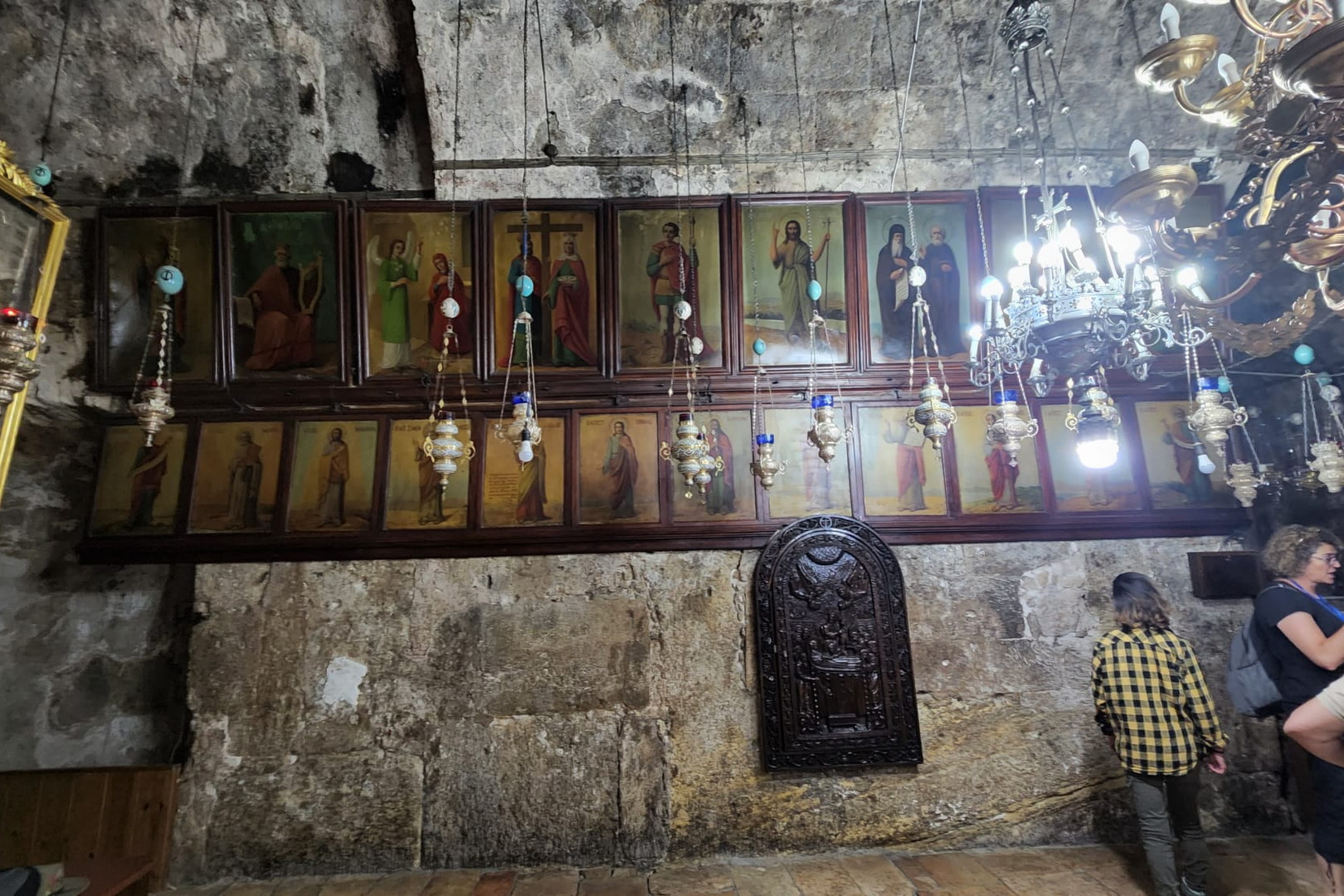
The Crusader Church of the Assumption, built over the traditional site of Mary’s Tomb in the Kidron Valley just north of Gethsemane, was one of the most ambitious ecclesiastical projects of the 12th century. The Crusaders began construction around 1130, creating a two-level complex: an upper church over Byzantine ruins and a lower church containing the venerated tomb chamber.
The upper church followed a circular plan approximately 50 meters in diameter, with massive stone pillars supporting a domed roof incorporating Romanesque and early Gothic elements. A wide descending staircase, part of the Crusader construction, leads to the crypt where Mary’s body is believed to have been laid. The crypt is designed in a cruciform shape with uneven arms, a distinctive feature still visible today.
St. Anne's Church, Jerusalem: Best-Preserved Crusader Church in the City
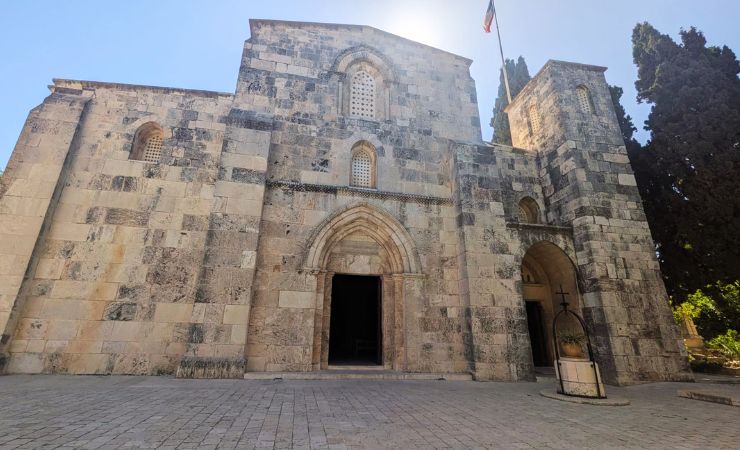
St. Anne’s Church, near the Lions’ Gate in the Muslim Quarter, is the best-preserved Crusader church in Jerusalem. Built between 1131 and 1138 during the reign of Queen Melisende, the church stands on the site traditionally believed to be the birthplace of the Virgin Mary, close to the Pools of Bethesda where, according to the Gospel of John, Jesus healed a paralytic.
The building is a strong example of Romanesque architecture: thick walls, a basilica layout with three aisles, cross-vaulted ceilings, and an intentionally austere interior. Mismatched columns and differently sized windows give the design a subtle asymmetry. The high altar, crafted by French sculptor Philippe Kaeppelin, depicts scenes from the life of the Virgin Mary.
When Saladin took Jerusalem in 1187, he converted the church into a madrasa called Al-Madrasa As-Salahiyya rather than demolishing it. An Arabic inscription above the main entrance still commemorates that conversion. Today the church is administered by the White Fathers, a Catholic missionary order, and is renowned for acoustics that draw choirs from around the world.
The Cenacle (Room of the Last Supper), Jerusalem
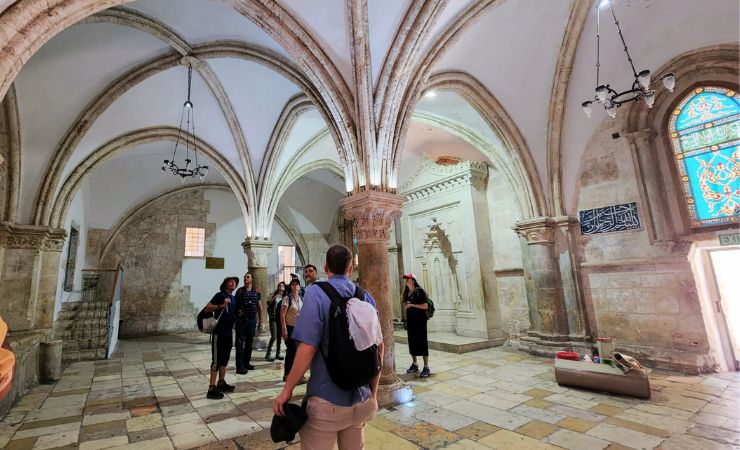
The Cenacle, also known as the Upper Room, is traditionally held to be the site of the Last Supper. Located on Mount Zion in Jerusalem, just outside the medieval Old City walls, this room has undergone numerous cycles of destruction and reconstruction, culminating in the structure that stands today. Here’s what can be found from the time of the Crusaders:
The current building that houses the Cenacle is of medieval date. This means that while the site itself is ancient and associated with the Last Supper, the actual structure that visitors see today has its origins in the medieval period, which includes the time of the Crusaders.
The building’s foundation is a remnant of Hagia Zion, a church that existed during the Crusader period. This foundational element is a testament to the various religious structures that have occupied this site over the centuries.
The Cenacle stands tall on Mount Zion, nesting above what is traditionally considered David’s tomb. This location is significant because the only specific information we have from the Last Supper accounts is that Jesus and his apostles secured a large furnished space, the upper room of an unnamed householder in Jerusalem.
The building has experienced numerous cycles of destruction and reconstruction, with the current structure being of medieval origin, which aligns with the time of the Crusaders.
The general location of the Cenacle is also associated with the house where the Virgin Mary lived among the apostles until her death or dormition, an event celebrated in the nearby Church of the Dormition.
Pilgrims have reported visiting a structure on Mount Zion commemorating the Last Supper since the 4th century AD. Some scholars believe that this was the Cenacle, which might have been a synagogue from an earlier time. The building’s foundation is a remnant of Hagia Zion, which was originally built as a church and later repurposed during the Crusader period.
The “Tomb of King David” is located on the lower level of the same building. This niche is traditionally associated with the burial site of King David, marked by a large cenotaph-sarcophagus first reported by 12th-century Crusaders.
The Church of the Holy Sepulchre, Jerusalem: 12th Century Renovations
The Church of the Holy Sepulchre in the Christian Quarter of the Old City of Jerusalem is considered the holiest site in Christianity and has drawn pilgrims since the 4th century. The Crusaders undertook a major renovation during the 12th century, and that work is largely what visitors see today.
Here are some of the structures and features from the time of the Crusaders that can be found in the Church of the Holy Sepulchre:
Crusader Renovation: The church underwent significant changes during the reign of the Crusader kings in the 12th century. This renovation has largely stood the test of time and is what visitors predominantly see today.
Crusader Campanile (bell tower): This bell tower was constructed during the Crusader period and is a prominent feature of the church.
Crusader Patriarchate: This was the seat of the Roman Catholic patriarch during the Crusader period.
Ruins of the Crusader Arcade: Remnants of an arcade built during the Crusader era can still be seen.
Chapel of the Franks (10th Station of the Cross): This chapel is associated with the Crusader period.
Greek Calvary (12th–13th Stations of the Cross): This area of the church, associated with the final stations of the Cross, has elements from the Crusader period.
Latin Calvary (11th Station of the Cross): Another area associated with the Crucifixion and the Crusader era.
Chapel of the Angels, Chapel of St. Michael, Chapel of St. Mary of Egypt, Chapel of St. Thecla, Chapel of St. James the Less, Chapel of Forty Martyrs, Chapel of St. Helena, and several others: These chapels within the church complex have elements or were influenced by the Crusader period.
The Church of the Holy Sepulchre is a complex structure with a rich history, and the Crusader period left a significant mark on its architecture and layout. The Crusaders made substantial changes to the church, many of which are still visible and form an integral part of the church’s character today.
Read more about the Church of the Holy Sepulcher
Additional Information
Is there a Crusader castle in Israel?
Yes. Israel has 12 significant Crusader castles and fortresses built between 1099 and 1291 CE. Key sites include Belvoir, Montfort, Château Pèlerin (Atlit), Nimrod Fortress, and the Knights Hall in Acre. All are open to visitors today.
Which is the best-preserved Crusader castle to visit in Israel?
The Knights’ Hall in Acre (Akko) is widely considered the best-preserved Crusader site. Visitors can explore massive underground halls, dining rooms, and advanced medieval sewage systems that remained intact for centuries beneath the modern city. The Church of Saint Anne in Jerusalem is also remarkably well-preserved, having survived the Mamluk conquest nearly perfectly.
What is the largest Crusader fortress in Israel?
Nimrod Fortress, located on the slopes of Mount Hermon, is the largest medieval castle in the region. While it incorporates significant Ayyubid and Mamluk construction, its scale and strategic position overlooking the Golan Heights make it a premier example of 13th-century military engineering.
Why were Crusader castles in Israel built with concentric walls?
Castles like Belvoir utilized a “concentric” design—a castle within a castle—to provide multiple layers of defense. This innovative architecture allowed defenders to retreat to an inner citadel if the outer walls were breached. This style was so effective it was later copied by military architects throughout Europe.
Are there any Crusader ruins located near Tel Aviv?
Yes, Apollonia National Park (Arsuf) is located just north of Tel Aviv in Herzliya. It features a clifftop Crusader fortress with a dramatic view of the Mediterranean. Additionally, Antipatris (Tel Afek) and Migdal Tzedek (Mirabel) are located within a short drive of the Tel Aviv metropolitan area.
How did the Crusaders influence the architecture of Jerusalem?
The Crusaders left a significant mark on Jerusalem’s most holy sites. The current structure of the Church of the Holy Sepulchre is largely the result of a 12th-century Crusader renovation. They also built St. Anne’s Church, the Church of the Resurrection in Abu Gosh, and established the foundations of the Tower of David citadel.
Keep reading
Part of our Negev & Southern Israel Guide →