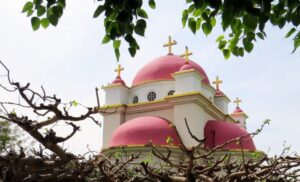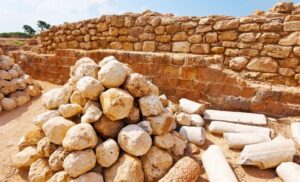
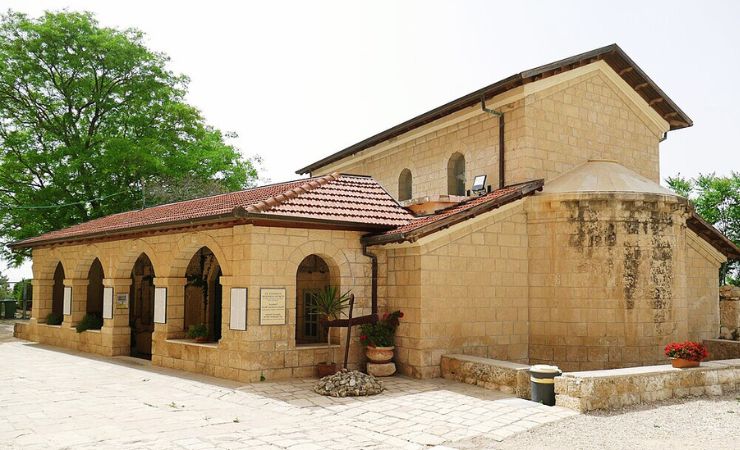
Beit Jamal Monastery is a Catholic monastery located in the Judean Hills near Jerusalem, built over the traditional site where St. Stephen's remains were discovered in 415 CE. The monastery sits on land associated with Rabbi Gamaliel and features a beautiful church, peaceful gardens, and serves as a spiritual retreat center run by the Salesian order.
Beit Jamal Monastery, operated by the Salesian Order, preserves the memory of St. Stephen, Christianity’s first martyr, whose remains were discovered here in the early 5th century. The site also honors Rabbi Gamaliel the Elder, Paul the Apostle’s teacher and a leading figure in first-century Judaism. Archaeological evidence, including Byzantine mosaics and inscribed stones, supports the monastery’s claims to house one of Christianity’s most sacred burial sites.
Location
Beit Jamal Monastery sits in the Judean Hills approximately 30 kilometers west of Jerusalem, near the modern town of Beit Shemesh. The site occupies a terraced hillside at 350 meters above sea level, offering panoramic views across the Elah Valley, the same valley where, according to the biblical account, David faced Goliath. Visitors can reach the monastery via Route 38, turning off just south of Beit Shemesh.
Beit Jamal's History
The roots of Beit Jamal Monastery extend back to the Byzantine period, when Christian monasticism flourished across the Holy Land. Archaeological evidence suggests that the first monastic community established itself here in the 5th century, following the dramatic discovery of St. Stephen’s remains. The site originally bore the name Kfar Gamala, derived from Rabbi Gamaliel, whose burial here predated the Christian settlement by several centuries.
The Islamic conquest of 638 CE brought initial tolerance, but subsequent periods saw abandonment and destruction. Crusaders later restored some structures, only to see them fall again during the Mamluk period. For centuries, the site lay largely forgotten, known only to local communities and occasional pilgrims who maintained oral traditions about its sacred history.
Modern revival came in 1878 when the Salesian Order, founded by St. John Bosco, purchased the property from the Ottoman authorities. The Salesians immediately began excavations while establishing an agricultural school that provided vocational training to local youth, a mission consistent with the Order’s founding principles. Their most significant discovery occurred in 1915 when excavations revealed the foundations of a Byzantine basilica beneath accumulated debris. The church’s mosaic floor bore a crucial Greek inscription reading “The Most famous and holy God, Stephanus,” providing tangible evidence for the site’s connection to Christianity’s first martyr. The Salesians completed the current Church of St. Stephen in 1930, building directly over the Byzantine foundations so that the ancient and modern layers of devotion occupy the same ground.
Connection to St. Stephen and Rabbi Gamaliel
The story of St. Stephen’s association with Beit Jamal begins with one of early Christianity’s most dramatic discoveries. In 415 CE, a priest named Lucian received a vision directing him to a burial site where the remains of Stephen, who became Christianity’s first martyr after his stoning recorded in Acts 6 and 7, lay hidden for nearly four centuries. Contemporary accounts by church historians Sozomen and Theodoret describe the discovery as causing widespread excitement throughout the Byzantine world. Relics were distributed to churches across the empire, including to Augustine of Hippo, who wrote of miraculous healings attributed to Stephen’s bones. The original burial site at Kfar Gamala remained a pilgrimage destination even as relics traveled far beyond it.
Rabbi Gamaliel the Elder’s connection to this location predates the Christian presence by several decades. Born around 15 CE, Gamaliel served as Nasi (president) of the Sanhedrin and belonged to the house of Hillel, one of Judaism’s most influential rabbinic dynasties. His moderate approach toward early Christians appears in Acts 5:34-39, where he counseled the Sanhedrin: “Leave these men alone. Let them go. For if their purpose or activity is of human origin, it will fail. But if it is from God, you will not be able to stop these men.” This measured counsel likely reflected both his legal temperament and his familiarity with movements that challenged established religious authority, including through his student Saul of Tarsus, later known as Paul the Apostle.
Paul’s reference to his education under Gamaliel in Acts 22:3 highlights the rabbi’s profound influence on early Christianity: “I am a Jew, born in Tarsus of Cilicia, but brought up in this city. I studied under Gamaliel and was thoroughly trained in the law of our ancestors.” The archaeological record at Beit Jamal supports these connections through Hebrew and Greek inscriptions found in ancient burial chambers, suggesting the site served as a cemetery for prominent Jewish figures before becoming a Christian pilgrimage center. The discovery of a stone lintel inscribed with “DIAKONIKON STEPHANOU PROTOMARTYROS” provides physical evidence that the Land of Israel and Christian traditions converged at this remarkable location.
What Can Be Found at the Site
Beit Jamal Monastery offers visitors a unique blend of archaeological treasures, religious architecture, and monastic life that spans nearly two millennia:
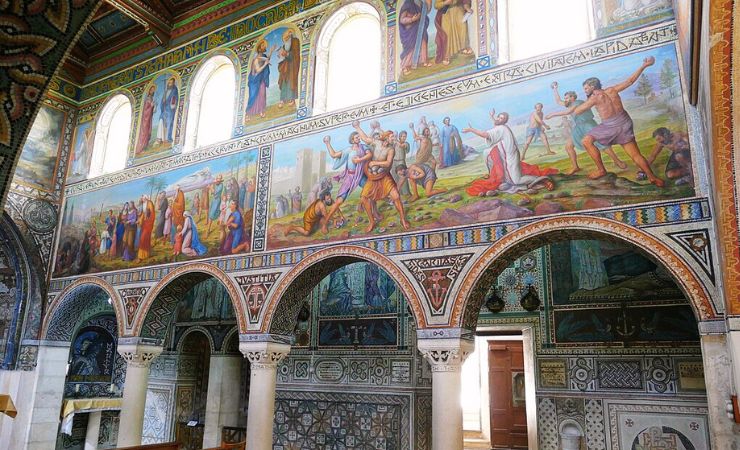
- Church of St. Stephen: Completed in 1930 over the foundations of the 5th-century Byzantine basilica, this neo-Romanesque church showcases the architectural vision of Swiss Benedictine monk Maurizio Gisler from Jerusalem’s Dormition Abbey. The interior features stunning mosaics depicting scenes from Stephen’s martyrdom as recorded in Acts 7, while original Byzantine elements remain visible beneath glass panels in the floor. The church’s altar sits directly above the presumed location where St. Stephen’s relics were first discovered.
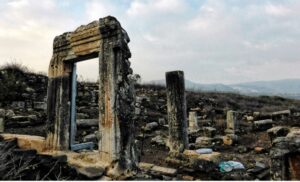
- Byzantine Archaeological Remains: Excavations have revealed multiple layers of occupation, including rock-cut tombs from the Second Temple period, Byzantine church foundations with intricate mosaic floors, and medieval Crusader additions. The site’s museum displays pottery shards, coins, and inscribed stones that chronicle the area’s continuous religious significance. A particular highlight is the preserved section of the original 5th-century mosaic floor with its Greek dedicatory inscription to St. Stephen.
- Monastery Gardens and Grounds: The Salesian fathers maintain terraced gardens planted with native olive groves, cypress trees, and Mediterranean herbs. Stone pathways connect various prayer stations and meditation areas, while ancient cisterns and agricultural terraces demonstrate the site’s historical self-sufficiency.
- Salesian Winery and Production Facilities: Operating since the early 20th century, the monastery’s winery produces several varieties of wine using traditional methods combined with modern equipment. The winery also maintains a tasting room where guests can sample products while learning about monastic agricultural traditions.
- Cultural Programs and Workshops: The monastery hosts concerts featuring classical and sacred music in its intimate auditorium, particularly during the Christmas and Easter seasons.
Practical Information
Beit Jamal Monastery welcomes visitors daily from 8:00 AM to 12:00 PM and 2:00 PM to 5:00 PM (winter hours may vary). Visitors should dress modestly when entering religious areas, with long pants and covered shoulders required for both men and women. The church and main pathways are wheelchair accessible, though some archaeological areas involve uneven terrain.
Additional Information
What makes Beit Jamal Monastery historically significant?
Beit Jamal Monastery preserves the burial site where St. Stephen’s remains were discovered in 415 CE, making it one of Christianity’s most important archaeological sites. The location also honors Rabbi Gamaliel the Elder, Paul the Apostle’s teacher, whose burial here predates the Christian settlement. Archaeological evidence including Byzantine mosaics and Greek inscriptions confirms the site’s dual significance in both Jewish and Christian history.
How far is Beit Jamal Monastery from Jerusalem?
Beit Jamal Monastery is located approximately 30 kilometers (19 miles) west of Jerusalem, near the modern town of Beit Shemesh. The drive typically takes 35-45 minutes via Route 1 and Route 38. Public transportation options include buses to Beit Shemesh followed by a short taxi ride to the monastery grounds.
What is the connection between St. Stephen and Rabbi Gamaliel at this site?
According to tradition, both St. Stephen and Rabbi Gamaliel the Elder were buried at this location, originally known as Kfar Gamala. Gamaliel was Paul the Apostle’s teacher and a respected member of the Sanhedrin who advocated tolerance toward early Christians. Stephen’s remains were later discovered here in 415 CE, creating a unique convergence of Jewish scholarship and Christian martyrdom at one sacred site.
What products can visitors purchase at Beit Jamal Monastery?
The monastery shop offers locally produced wine, olive oil, honey, and handcrafted pottery made by the resident nuns. Religious items including icons, rosaries, and books are also available. The winery provides tastings and sells several wine varieties produced using traditional methods, while the pottery workshop creates unique ceramic pieces and religious artifacts.
Nearby Sites
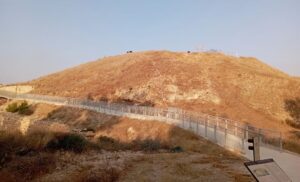
- Tel Beit Shemesh: An ancient archaeological site revealing layers of history from the Canaanite, Israelite, and Philistine periods.
- Sorek Cave: Also known as Avshalom Cave, this stunning cave features a remarkable array of stalactites and stalagmites
- Mini Israel: A miniature park showcasing detailed replicas of over 350 famous Israeli landmarks, offering a unique perspective on the country’s diverse heritage.
- Latrun Monastery: Another picturesque monastery with a rich history, located a short drive from Beit Jamal, known for its tranquil atmosphere and beautiful gardens.
Keep reading
Part of our Shephelah & Central Israel Guide →