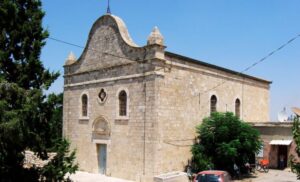
St. Nicholas Armenian Church stands in Old Jaffa as part of the Saint Nicholas Monastery, established in the first millennium AD. The church exemplifies ancient Armenian architectural tradition and serves as an active place of worship for Jaffa's Armenian community. Visitors can explore its historical interior and peaceful monastery courtyard during designated visiting hours.
St. Nicholas Armenian Church, located in the ancient port city of Jaffa, represents one of the oldest Armenian Apostolic Church establishments in the Holy Land. Built within the first millennium AD as part of the Saint Nicholas Monastery complex, the church has served the Armenian community for over a thousand years. The monastery occupies a prime position overlooking Jaffa’s historic harbor, where pilgrims and merchants have traveled for centuries along Mediterranean trade routes.
Location
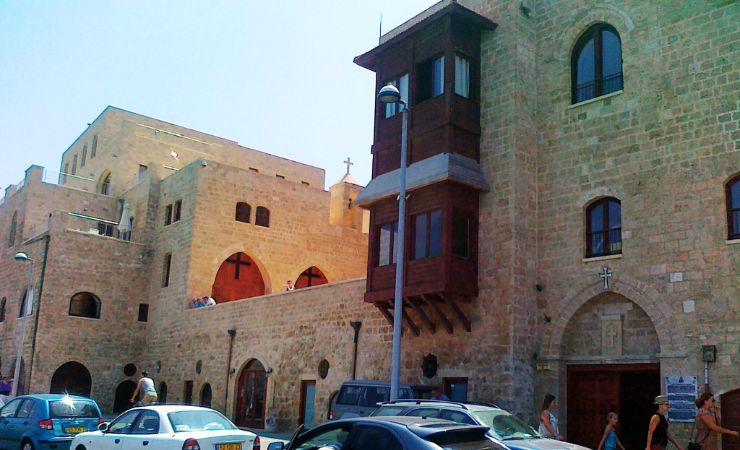
St. Nicholas Armenian Church occupies a prominent location on Mifratz Shlomo Street in Old Jaffa. The monastery complex sits elevated above the Mediterranean coastline, providing panoramic views of the sea and historic harbor.


Early History and Establishment
St. Nicholas Armenian Church forms the center of the larger St. Nicholas Monastery complex, established during the first millennium AD when Armenian merchants and first settled permanently in Jaffa. While exact founding dates remain unclear in historical records, Armenian presence in the port city dates to at least the 6th century, when Armenian traders established commercial networks throughout the eastern Mediterranean. The monastery developed around the church as a spiritual and administrative center for the local Armenian community, providing lodging for pilgrims traveling to Jerusalem and other holy sites.
The Crusader Period
During the Crusades, Jaffa served as a crucial entry point for European armies and pilgrims, and the Armenian monastery played a vital role in supporting these arrivals. The Armenians, as fellow Christians, maintained diplomatic relations with Crusader authorities while preserving their distinct liturgical traditions. The monastery provided medical care, supplies, and temporary shelter for crusaders and pilgrims, establishing its reputation as a sanctuary near the harbor. Archaeological evidence suggests the current church structure incorporates Crusader-era stonework alongside earlier Byzantine foundations.
Ottoman Era and Napoleon’s Influence
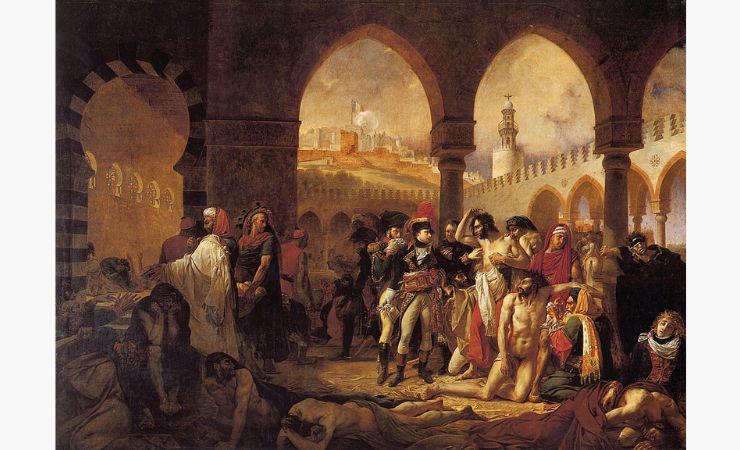
The monastery’s most dramatic historical moment occurred during Napoleon Bonaparte’s campaign in 1799. Following the siege of Jaffa in March 1799, Napoleon requisitioned the monastery buildings to house French soldiers afflicted with bubonic plague. The episode became internationally famous through Antoine-Jean Gros’s 1804 painting “Bonaparte Visiting the Plague Victims of Jaffa,” which depicted Napoleon touching plague victims in the monastery courtyard. This painting, now in the Louvre, immortalized St. Nicholas Armenian Church in European art and historical records. The plague outbreak killed hundreds of French soldiers, and the monastery served as both hospital and morgue during those terrible weeks.
Modern Times
Under British Mandate administration (1917-1948) and subsequent Israeli governance, the monastery adapted to changing circumstances while maintaining its religious functions. The Armenian Patriarchate of Jerusalem, which administers the complex, began leasing portions of the monastery buildings for residential and commercial purposes to ensure financial sustainability. This pragmatic approach has funded essential maintenance and restoration work on the historic church structure. The monastery continues operating as an active place of worship for Jaffa’s Armenian community, hosting liturgical services according to the Armenian Apostolic tradition.
The complex history of St. Nicholas Armenian Church reflects the broader narrative of Middle Eastern Christian communities, demonstrating remarkable resilience through successive empires, wars, and political transformations while maintaining continuous Franciscan sanctuaries in the Holy Land religious and cultural identity.
Architecture and Interior
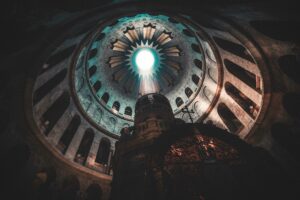
The church interior displays characteristic Armenian architectural elements, including a semicircular apse oriented eastward according to traditional liturgical requirements. Stone columns support pointed arches that reflect medieval construction techniques, while wall frescoes and iconography follow Armenian Apostolic artistic traditions. The altar area features distinctive Armenian khachkars (cross-stones) carved with intricate geometric patterns. Natural light filters through narrow windows designed to illuminate the sanctuary during morning prayers.
What Can Be Seen
Visitors can observe the main sanctuary with its elevated altar platform and traditional Armenian liturgical furnishings. The monastery courtyard retains its historic stone paving and offers views of the Mediterranean Sea beyond the harbor. Architectural details include medieval masonry techniques, Ottoman-period additions, and 19th-century restoration work visible in different sections of the complex. Memorial plaques commemorate Armenian benefactors and community leaders throughout the centuries. The monastery walls incorporate stones from various historical periods, creating a layered archaeological record of continuous occupation.
Practical Information
St. Nicholas Armenian Church operates under the authority of the Armenian Patriarchate of Jerusalem. Visiting hours vary seasonally and depend on liturgical schedules, typically allowing access from 9:00 AM to 4:00 PM, Sunday through Friday. The church remains closed during Armenian religious holidays and feast days.
Visitors should dress modestly, covering shoulders and knees, and remove hats before entering the sanctuary. The site is partially accessible to visitors with mobility limitations, though some areas require climbing stone steps.
Additional Information
When was St. Nicholas Armenian Church in Jaffa built?
St. Nicholas Armenian Church was established sometime during the first millennium AD as part of the larger monastery complex. While exact construction dates are unclear, Armenian presence in Jaffa dates to at least the 6th century, and the current structure incorporates architectural elements from Byzantine, Crusader, and Ottoman periods.
Can visitors attend services at St. Nicholas Armenian Church Jaffa?
Yes, visitors can respectfully observe Armenian Apostolic liturgical services held on Sundays and major feast days. Services follow traditional Armenian rites and are conducted in Armenian. Visitors should dress modestly and remain in designated areas during worship.
What is the connection between Napoleon and St. Nicholas Armenian Church?
In March 1799, Napoleon used the monastery to house French soldiers afflicted with bubonic plague during his siege of Jaffa. This historical episode was immortalized in Antoine-Jean Gros’s famous painting “Bonaparte Visiting the Plague Victims of Jaffa,” now displayed in the Louvre Museum.
What architectural features can be seen at St. Nicholas Armenian Church Jaffa?
The church displays characteristic Armenian architectural elements including a semicircular apse, pointed stone arches, traditional khachkars (cross-stones), and layered masonry from different historical periods. The monastery courtyard retains historic stone paving with Mediterranean Sea views.
Nearby Sites
- Jaffa Old City: Just steps away, this ancient enclave is a labyrinth of galleries, boutiques, and cafes, perfect for a leisurely exploration of local art and cuisine.
- Simon the Tanner’s House: Traditionally believed to be the home of Simon the Tanner, this site is significant in Christian history as the place where Apostle Peter had his vision, as described in Acts 10.
- Jaffa’s Clock Tower: Built in 1903 to honor Sultan Abdul Hamid II’s 25th anniversary of his accession to the throne, this clock tower is an iconic symbol in the center of Jaffa, marking the Ottoman architectural presence in the city.
- Jaffa Port: Known as one of the oldest ports in existence, it now hosts a variety of artistic and social events, alongside a vibrant marketplace.
- Jaffa Flea Market: A treasure trove for bargain hunters and antique lovers, the flea market is a bustling hub where history meets modern-day trade.
Keep reading
Part of our Tel Aviv & Jaffa Guide →