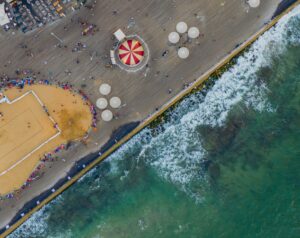
Tel Aviv Port, called Namal by locals, started life in 1936 as a working cargo harbor and is now a 14-hectare Mediterranean waterfront district where you can eat in a converted shipping warehouse, walk a wave-shaped boardwalk, and watch fishing boats crossing the same water that once carried British Mandate cargo ships.
What Is the History Behind Tel Aviv Port?
Tel Aviv Port was founded in 1936 by Otzar Mif’alei Yam (“Treasure of Sea Works”) after an April 1936 Arab general strike shut down Jaffa Port and cut off Jewish commerce. Construction began in May 1936 under British engineer H.R. Halcrow, who used innovative methods to build artificial harbors in the sandy Mediterranean coastline.
Originally named Sha’ar Zion (“Gate of Zion”), the port was inaugurated at full capacity on February 23, 1938. It featured two piers extending 150 meters into the sea, warehouse capacity for 10,000 tons of cargo, and specialized grain-handling facilities. During its peak years from 1938 to 1940, the port processed roughly 40% of Jewish Palestine’s maritime trade.
That active commercial life was short. The British Navy took control from 1940 to 1945, converting the site into a military installation during World War II. According to Britannica’s historical overview, the port fulfilled its core purpose during that pre-war window. It briefly handled weapons and supplies for the new Israeli state during the 1948 Arab-Israeli War, but shallow waters made it unfit for modern cargo ships.
On October 25, 1965, the port closed permanently when all shipping moved to the newly built Ashdod Port. The hangars sat empty for decades. Serious redevelopment only began in the 1990s after the Tel Aviv Municipality acquired the property, and the transformation that followed is now considered one of Israel’s most successful urban renewal projects.
What Can You See and Do Inside Tel Aviv Port (Namal)?
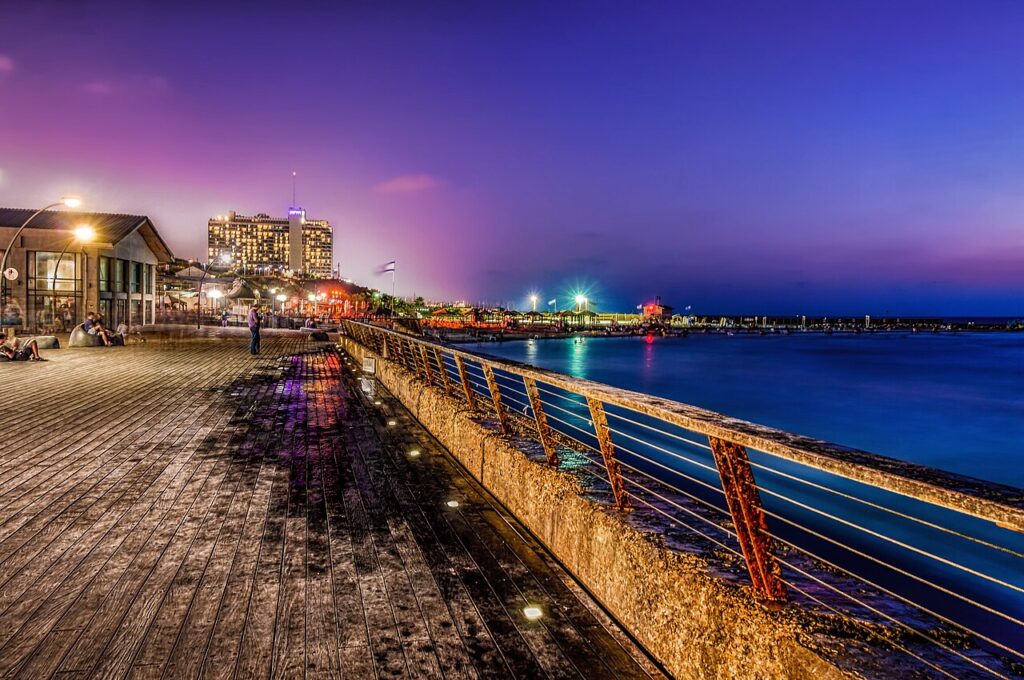
Wave-Shaped Wooden Boardwalk — The boardwalk is the first thing you notice: 14,000 square meters of Ipe wood from Brazil, shaped into long undulating waves that echo both the ocean swells and the original sand dunes beneath the port. Walk its full 800-meter length and you pass through natural wind-sheltered pockets where outdoor diners sit below the curves. The structure won the Rosa Barba European Landscape Prize in 2010, Europe’s most prestigious landscape architecture award, and required 2,000 cubic meters of timber plus underground drainage cisterns to build. Street performers gravitate to the curved sections, which form a natural amphitheater space at no cost to visitors.
Restored Port Hangars — Step inside any of the original 1930s warehouses and look up: exposed steel beams and high industrial ceilings are now the backdrop for upscale restaurants and boutique shops. The hangar developers kept original loading-dock details intact, so pulley systems and track guides are still visible on the walls. Hangar 11 is a multi-purpose event space for up to 800 guests, with original crane equipment preserved as architectural elements. Hangar 26 runs floor-to-ceiling windows that open the dining rooms to views of the old port infrastructure, making the industrial past impossible to forget.
Namal Food Market in Hangar 12 — This 3,000-square-meter gourmet market fills one of the largest original hangars, and National Geographic has compared it to London’s Borough Market. More than 30 artisanal vendors operate inside, including Delicatessen for European-style cured meats and Fishmonger, which sources directly from Mediterranean fishing fleets. When the weather allows, the original cargo doors roll open and the indoor-outdoor line disappears entirely. The building’s acoustics, designed to reduce echo during cargo operations, now create a surprisingly intimate feel for a space this large.
TEL AVIV Letters Installation — Each aluminum letter stands 2.5 meters high, weighs about 300 kilograms, and is fitted with LED lighting so the display reads clearly after dark against the Mediterranean sky. The installation moves to different spots within the port seasonally, which keeps the backdrop fresh and spreads foot traffic around the waterfront. For visitors, the letters are the most reliably photographed spot at Namal, and the shifting placement means the ocean view behind them changes with every visit.
Angel Wings Sculpture — In 2018, Mexico City’s Jewish community gifted the port a three-meter-high bronze reproduction of “Alas De La Cuidad,” created by Israeli artist Menashe Kadishman. The sculpture weighs 800 kilograms and represents the bonds between Jewish communities across continents. Visitors can stand between the outstretched wings for photos, and that interactive quality has made it a consistent stop for anyone walking the waterfront, well beyond the usual art-appreciating crowd.
Children’s Playground and Green Spaces — Eight dunams of the former Maccabiah Stadium site now hold open lawns and a playground where the climbing structures are shaped like ship masts and rigging, keeping the maritime theme going at ground level. The landscaping uses drought-resistant Mediterranean plants and incorporates recycled port materials: anchor chains serve as decorative fences and old dock pilings have been cut down into seating. The contrast between these soft green spaces and the steel-and-brick hangars behind them captures what the whole redevelopment was trying to achieve.
Levant Fair Area and Amphitheater — The 5,000-square-meter area connected to the historic 1933 Levant Fair grounds now holds a 1,200-seat amphitheater carved into the natural slope leading to the waterfront, hosting concerts, theater, and cultural festivals year-round. Glass panels set into the walking paths reveal the original exhibition pavilion foundations below your feet. Water features activate during evening events, turning the fountains into part of the lighting design. It is the spot that most directly connects Tel Aviv Port to the city’s broader pre-state cultural history.
What Events Take Place at Tel Aviv Port?
The port hosts a rotating calendar of events throughout the year. The “Mugzam BaNamal” (“Exaggerated at the Port”) summer festival is one of the most anticipated seasonal events, drawing large crowds to the waterfront for performances and installations. The GLOW exhibition has brought lights, lasers, and rooms filled with balloons to the port, turning the old hangars into immersive art environments. Free fitness and movement classes have been held at the port entrance, typically running through summer and pausing in September. Check the official Namal website for current event schedules, as programming changes seasonally.
How Do You Get to Tel Aviv Port and When Should You Visit?
Tel Aviv Port sits at the northern end of Tel Aviv’s coastline. The site is open as a public space 24 hours a day, though individual restaurants, shops, and attractions keep their own hours. Free parking is available in designated lots, but spaces fill fast on weekend evenings. Morning and early afternoon visits offer the quietest experience on the boardwalk, which draws large crowds at sunset. Public transportation reaches the port easily from central Tel Aviv.
Additional Information
What is Tel Aviv Port (Namal)?
Tel Aviv Port, known as Namal, is a 14-hectare former cargo harbor built in 1936 and redeveloped into a waterfront entertainment district. It holds a prize-winning wooden boardwalk, restored 1930s hangars, a gourmet food market, restaurants, shops, art installations, and a 1,200-seat amphitheater.
When did Tel Aviv Port open and close as a working harbor?
The port opened on February 23, 1938, and closed on October 25, 1965, when shipping moved to Ashdod Port. It operated commercially for less than two years before the British Navy converted it to a military base from 1940 to 1945.
What is the wooden boardwalk at Tel Aviv Port?
The boardwalk covers 14,000 square meters of wave-shaped Ipe wood running 800 meters along the waterfront. It won the Rosa Barba European Landscape Prize in 2010 and required 2,000 cubic meters of timber. The curves create sheltered dining pockets and natural gathering spaces for street performers.
What do you love doing at Tel Aviv Port?
Most visitors eat their way through the Namal Food Market in Hangar 12, walk the full length of the boardwalk at sunset, photograph the oversized TEL AVIV letters, and catch live events at the 1,200-seat amphitheater. Families use the maritime-themed playground on the former Maccabiah Stadium site.
Is parking available at the port?
Free parking is available in designated areas throughout the complex, with approximately 1,200 spaces distributed across multiple lots. Parking fills quickly during weekend evenings and during special events, so early arrival is recommended. Alternative transportation includes bus lines 4 and 5, which stop adjacent to the port entrance.
Are there activities for children at the port?
The port features extensive family facilities, including a children’s playground with maritime-themed equipment occupying eight dunams of green space. The playground includes climbing structures designed to resemble ship rigging and masts. Additionally, the open lawns provide space for recreational activities, and many restaurants offer children’s menus and outdoor seating suitable for families.
Nearby Sites
- Jaffa Port: Ancient harbor with 4,000 years of maritime history and ongoing archaeological discoveries.
- Neve Tzedek Tel Aviv: Historic neighborhood featuring 19th-century architecture and cultural attractions.
- Tel Aviv Museum of Art: Major cultural institution housing Israeli and international contemporary art collections.
- Yarkon Park: Urban park along the Yarkon River offering gardens, recreational facilities, and concert venues.
- Tel Aviv Beaches: Mediterranean coastline with designated swimming areas, volleyball courts, and beachfront cafes.
- Dizengoff Center: Shopping and entertainment complex in central Tel Aviv with dining and retail options.
- Tel Aviv Port (Namal) — Official Website — Official site
- Tel Aviv Port – Wikipedia — Comprehensive historical information about the port’s founding and development
- Tel Aviv–Yafo – Ancient, Modern, Mediterranean | Britannica — Britannica’s historical overview of Tel Aviv-Yafo includes coverage of the establishment of the separate Tel Aviv port in 1936-39 following Arab strikes at Jaffa Port, and its closure in 1965 when operations moved to Ashdod Port
- The Best of Tel Aviv | National Geographic — National Geographic travel guide mentioning the Tel Aviv Port as a revitalized commercial and entertainment area, noting the Kitchen Market and the contrast between historical significance and modern dining destinations