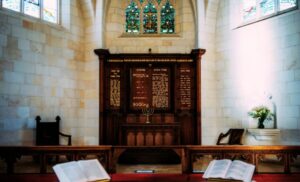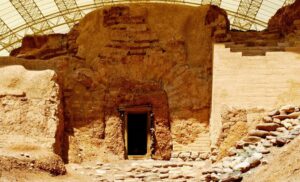
Elijah's Cave is a sacred grotto on Mount Carmel's western slope in Haifa where the prophet Elijah allegedly sheltered during his flight from King Ahab and Queen Jezebel. Revered by Jews, Christians, Muslims, and Druze, the cave serves as a pilgrimage site and prayer destination. Visitors can explore the underground chamber and experience its spiritual significance year-round.
Cut into the rocky western slope of Mount Carmel, Elijah’s Cave Haifa is one of the most venerated sacred sites on Israel’s northern coast. This modest limestone cave is believed by Jewish, Christian, and Muslim tradition alike to have sheltered the prophet Elijah, making it a rare point of convergence for three of the world’s major faiths.
Location
Elijah’s Cave sits on the western flank of Mount Carmel, at the base of the Carmelite Stella Maris Monastery, roughly 2 kilometers north of Haifa’s downtown port area. The address is 230 Allenby Road, and the cave entrance faces the Mediterranean, sitting only about 50 meters above sea level.
Biblical context
Elijah’s Cave holds a special place in Jewish, Christian, and Muslim traditions. According to biblical accounts, this is believed to be one of the caves where the prophet Elijah sought refuge. In 1 Kings 19, Elijah fled to Mount Carmel after his dramatic confrontation with the prophets of Baal.
The confrontation itself took place on the high ridge of Carmel, where Elijah challenged the 450 prophets of Baal to a sacrificial contest. When fire fell from heaven to consume Elijah’s offering, the people acknowledged the God of Israel, and Elijah ordered the prophets of Baal killed at the Kishon River below. Queen Jezebel’s retribution was immediate and lethal in its intent. Fearing for his life, Elijah fled south toward Beersheba, then continued into the wilderness, before an angel directed him onward toward Horeb, the mountain of God. The tradition linking this specific Carmelite cave to his flight likely reflects his return to, or lingering near, the mountain where he had just witnessed divine fire, as recorded in accounts of the prophet Elijah’s life across ancient sources.
Though the Bible doesn’t specify the exact cave on Mount Carmel, Jewish tradition holds that the cave currently venerated as Elijah’s Cave is where he may have hidden during this period of distress. This tradition developed over centuries as pilgrims and religious scholars associated this specific location with Elijah’s story, especially given its proximity to the place of the famous confrontation with the prophets of Baal. The earliest written pilgrim references to the cave date to the Byzantine period, suggesting veneration of the site stretches back at least 1,500 years.
The History of Elija's Cave
The cave’s sacred status spans roughly two millennia of documented veneration. Byzantine-era pilgrims recorded visiting a cave on the Carmel coast associated with Elijah as early as the 6th century CE, and the site appears in medieval Jewish travel accounts as well, including those of Benjamin of Tudela, who visited the region in the 12th century. Crusader-period activity on Mount Carmel reinforced the site’s prominence, as the early Carmelite hermits who settled on the mountain specifically chose this location for its proximity to the prophet’s memory. The Order of Our Lady of Mount Carmel, founded in the mid-12th century, drew its spiritual identity directly from Elijah’s example of solitary prayer and prophetic zeal, as documented in early Carmelite history.
The cave’s association with Elijah dates back thousands of years. Jewish pilgrims have venerated the site, believing that Elijah prayed and sought shelter in this very cave.
- Jewish tradition: Many believe that Elijah’s spirit continues to watch over the people of Israel, making this cave a place where worshippers seek blessings. The cave is particularly associated with prayers for fertility and healing; Jewish families, especially those from Sephardic and Mizrahi backgrounds, have long brought children here to receive a first haircut (upsherin) and blessings. Elijah’s role in Jewish liturgy, appearing at every Passover Seder and every circumcision, deepens the personal quality of devotion here.
- Christian tradition: Elijah’s role as a forerunner of Christ in the New Testament has made the cave a pilgrimage site for Christians, especially those following the story of Jesus’ Transfiguration, where Elijah appears alongside Moses on a mountain top. The Carmelite order, which has maintained a physical presence on Mount Carmel since the 12th century, regards this cave as the spiritual heart of their founding story.
- Muslim tradition: Elijah is recognized as a prophet in Islam, and the cave is respected within Islamic tradition. Islamic sources identify him with the figure of Al-Khidr, a mysterious servant of God associated with living waters and hidden knowledge, though scholarly opinion on the precise identification varies. Muslim visitors have prayed here alongside Jews and Christians for centuries.
The cave has undergone several renovations over the centuries. The interior was remodeled during the Ottoman period, and in more recent decades the Israel Antiquities Authority has carried out conservation work to stabilize the stone and preserve the inscriptions and devotional art on its walls.
What can be Found at the Site
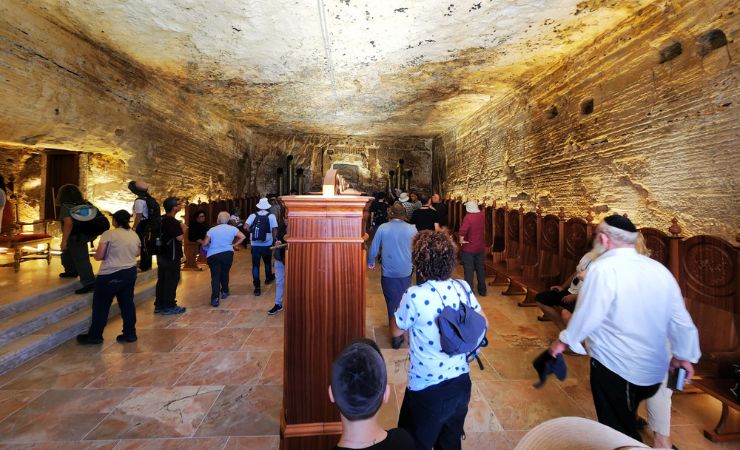
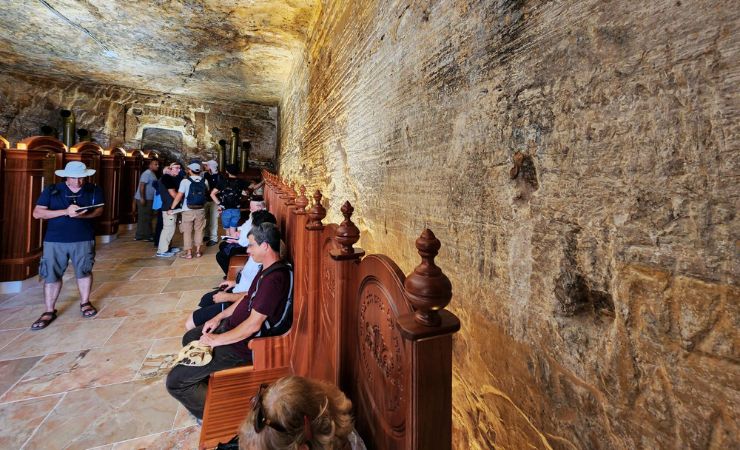
- The Cave Itself: The main chamber measures roughly 20 meters deep and up to 10 meters wide, carved naturally into the Carmel limestone. Inside, visitors see religious symbols and prayers written in Hebrew, Arabic, and Latin on the walls, a vivid reminder of the site’s multi-faith history.
- Torah Scrolls and Prayer Books: For Jewish visitors, Torah scrolls and prayer books are available within the cave.
- Christian Icons: The cave also features Christian icons and votive offerings left by believers, reflecting the site’s multicultural and multi-faith significance.
- Elaborate Decorations: Over time, the cave has been adorned with intricate religious mosaics, Hebrew inscriptions, hand-painted tiles, and other symbols of devotion. Some of the votive inscriptions on the walls date to the 18th and 19th centuries and reflect the waves of Jewish pilgrims who arrived during the Ottoman period.
Additional Information
Is Elijah’s Cave Haifa free to enter?
Yes, admission to Elijah’s Cave is free of charge. The site is administered by the Israel Antiquities Authority and funded as a public heritage site. There is a small paid parking lot directly adjacent to the entrance if you arrive by car.
What is the significance of Elijah’s Cave for Jewish visitors?
The cave functions as an active synagogue where Torah scrolls are kept and morning prayers are held. It holds particular meaning in Sephardic and Mizrahi Jewish tradition, where families bring children for an upsherin (first haircut) ceremony and to seek blessings. Elijah’s enduring presence in Jewish liturgy, at every Passover Seder and every brit milah, gives the site a personal and intimate quality for many Jewish visitors.
Is Elijah’s Cave in Haifa a Christian pilgrimage site?
Yes. Christian pilgrims have visited the cave since at least the Byzantine period, drawn by Elijah’s appearance alongside Moses at the Transfiguration of Jesus and by the Carmelite order’s deep spiritual connection to the prophet. The cave features Christian icons and votive offerings alongside Jewish and Islamic devotional items. It fits naturally into a northern Israel pilgrimage itinerary that includes Stella Maris Monastery just above.
Sources and Additional Information
Nearby Sites
- Stella Maris Monastery: Just a short walk from Elijah’s Cave, this Carmelite monastery offers a spiritual atmosphere and panoramic views of Haifa Bay.
- Baha’i Gardens: A breathtaking terraced garden, descending from Mount Carmel towards the sea, that serves as the world center of the Baha’i faith.
- German Colony: A beautifully preserved neighborhood at the foot of Mount Carmel, full of charming cafes, restaurants, and historical buildings.
Keep reading
Part of our Christian Pilgrimage Guide →