The Church of the Annunciation in Nazareth marks the traditional site where the angel Gabriel announced to Mary that she would conceive Jesus. This Catholic basilica, completed in 1969, is the largest church in the Middle East and incorporates archaeological remains from earlier Byzantine and Crusader churches beneath its modern structure.
The Church of the Annunciation Nazareth stands as the largest Christian church in the Middle East and one of the most significant pilgrimage destinations in the Holy Land. Built over the traditional site where the Angel Gabriel announced to Mary that she would conceive Jesus Christ, this remarkable basilica combines archaeological treasures from multiple historical periods with striking modern architecture. The church houses the ancient grotto believed to be Mary’s home.
Location
The Church of the Annunciation Nazareth occupies a prominent position on Casa Nova Street in the center of Nazareth, approximately 100 kilometers north of Jerusalem. This imposing structure serves as the starting point of the Jesus Trail pilgrimage route that winds through the Galilee region. Visitors should distinguish this Catholic basilica from the smaller Greek Orthodox Church of the Annunciation, which sits near the traditional location of the Fountain of the Virgin Mary (Mary’s Well) approximately 200 meters away.
Biblical Context
The Church of the Annunciation Nazareth commemorates one of Christianity’s most pivotal moments: the Annunciation, when the Angel Gabriel appeared to Mary to announce she would conceive Jesus through divine intervention. This foundational event, recorded in the Gospel of Luke (1:26-38), established Nazareth as a central location and transformed a small Galilean village into one of the world’s most important pilgrimage destinations. The angel’s greeting “Hail Mary, full of grace, the Lord is with you” became the foundation for the most widely recited prayer in Catholic tradition, while Mary’s response “Let it be done unto me according to your word” represents the moment of acceptance that Christians believe initiated the Incarnation.
In the sixth month the angel Gabriel was sent from God to a city of Galilee named Nazareth, to a virgin betrothed to a man whose name was Joseph, of the house of David. And the virgin’s name was Mary. And he came to her and said, ‘Greetings, O favored one, the Lord is with you!’… And the angel said to her, ‘Do not be afraid, Mary, for you have found favor with God. And behold, you will conceive in your womb and bear a son, and you shall call his name Jesus
Main Features from an Archaeological Perspective
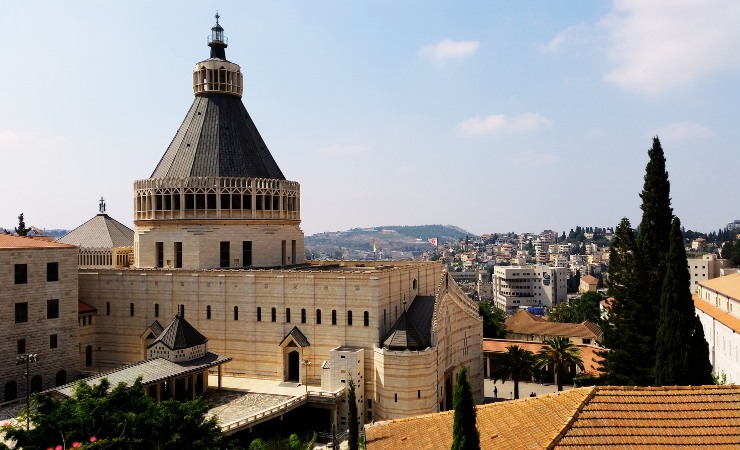
The Church of the Annunciation Nazareth represents a masterpiece of mid-20th century ecclesiastical architecture, designed by Italian architect Giovanni Muzio and completed in 1969. This impressive structure exemplifies the Brutalist-eclectic architectural movement, integrating historical elements from multiple periods with contemporary design principles. The church’s unique two-level configuration allows visitors to experience both ancient and modern expressions of faith within a single visit, while reveals the site’s continuous sacred use spanning nearly two millennia.
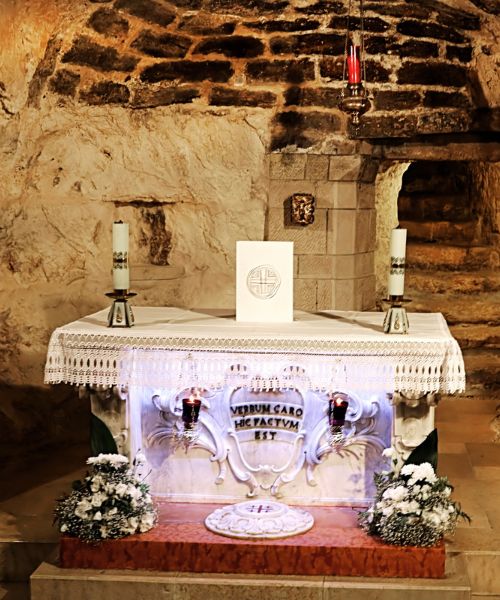
Lower Level (Crypt): The lower church preserves the archaeological heart of the site, incorporating remains from Byzantine and Crusader churches alongside the central grotto believed to be Mary’s home. Muziio’s design creates protective glass barriers that allow visitors to view original mosaic floors, foundation stones, and architectural fragments dating from the 4th to 12th centuries. The centerpiece remains the limestone grotto, marked by the Latin inscription “Hic Verbum Caro Factum Est” (Here the Word was made Flesh), where pilgrims gather for prayer and reflection. Excavations conducted before construction revealed pottery shards, cooking installations, and storage areas consistent with a 1st-century village home.
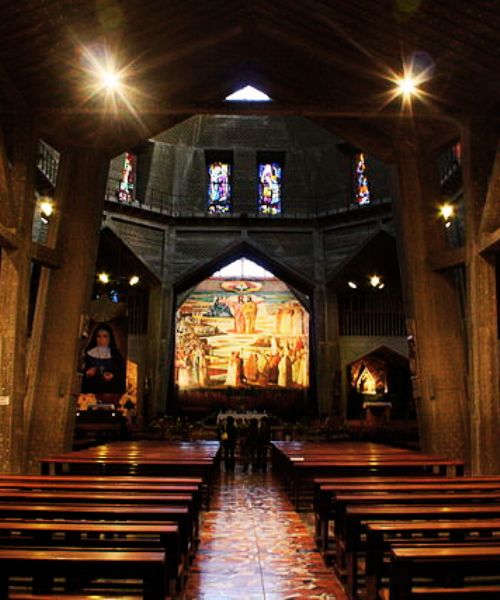
Upper Level (Main Sanctuary): The upper basilica accommodates over 2,000 worshippers beneath Muzio’s soaring concrete dome, which reaches 55 meters in height. The dome’s interior features a magnificent mosaic depicting Christ surrounded by symbols representing the four evangelists, while the lily motif throughout the church references Mary’s purity. Natural light filters through carefully positioned windows to illuminate the sanctuary, creating an atmosphere conducive to prayer and contemplation. The altar area incorporates stones from the original Crusader church, maintaining physical continuity with the site’s medieval Christian heritage.
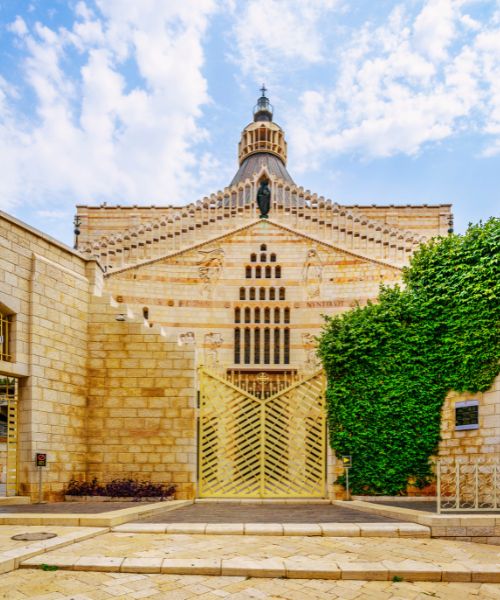
The Façade and Courtyard: The church’s western facade displays bronze relief panels depicting scenes from Christ’s life, while the surrounding courtyard houses over 50 artistic representations of the Annunciation donated by Catholic communities worldwide. These mosaics and paintings reflect diverse cultural interpretations of the biblical event, from traditional European iconography to contemporary African and Asian artistic styles. The Japanese contribution features Mary in traditional kimono, while the Mexican panel incorporates indigenous Aztec symbols, demonstrating the universal appeal of the Annunciation narrative.
Muzio’s architectural vision creates a continuous dialogue between past and present, earthly and divine, transforming the ancient grotto into a contemporary pilgrimage destination while preserving its historical authenticity.
Archaeological Layers of the Church of the Annunciation
The Church of the Annunciation Nazareth reveals a complex archaeological narrative spanning nearly two thousand years of continuous Christian worship. Each historical layer contributes essential elements to the site’s current form and spiritual significance, creating a unique palimpsest of faith and devotion.
The Early Byzantine Church (4th-5th centuries CE): The earliest documented Christian structure emerged during the reign of Emperor Constantine, when Christianity gained official recognition throughout the Roman Empire. Archaeological excavations beneath the current basilica uncovered fragments of a substantial stone church featuring polychrome geometric mosaics typical of 4th-century Byzantine craftsmanship. This initial church indicating Nazareth’s early importance in Christian pilgrimage networks.
The Crusader Church: The Frankish conquest of the Holy Land ushered in an ambitious building program that transformed the modest Byzantine structure into a magnificent Romanesque basilica. Archaeological evidence reveals three-meter-thick foundation walls supporting a much larger complex, complete with elaborate carved capitals, decorative columns, and imported marble elements. The Crusader church followed the typical basilica layout with a central nave, two side aisles, and an eastern apse, while carefully preserving the sacred grotto beneath the main altar. French architectural influences appear in the pointed arch fragments discovered during excavations, reflecting the cultural background of the Frankish rulers.
The Franciscan Period (1620-1955): Following centuries of abandonment after the Crusader departure, the Franciscan Custody of the Holy Land obtained permission from Ottoman authorities to establish a modest chapel over the grotto in 1620. The Franciscans constructed a simple rectangular structure using stones salvaged from the ruined Crusader church, maintaining continuous Catholic presence at the site for over three centuries. Their careful stewardship preserved the archaeological layers beneath while providing basic shelter for pilgrims visiting the sacred grotto. During this period, systematic documentation began of the site’s historical significance.
The Modern Basilica (1960-1969): The decision to construct a new church emerged from the need to accommodate increasing numbers of pilgrims while properly protecting and displaying the site’s archaeological treasures. After rejecting several designs, including proposals by renowned church architect Antonio Barluzzi, church authorities selected Giovanni Muzio’s innovative two-level concept. Muzio’s design preserved every significant archaeological feature while creating spaces for contemporary worship. Construction required delicate excavation techniques to document and preserve Byzantine mosaics, Crusader foundations, and other historical elements now visible to visitors throughout the basilica complex.
Practical Information
Opens daily from 8:00 AM to 6:00 PM (November-March) and 8:00 AM to 6:45 PM (April-October), with reduced hours on Sundays (2:00-5:30 PM).
Entry remains free, though donations support ongoing conservation efforts. Visitors should dress modestly (covered shoulders and knees required)
The site offers partial wheelchair accessibility to the upper basilica
Additional Information
What is the difference between the Catholic and Orthodox Churches of the Annunciation in Nazareth?
The Catholic Basilica of the Annunciation is the large modern structure built over Mary’s traditional home, while the Greek Orthodox Church of the Annunciation is smaller and located near Mary’s Well. Both commemorate the same biblical event but represent different Christian traditions’ interpretations of where the Annunciation occurred. The Catholic church emphasizes the domestic setting of Mary’s home, while the Orthodox tradition focuses on the well where Mary drew water.
What archaeological evidence supports the Church of the Annunciation’s authenticity?
Archaeological excavations beneath the Church of the Annunciation revealed continuous occupation from the 1st century CE through the Crusader period, including pottery, cooking installations, and storage areas consistent with a 1st-century village home. Byzantine mosaics and inscriptions from the 4th century indicate early Christian veneration of the site. While absolute proof of the biblical event remains impossible, the archaeological record supports the site’s historical significance in early Christian tradition.
How does the Church of the Annunciation connect to other biblical sites in Nazareth?
The Church of the Annunciation Nazareth serves as the centerpiece of Nazareth’s biblical heritage, with several related sites within walking distance. St. Joseph’s Church, believed to mark Joseph’s carpentry workshop, sits adjacent to the basilica. The Synagogue Church, where Jesus preached, is located 300 meters away, while Mary’s Well connects to the Orthodox Annunciation Church. These sites collectively preserve the New Testament narrative of Jesus’s early life in Nazareth.
Nearby Sites
The Synagogue Church: This small church is traditionally identified with the synagogue where Jesus read the scriptures and announced his mission.
St. Joseph’s Church: Believed to be the site of Joseph’s carpentry workshop.
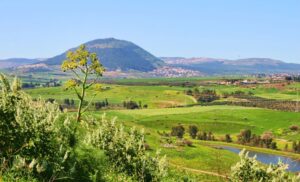
Mount Precipice: Mount Precipice offers panoramic views of the Jezreel Valley and Mount Tabor. It’s believed to be the site of the cliff where an angry mob intended to throw Jesus off after his bold proclamation in the Nazareth synagogue.
Nazareth Village: Nazareth Village is an open-air museum recreates a typical village from the time of Jesus, complete with costumed guides, traditional crafts, and ancient agricultural practices.
Keep reading
Part of our Christian Pilgrimage Guide →