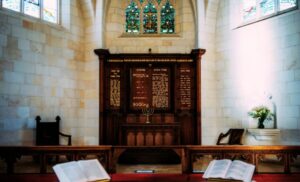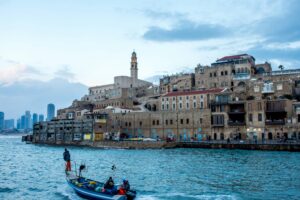
Antonio Barluzzi was an Italian architect born in 1884 who designed and restored numerous churches across the Holy Land. Working primarily for the Franciscan Custody of the Holy Land, he created iconic religious structures including the Church of All Nations, the Church of the Transfiguration on Mount Tabor, and Dominus Flevit Chapel, leaving an enduring architectural legacy in Israel.
Antonio Barluzzi, an Italian architect born in 1884, transformed the spiritual landscape of the Holy Land through his visionary designs for sacred sites. His remarkable 40-year career produced some of Christianity’s most iconic modern churches, including the Church of All Nations in Gethsemane and the Church of the Transfiguration on Mount Tabor. Working primarily for the Franciscan sanctuaries in the Holy Land Franciscan Custody of the Holy Land, Barluzzi created structures that harmoniously blend historical architectural traditions with contemporary needs, earning him recognition as “The Architect of the Holy Land.”
Early Life and Formative Years
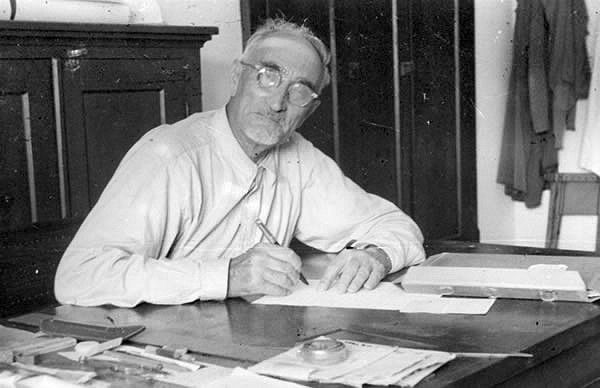
Antonio Barluzzi was born on September 26, 1884, in Rome, Italy, into a family deeply connected to sacred architecture. His maternal grandfather served as a custodian responsible for maintaining St. Peter’s Basilica, an influence that likely shaped Barluzzi’s career path toward religious construction. Even as a five-year-old child, Barluzzi demonstrated extraordinary artistic ability, creating detailed sketches of churches that revealed his natural affinity for ecclesiastical design.
As a young man, Barluzzi seriously considered entering the priesthood and spending time in spiritual reflection. However, his mentor at the seminary advised him that his talents could serve God more effectively through secular work. His elder brother Giulio, already established as an architect, provided additional encouragement toward pursuing architectural studies rather than religious vocation.
Barluzzi completed his architectural education at Sapienza University of Rome between 1902 and 1907, earning his degree in Engineering. His academic focus centered on historical architectural styles, particularly those employed in religious structures. His early professional designs already displayed his signature approach of integrating traditional Byzantine, Romanesque, and Crusader elements with modern construction techniques and materials.
Military Service and a Turning Point
Between 1909 and 1914, Antonio Barluzzi collaborated with his brother Giulio on construction projects across Italy and the Middle East. During this formative period, while still contemplating religious vocation, he found himself working on the Italian Hospital project in Jerusalem’s history. This assignment brought him into contact with the Franciscan Custody of the Holy Land, a meeting that would define his entire career. Father Razzoli, representing the Custody, recognized Barluzzi’s exceptional talent and commissioned him to submit architectural plans for a basilica on Mount Tabor.
The outbreak of World War I in 1914 abruptly interrupted his Holy Land work, forcing Barluzzi to return to Italy. He briefly reconsidered entering the seminary at Seminario Romano di S. Giovanni after Easter 1915, but departed after only a few weeks, realizing his true calling lay elsewhere. Instead, he enlisted in the Italian army as a Sergeant in the Fortifications Office. His military duties included supervising archaeological excavations at Castel Sant’Angelo in Rome, work that deepened his understanding of historical construction techniques and ancient architectural foundations.
In 1918, Barluzzi joined the Italian detachment in Palestine and participated in the Allied liberation of Jerusalem. This pivotal experience allowed him to witness firsthand the sacred sites that would later become his life’s work. While stationed in Mandatory Palestine, he encountered Father Ferdinando Diotallevi, the newly appointed Custos of the Holy Land. Diotallevi had reviewed Barluzzi’s previous Mount Tabor designs and immediately invited him to begin construction on that church, along with a new sanctuary at Gethsemane.
Barluzzi initially hesitated, fully understanding the magnitude and spiritual responsibility of designing two major churches simultaneously. He returned to Italy for a period of reflection and prayer. Ultimately, recognizing this as his divine calling, he accepted the commission and returned to Jerusalem in 1919, committed to dedicating his career to sacred architecture in the Holy Land.



Beginning of a Lifelong Dedication
In the early 1920s, the Franciscans entrusted Antonio Barluzzi with the monumental task of designing and constructing churches atop the ruins of ancient Byzantine and Crusader structures throughout the Holy Land. This commission marked the beginning of his lifelong dedication to sacred architecture in Christianity’s holiest sites. Working under British Mandate Palestine, Barluzzi faced unique challenges including limited resources, complex archaeological considerations, and the need to respect existing religious sensitivities while creating structures suitable for modern pilgrimage.
His approach to each project involved extensive archaeological research and careful study of existing foundations. Before beginning construction, Barluzzi would spend months examining ancient stones, studying historical documents, and consulting with Franciscan scholars about the theological significance of each site. His first major projects included the Church of the Transfiguration on Mount Tabor and the Church of All Nations in the Garden of Gethsemane, both of which established him as a visionary architect capable of creating deeply spiritual spaces that honored both historical traditions and contemporary liturgical needs.
The Church of the Annunciation and Later Years
One of the most significant disappointments in Antonio Barluzzi’s career came in 1958 when church authorities rejected his design for the Church of the Annunciation in Nazareth in favor of Giovanni Muzio’s modernist proposal. Barluzzi had envisioned this project as his masterpiece, designing what he called a “Shrine to the Incarnation” that would have been his crowning achievement in the Holy Land. The rejection devastated him both professionally and personally, contributing to a heart attack that left him with cerebral deafness and pulmonary emphysema.
By 1957, the Italian government recognized his contributions by awarding him the Grand Officer of the Order of Merit of the Italian Republic. His final years were spent in a modest apartment at the Holy Land Delegation in Rome. Antonio Barluzzi passed away on December 14, 1960, at age 76. Following his wishes, he was laid to rest in the cemetery of the Franciscan Custody of the Holy Land next to Mount Zion in Jerusalem.
Antonio Barluzzi's Legacy
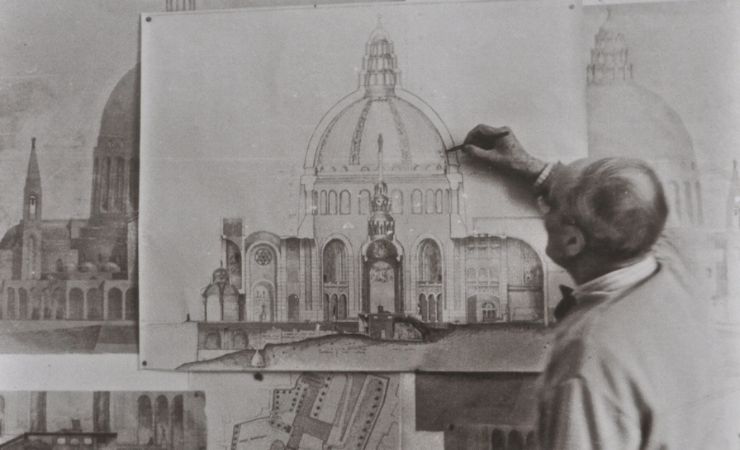
Antonio Barluzzi’s architectural legacy encompasses far more than individual buildings. His work fundamentally reshaped how Christian pilgrims experience sacred sites in the Holy Land. Through his designs, he created spaces that serve both liturgical functions and spiritual contemplation, accommodating the needs of modern pilgrimage while honoring ancient traditions. His churches receive over two million visitors annually, making his architecture among the most visited religious structures in the world.
Barluzzi’s distinctive approach involved what he called “liturgical architecture,” designing each space to enhance specific religious experiences tied to biblical events. His use of natural light, symbolic geometry, and carefully positioned windows created dramatic effects that guide visitors’ attention toward altars and sacred relics. The Church of All Nations exemplifies this approach, with its deep blue ceiling mosaics and strategically placed lighting that evokes the atmosphere of Christ’s agony in the garden.
Beyond their architectural significance, Barluzzi’s churches serve as important centers for the Holy Land interfaith dialogue and cultural exchange. His designs accommodate multiple Christian denominations and provide neutral spaces where different traditions can worship together. His work continues to inspire contemporary architects working on religious projects, particularly those seeking to balance historical reverence with modern functionality.
Antonio Barluzzi's Work in the Holyland
Churches
The Church of All Nations in the Garden of Gethsemane, Jerusalem (1919-1924): Built between 1919 and 1924, the Church of All Nations, also known as the Basilica of the Agony, is located at the foot of the Mount of Olives in Jerusalem. It enshrines a section of bedrock where Jesus is believed to have prayed before his arrest. The church’s name reflects the contributions made by many countries to its construction. Its façade features a mosaic depicting Christ as the link between God and humanity.
The Church of the Transfiguration, Mount Tabor (1921-1924): This church is situated on Mount Tabor, a site traditionally believed to be the location of the Transfiguration of Jesus. The church is built on the ruins of Byzantine and Crusader churches, incorporating light-colored limestone and Syrian architectural elements. It features three grottoes representing the huts that Peter desired to build for Jesus, Moses, and Elias.
The Church of the Hospice of the Good Shepherd, Jericho (1924-1925): Located in the ancient city of Jericho, this church was constructed as a hospice and place of worship for Christian pilgrims visiting the Holy Land.
The Church of the Flagellation, Jerusalem (restoration 1927-1929): This church, traditionally believed to be the site where Jesus was scourged, was restored by Barluzzi.
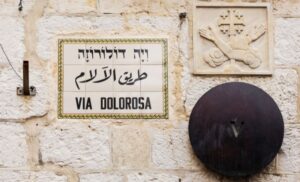
The Church of the Holy Sepulchre, Jerusalem (restoration of the Catholic Chapel of Calvary, 1933-1937): The impressive Catholic gallery, represents the 12th station of the Via Dolorosa. It is the place where Jesus is traditionally believed to have been nailed to the cross.
The Church of the Beatitudes, Galilee (Completed 1938): This church is situated on the Mount of Beatitudes, where Jesus is believed to have delivered the Sermon on the Mount. The church has an octagonal shape, reflecting the eight Beatitudes, has a spectacular view of the Sea of Galilee and is surrounded by gardens.
The Church of the Visitation, Ein Karem (completed 1955): This church in Ein Karem commemorates the visitation of Mary to Elizabeth. Barluzzi designed the church in a Renaissance style, with a façade of arches and intricate interior mosaics depicting the visitation and Magnificat.
The Cloister of Bethlehem (restoration, completed 1947): The restoration of the Cloister of Bethlehem by Barluzzi involved preserving the historical integrity of the structure while ensuring its stability and usability for religious purposes.
The Church of St. Lazarus, Bethany (completed 1953): This church, built on the traditional site of Lazarus’ house, combines Byzantine and Romanesque architectural styles. It features a bell tower and an elegant interior.
The Church of the Angels, Shepherds Fields, Bethlehem (completed 1954): This church, built in the shape of a tent, commemorates the appearance of the angels to the shepherds announcing Jesus’ birth. Its simple design reflects the humble settings of the biblical event.
Dominus Flevit, Mount of Olives (completed 1955): Dominus Flevit, which means “The Lord Wept,” is a small church shaped like a teardrop, symbolizing the tears of Christ. It is situated on the Mount of Olives, where Jesus wept over Jerusalem.
The Church at Bethphage (restoration, 1955): This restoration project involved carefully preserving and enhancing the church at Bethphage, the traditional starting point of Jesus’ triumphal entry into Jerusalem.
The Greek Church of the Holy Face and St. Veronica, Jerusalem (restoration): In this restoration project, Barluzzi worked on the Greek Church of the Holy Face and St. Veronica in Jerusalem, preserving its historical integrity and religious significance.
Other buildings and structures
- The Italian Hospital of Jerusalem (1912-1919): Beluzzi and his brother created a beautiful building (that currently houses offices of the Ministry of Education) that consists of a harmonious blend of Italian and Middle Eastern influences. This was the first building he designed in the Holyland.
A School for Girls in Jericho (completed 1924): Besides churches, Barluzzi also contributed to the community by designing educational institutions. This school provided education for girls in a region where educational opportunities were limited.
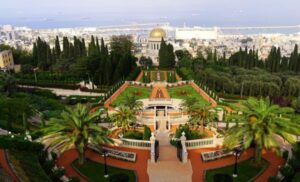
A New House for the Carmelite Fathers of Haifa (completed 1930): Barluzzi designed a residence for the Carmelite Fathers in Haifa, focusing on creating a space that is both functional and spiritually enriching.
The Convent of St. Antony, Jerusalem: This convent in Jerusalem serves as a religious community for nuns. Barluzzi’s design focused on creating a serene and contemplative environment.
The Ethiopian Monastery (restoration): Barluzzi restored this ancient monastery, preserving its historical features and ensuring its continued use as a place of worship and community.
- Terra Santa School, Jerusalem: This school in Jerusalem was designed to serve the local community, providing education within a building that reflects both functionality and aesthetics.
Additional Information
- September 26, 1884: Antonio Barluzzi is born in Rome, Italy.
- Circa 1889: As a five-year-old, Barluzzi is already creating remarkable sketches of churches.
- 1902: Barluzzi leaves Liceo Umberto I di Roma and considers entering the seminary, but is advised to delay to further his education.
- 1902-1907: Barluzzi attends Sapienza University of Rome, earning a degree in Engineering.
- 1909-1912: Barluzzi works on building projects in Italy with his brother Giulio.
- 1912-1919: Antonio and Giulio Barluzzi work on the Italian Hospital in Jerusalem.
- 1913-1914: Barluzzi works on building projects in the Middle East with his brother Giulio. While in Jerusalem, he works on a hospital for the Italian Missionary Society and is asked to submit plans for a basilica on Mount Tabor.
- 1914: With the outbreak of World War I, Barluzzi is obliged to return to Italy.
- 1915: Barluzzi joins the Seminario Romano di S. Giovanni after Easter, but leaves after a few weeks.
- 1915: After leaving seminary, Barluzzi joins the Italian army as a Sergeant and begins military service with the Fortifications Office, overseeing archaeological excavations at Castel Sant’Angelo.
- 1918: Barluzzi joins the Palestine detachment of the Italian army and takes part in the allied entry into Jerusalem.
- Circa 1918: While in Palestine, Barluzzi meets Father Ferdinando Diotallevi, the new Custos of the Holy Land, who requests he start work on churches at Mount Tabor and Gethsemane simultaneously, using Barluzzi’s previous plans.
- 1918-1926: Barluzzi (“le Capitaine Barluzzi”) is a member of the leading Council of the Pro-Jerusalem Society.
- 1919-1924: Barluzzi works on and completes the Church of All Nations at Gethsemane.
- 1921-1924: Barluzzi works on and completes the Church of the Transfiguration on Mount Tabor.
- 1924: Barluzzi completes The Church of All Nations at Gethsemane and the Church of the Transfiguration on Mount Tabor.
- 1924-1925: Barluzzi builds the Church and Hospice of Jesus the Good Shepherd in Jericho and a school for girls in Jericho.
- 1925-1926: Barluzzi undertakes the restoration of the Italian Legation premises at Teheran.
- 1926: Terra Sancta College is built in Jerusalem by the Society of Saint Paul of Milan as the “Opera Cardinal Ferrari.” (Source indicates Barluzzi designed it).
- 1927-1929: Barluzzi rebuilds the Church of the Flagellation in Jerusalem over Crusader ruins.
- 1927-1937: Barluzzi serves as secretary of the Jerusalem branch of the Fascist Party.
- 1930: Barluzzi builds a new house for the Carmelite Fathers of Haifa and restores their church on Mount Carmel.
- 1932 or 1933: The Italian Hospital in Haifa is inaugurated. (Source indicates Barluzzi built it).
- 1933-1937: Barluzzi restores the Catholic chapel of the Calvary within the Church of the Holy Sepulchre in Jerusalem.
- 1936: Barluzzi builds the Convent and College of St Anthony (Collegio Sant’Antonio) in Jerusalem for the Sisters of the Immaculate Heart of Mary.
- 1937-1938: Barluzzi builds the Church of the Beatitudes on the Mount of Beatitudes by the Sea of Galilee.
- 1939: Barluzzi renovates the Church of Saint John the Baptist in Ein Karem, Jerusalem.
- During World War II (1939-1945): Barluzzi is in Sardinia doing building works for Franciscan and Capuchin fathers. He remains in Italy until 1947. During this time, he plans a great temple at the Holy Sepulchre and a Shrine to the Incarnation in Nazareth, which he believed would be his final work in the Holy Land.
- 1947: Barluzzi restores the Cloister of St. Jerome at the Church of Saint Catherine, Bethlehem.
- 1947: Barluzzi returns to the Holy Land after World War II.
- 1951: Barluzzi completely transforms the Latin Patriarchate church in Beit Sahour (originally built in 1859), consecrating and dedicating it to Our Lady of Fatima and St. Theresa of Lisieux.
- 1952-1953: Barluzzi builds the Church of St. Lazarus in al-Eizariya (biblical Bethany).
- 1953: Barluzzi restores the Church of the Holy Face and Saint Veronica (Greek Catholic) on the Via Dolorosa in Jerusalem.
- 1953-1954: Barluzzi builds the Church of the Angels or Gloria in Excelsis at Shepherds’ Field, Beit Sahour near Bethlehem.
- 1954-1955: Barluzzi builds the Church of Dominus Flevit on the Mount of Olives.
- 1955: Barluzzi restores the Church of Bethphage on the Mount of Olives and completes the Church of the Visitation in Ein Karem.
- Circa 1955: A fresco depicting Barluzzi appears on the wall of the church he designed at Ein Karem.
- 1957: Barluzzi is awarded the Grand Officer of the Order of Merit of the Italian Republic.
- 1958: The decision to commission Barluzzi for the Nazareth project is revoked, leading him to suffer a heart attack which causes cerebral deafness and pulmonary emphysema.
- December 14, 1960: Antonio Barluzzi dies in a small room at the Delegation of the Holy Land in Rome.
What architectural style did Antonio Barluzzi use in his Holy Land churches?
Antonio Barluzzi developed a distinctive style that blended traditional Byzantine, Romanesque, and Crusader elements with modern construction techniques. He used reinforced concrete for structural integrity while maintaining historical appearances through traditional stone masonry and classical proportions. His approach emphasized “liturgical architecture” designed to enhance specific religious experiences.
What happened to Barluzzi’s design for the Church of the Annunciation?
In 1958, church authorities rejected Barluzzi’s design for the Church of the Annunciation in Nazareth in favor of Giovanni Muzio’s modernist proposal. This rejection deeply affected Barluzzi, contributing to a heart attack that left him with health problems. He had envisioned this project as his masterpiece and “Shrine to the Incarnation.”
Where is Antonio Barluzzi buried?
Antonio Barluzzi was buried in the cemetery of the Franciscan Custody of the Holy Land next to Mount Zion in Jerusalem, following his death on December 14, 1960. His burial location reflects his deep spiritual connection to the Holy Land and his desire to remain close to the sacred sites he helped shape through his architecture.
What makes Antonio Barluzzi’s church designs unique?
Barluzzi’s churches feature distinctive use of natural light, symbolic geometry, and strategically positioned windows to create dramatic spiritual effects. He designed each space to enhance specific biblical events associated with the site. His integration of modern materials with traditional aesthetics created earthquake-resistant structures that maintain historical character while meeting contemporary needs.
Keep reading
Part of our Christian Pilgrimage Guide →