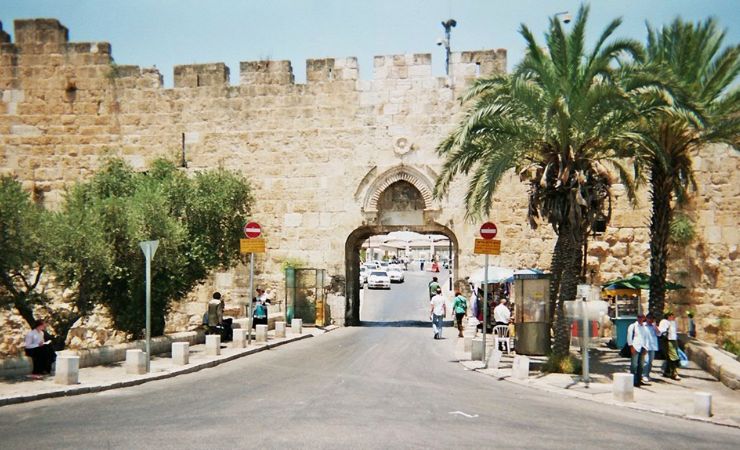
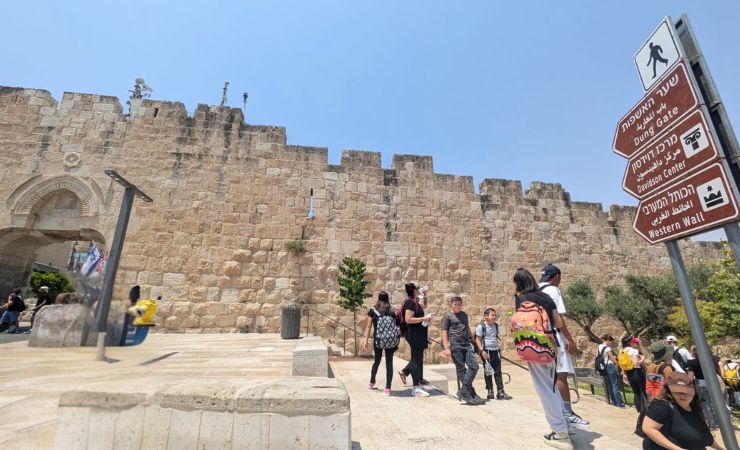
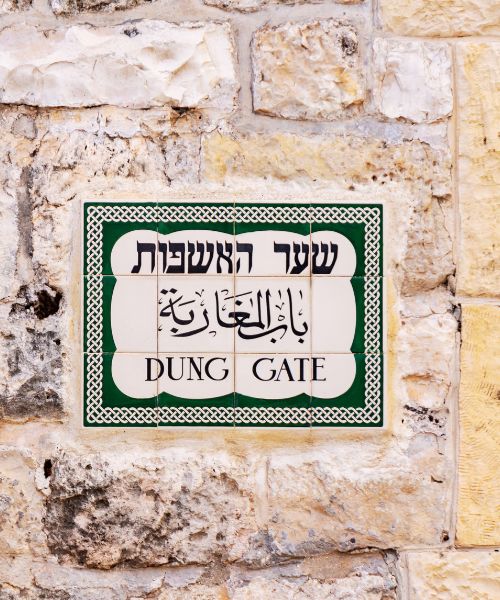
The Dung Gate is one of eight gates in Jerusalem's Old City walls, providing the closest access to the Western Wall and Temple Mount. Also known as the Silwan or Mughrabi Gate, it serves as the primary entrance for visitors heading to Judaism's holiest prayer site and sits at the southern end of the Western Wall plaza.
The Dung Gate, known alternatively as the Silwan Gate or Mughrabi Gate, serves as the primary vehicle entrance to Jerusalem’s Old City and provides direct access to the Western Wall Plaza. This unassuming gate handles thousands of pilgrims, tourists, and residents daily, making it one of the eight gates in the Old City of Jerusalem busiest entry points. Despite its humble name, the Dung Gate offers passage to some of the world’s most sacred sites, including the Western Wall and the Al-Aqsa Mosque.
Location
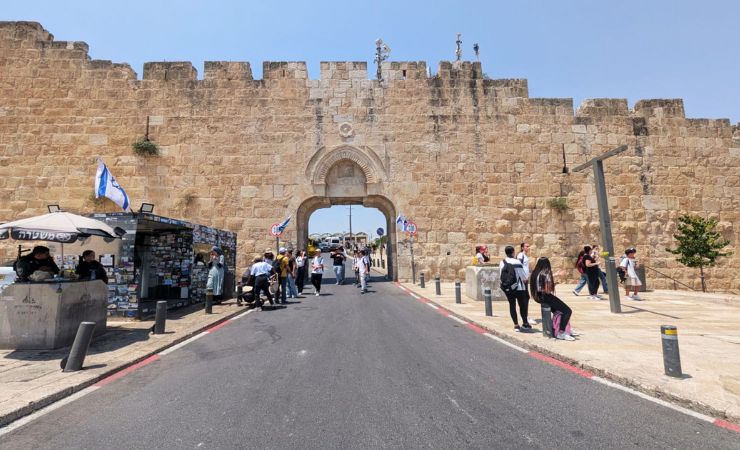
The Dung Gate Jerusalem sits at the southeastern corner of the Old City walls, approximately 200 meters from the Jerusalem Archeological Park (Davidson Center). The gate opens onto the Kidron Valley and provides the closest vehicular access to the Western Wall Plaza. Its strategic position makes it the natural entry point for tour buses and vehicles serving the Temple Mount compound and Jewish Quarter.
What's in a Name?
The distinctive name “Dung Gate” traces back to biblical times, specifically mentioned in Nehemiah 2:13 during the prophet’s nighttime inspection of Jerusalem’s walls around 445 BCE. The ancient gate in this vicinity served as the city’s waste disposal exit, where refuse and ashes were carried out to the Hinnom Valley for burning. Archaeological evidence from this period suggests the area contained pottery workshops, leading to its alternative designation as the “Potter’s Gate” in ancient texts.
The Arabic name “Bab al-Maghariba” (Gate of the Maghrebis or Moroccans) reflects a different layer of Jerusalem’s complex history. This designation commemorates the Mughrabi Quarter, established by North African Muslim immigrants who arrived in the 12th century to support Saladin’s campaigns. The quarter flourished for over 800 years until its demolition in 1967, when Israeli authorities cleared the area to create the modern Western Wall Plaza. The quarter’s narrow alleys and traditional architecture had housed generations of Moroccan, Algerian, and Tunisian families who maintained their distinct cultural identity while becoming integral to Jerusalem’s social fabric.
The Ottoman Origins of the Dung Gate
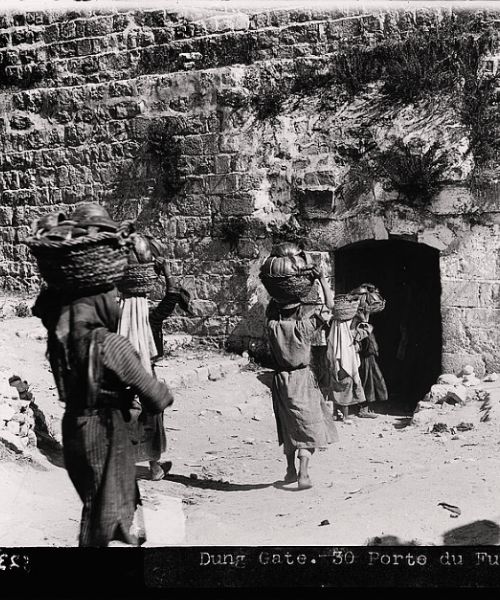
Ottoman Sultan Suleiman the Magnificent commissioned the current city walls between 1537 and 1541, incorporating the Dung Gate as a modest postern entrance measuring just 1.5 meters wide. Unlike Jerusalem’s grand gates such as Damascus Gate or Jaffa Gate, this entrance lacked defensive towers and elaborate decorative elements, reflecting its utilitarian purpose. The Ottoman architects positioned it to serve the southeastern neighborhoods while maintaining the wall’s defensive integrity. Historical records from this period indicate the gate operated on restricted hours, typically closing at sunset due to security concerns.
The gate’s transformation from a narrow pedestrian passage to a modern vehicle entrance occurred through several major renovations spanning four centuries. In 1938, British Mandate authorities removed an outer gatehouse, likely added during the 19th century, to restore the walls closer to their original 16th-century appearance. This restoration exposed original Ottoman stonework and decorative elements that had been obscured for generations.
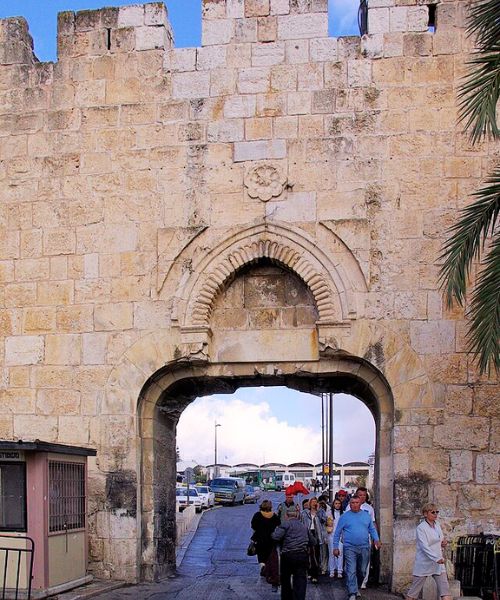
The most significant alteration came in 1952 when Jordanian authorities widened the opening to accommodate automobiles and tour buses. Engineers installed a reinforced concrete girder beneath the existing stone arch, a solution that preserved the historic masonry while meeting modern transportation needs. This renovation reflected Jerusalem’s growing importance as a pilgrimage destination in the mid-20th century.
Following the 1967 Six-Day War, Israeli authorities undertook a comprehensive renovation between 1984 and 1985. Landscape architect Shlomo Aronson and architect Arthur Kutcher led the sensitive restoration, which raised the original arch and decorative elements to create a 4.5-meter-high opening. The modern reinforced concrete structure was carefully clad in matching limestone, blending seamlessly with Suleiman’s 16th-century walls. The Dung Gate Jerusalem now accommodates modern traffic demands while preserving its historical character, serving as the primary vehicular route to the Western Wall Plaza and handling approximately 15,000 daily visitors during peak pilgrimage seasons.
Practical Information
The Dung Gate Jerusalem operates 24 hours daily and requires no admission fee for entry. Security screenings are standard, especially during peak pilgrimage seasons and Jewish holidays. The gate provides wheelchair accessibility with ramped access to the Western Wall Plaza.
Additional Information
- 648 A.D.: During Caliph Omar’s conquest of Jerusalem, trash is cleared out of the city through the gate that would become known as the Dung Gate.
- Ottoman Period: The current Dung Gate is built as a small postern gate (1.5 meters wide) with an arch, designed for pedestrians and pack animals, as part of the new city walls erected by Ottoman Sultan Suleiman the Magnificent. North African immigrants (Maghrebis) live in neighborhoods next to the gate, leading to its Arabic name “Bab al-Maghariba” (Gate of the Maghrebis).
- 19th Century:
- Zionists begin referring to the gate as “Dung Gate” (Sha’ar Ha’ashpot), commemorating an ancient biblical gate near the Pool of Siloam used for residue removal from the Jewish Temple.
- Inhabitants of the city begin relocating towards the slopes of the City of David and surrounding villages, increasing pressure to open the Dung Gate for easier movement.
- 1936-1939 (Arab Revolt): The New Gate is closed with barbed wire by the British. The British restore the walls to their original look, bringing the old stone decorations back to light. This creates a straight pedestrian passageway.
- 1948-1967: Jordanians control the Old City. The Jordanians widen the gate to allow vehicle passage, installing a reinforced concrete girder under the old stone arch.
- 1967 (Six-Day War): Israel reclaims the Old City. The gate becomes the main entry to the Western (Wailing) Wall and the Jewish Quarter.
- 1984-1985: The Dung Gate is enlarged by Israeli authorities. The old arch and decorative elements are raised, reaching a height of 4.5 meters. The modern gate is clad in stone and features a more curvy opening line.
How do I get to the Western Wall from Dung Gate Jerusalem?
The Western Wall Plaza is directly accessible through Dung Gate Jerusalem, located just 150 meters from the gate entrance. Follow the main paved path straight ahead after entering, and you’ll reach the plaza within a 2-3 minute walk. Security checkpoints are positioned along this route, so allow extra time during busy periods.
Why is it called the Dung Gate?
The distinctive name “Dung Gate” traces back to biblical times. The ancient gate in this vicinity served as the city’s waste disposal exit, where refuse and ashes were carried out to the Hinnom Valley for burning.
What other historical sites can I access through Dung Gate Jerusalem?
Beyond the Western Wall, Dung Gate Jerusalem provides access to the Jerusalem Archaeological Park, City of David excavations, and the Southern Wall excavations. The gate also leads to the Jewish Quarter, Western Wall Tunnels, and serves as a starting point for Temple Mount visits (during permitted hours and with advance arrangements).
Sites Nearby the Dung Gate
Jerusalem Archaeological Park and Davidson Centre: Right after entering the Dung Gate, these sites offer a glimpse into the city’s past with ruins of walls from different periods of Jerusalem’s history.
City of David: This archaeological site is believed to be the original urban core of ancient Jerusalem. Visitors can explore ancient ruins and walk through Hezekiah’s Tunnel, a remarkable feat of engineering from the biblical era.
- Western Wall: Also known as the Wailing Wall, this is one of the most sacred sites in Judaism. It’s a place of prayer and pilgrimage sacred to the Jewish people.
Western Wall Tunnels: These tunnels reveal the full length of the Western Wall hidden beneath the Old City, offering a unique perspective on this significant religious site.
- Al-Aqsa Mosque: This is the third holiest site in Islam and is located on the Temple Mount.
- Pool of Siloam: An ancient pool where, according to the New Testament, Jesus healed a man who had been blind since birth.
Keep reading
Part of our Jerusalem Travel Guide →