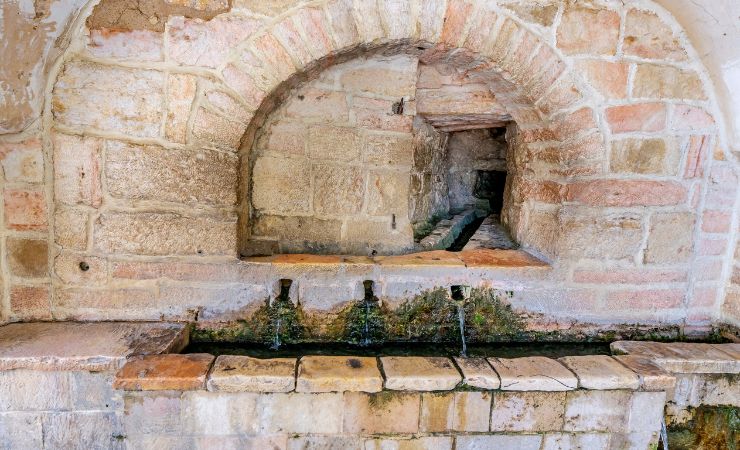
Mary's Spring in Ein Karem, located southwest of Jerusalem, is a sacred site where tradition holds the Virgin Mary drank water while visiting her cousin Elizabeth. The spring has provided water to the village for centuries and remains an active source today. Pilgrims visit this modest stone fountain to connect with biblical narratives and enjoy Ein Karem's peaceful atmosphere.
Located in the picturesque village of Ein Karem, just eight kilometers southwest of Jerusalem, Mary’s Well Ein Karem holds profound significance for Christian pilgrims and history enthusiasts alike. This ancient spring, also called Mary’s Spring or the Fountain of the Virgin, marks the traditional location where Mary is believed to have drawn water before her momentous visit to her cousin Elizabeth. The site connects visitors to one of the most celebrated events in Christian tradition, the Visitation, when Elizabeth proclaimed Mary blessed among all women.
Location
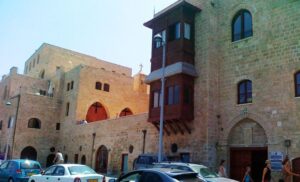
Ein Karem, translating to “Spring of the Vineyard,” sits at an elevation of 750 meters above sea level in the Judean Hills. This tranquil village encompasses terraced hillsides covered with olive groves, ancient fig trees, and remnants of the vineyards that gave it its name. Stone houses with red-tiled roofs line narrow cobblestone streets that wind through the valley, creating a Mediterranean atmosphere reminiscent of Tuscany. The village’s location in a natural amphitheater of hills provides natural springs that have sustained life here for millennia. Its proximity to Jerusalem makes it accessible to pilgrims while maintaining its serene, pastoral character that has attracted artists, writers, and spiritual seekers for generations.
Historical significance
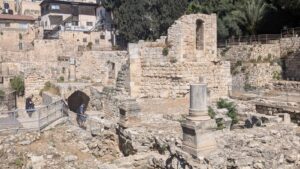
Ein Karem’s association with biblical events extends far beyond Christian tradition. Archaeological excavations have revealed pottery shards, coins, and foundation stones dating back to the Bronze Age (3300-1200 BCE), indicating continuous settlement for over four millennia. During the Second Temple period, the village flourished as part of the Jerusalem region’s agricultural belt. Roman-era installations include ancient wine presses carved directly into bedrock and ritual baths (mikvaot) that served the local Jewish population.
The Gospel of Luke records Mary’s journey “with haste to a Judean town in the hill country” (Luke 1:39), which Christian tradition identifies as Ein Karem. Byzantine pilgrims in the 4th-6th centuries CE established the first churches here, recognizing the site’s connection to Elizabeth and Zechariah’s home. The Crusaders built substantial structures in the 12th century, remnants of which can still be observed in some of the village’s older buildings. Ottoman tax records from the 16th century list Ein Karem as a thriving village with Muslim, Christian, and Jewish residents, reflecting its multi-religious character throughout history.
Biblical context
The narrative of Mary’s visit to Elizabeth represents a pivotal moment in Christian theology, marking the first recognition of Jesus’ divinity while still in the womb. According to Luke’s account, the angel Gabriel announced to Mary that her elderly cousin Elizabeth, previously barren, had conceived in her sixth month. This miraculous pregnancy served as a sign to confirm Mary’s own calling. The journey from Nazareth to Ein Karem would have taken three to four days on foot, covering approximately 150 kilometers through challenging terrain.
The narrative of Mary’s visit to Elizabeth represents a pivotal moment in Christian theology, marking the first recognition of Jesus’ divinity while still in the womb. According to Luke’s account, the angel Gabriel announced to Mary that her elderly cousin Elizabeth, previously barren, had conceived in her sixth month. This miraculous pregnancy served as a sign to confirm Mary’s own calling. The journey from Nazareth to Ein Karem would have taken three to four days on foot, covering approximately 150 kilometers through challenging terrain.
Elizabeth’s immediate recognition of Mary’s blessed state, triggered by John the Baptist’s movement in her womb, demonstrates the profound spiritual dimensions of this encounter. Mary’s response, known as the Magnificat (Luke 1:46-55), echoes the song of Hannah in 1 Samuel 2:1-10, connecting her experience to the broader narrative of God’s faithfulness to Israel. The theological significance extends beyond the personal meeting to encompass themes of divine election, prophetic recognition, and the fulfillment of messianic promises recorded throughout biblical history.
And Mary arose in those days and went into the hill country with haste, into a city of Juda; And entered into the house of Zacharias, and saluted Elisabeth. And it came to pass, that, when Elisabeth heard the salutation of Mary, the babe leaped in her womb; and Elisabeth was filled with the Holy Ghost: And she spake out with a loud voice, and said, Blessed art thou among women, and blessed is the fruit of thy womb.
Luke 1:39-44
This sacred encounter establishes the theological foundation for understanding Jesus and John’s future relationship, with John later proclaiming himself unworthy to untie Jesus’ sandals. The passage also highlights the role of women in salvation history, as both Mary and Elizabeth receive divine revelation and prophetic insight. The emphasis on Elizabeth being “filled with the Holy Spirit” parallels similar descriptions throughout Luke-Acts, connecting this moment to the broader work of God’s Spirit in the early church.


The Mosque Above Mary’s Spring
Mary’s Well Ein Karem remains accessible to visitors, though the water is no longer considered potable due to modern environmental factors. The natural spring continues to flow, emerging from an ancient limestone cave system that has supplied water to the village for millennia. Pilgrims often collect water in small containers as a devotional remembrance, though authorities recommend against consumption.
The mosque above Mary’s Spring in Ein Karem, also known as Ain Sitti Maryam, adds a significant historical and cultural layer to the site.
Historical Background
Constructed in the latter half of the 19th century during Sultan Abdul Hamid II’s reign, the mosque was built over the spring traditionally associated with Mary’s visit. During this period, the Ottoman Empire ruled the region, and many structures, including mosques, were established to serve the local Muslim community. The mosque’s construction above the spring underscores the site’s importance to different religious groups over the centuries.
Architectural Features
The mosque features three domes above its prayer hall and a prominent minaret that rises above the structure, making it a distinctive landmark in Ein Karem. The building itself is a blend of simple architectural design with historical significance, serving both religious and communal purposes during its peak use.
Cultural and Religious Significance
Ein Karem’s multi-religious character flourished during the Ottoman period, with Muslims, Christians, and Jews sharing neighborhood spaces and participating in local commerce. The presence of the mosque alongside Christian holy sites in Israel illustrates the harmonious coexistence and the layered history of the village.
Current Status
Although the mosque is no longer in active use for daily prayers, it remains an important historical site. Efforts have been made to preserve its structure, recognizing its value in the historical and cultural landscape of Ein Karem.
Practical Information
Mary’s Well Ein Karem is open daily year-round with no admission charge. The spring area can be accessed from sunrise to sunset, though optimal visiting hours are 8:00 AM to 5:00 PM when natural lighting is best for photography. The site remains accessible during Sabbaths and most holidays, making it convenient for pilgrims with varying religious observances.
Additional Information
Is Mary’s Well the same as Mary’s Well in Nazareth?
No, Mary’s Well in Ein Karem is completely separate from the well of the same name in Nazareth. The Ein Karem location is associated with Mary’s visit to Elizabeth during the Visitation, while Nazareth’s Mary’s Well relates to the Annunciation tradition. Both sites hold distinct theological significance in Christian pilgrimage routes.
Can visitors drink water from Mary’s Well?
The water from Mary’s Well is not considered safe for drinking due to modern environmental factors and potential contamination. While pilgrims may collect small amounts as devotional keepsakes, local authorities and health officials recommend against consumption. The spring continues to flow naturally after millennia of use.
What is the best time of year to visit Mary’s Well Ein Karem?
Spring (March-May) and fall (September-November) offer the most comfortable weather conditions with mild temperatures and clear skies ideal for photography. Summer visits are possible but can be quite warm, while winter months may bring occasional rain. The site remains accessible year-round regardless of season.
Sources and Additional Information
Nearby Sites
- Church of the Visitation: This beautifully decorated church marks the traditional site of Mary’s visit to Elizabeth. Its exterior features mosaics depicting the biblical event, and the interior includes ancient relics and a cistern believed to have provided water to John the Baptist.
- Church of St. John Be Harim: This church is believed to be built over the birthplace of John the Baptist and contains a grotto identified as his birthplace.
- The Russian Monastery: Known for its striking architecture and serene gardens, it offers a peaceful retreat for visitors.
- Art Galleries and Cafés: The village is dotted with charming art galleries and quaint cafés, making it a delightful place to explore and relax.
Keep reading
Part of our Christian Pilgrimage Guide →