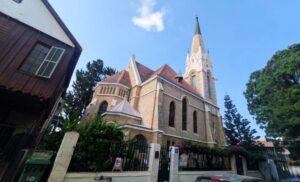
Neve Tzedek is Tel Aviv's oldest neighborhood, founded in 1887 — 22 years before Tel Aviv itself — by 48 Jewish families led by Shimon Rokach and Aharon Chelouche. Located on the southern edge of Tel Aviv near the Mediterranean seafront, it is known for its Art Nouveau and Bauhaus architecture, cultural institutions, and historic streets.
Neve Tzedek is Tel Aviv’s oldest residential neighborhood, founded in 1887 by 48 Jewish families who wanted a clean, orderly life outside the congested walls of Jaffa. It predates the city of Tel Aviv by 22 years, and walking its narrow lanes today, past sun-bleached plaster and bougainvillea climbing cracked walls, you feel that head start in every stone.
At a Glance
Neve Tzedek Tel Aviv sits on the southern edge of the city, bordered by Herzl Street to the east, the HaTachana railway compound to the west, and Jaffa to the south. The name comes from the Hebrew נְוֵה צֶדֶק and is translated variously as “Oasis of Justice,” “Abode of Justice,” or “Dwellings of Justice.” The founders drew the phrase from Jeremiah 50:7, where it appears as an epithet for God, signaling both a religious vision and a practical ambition: to build a community defined by order and fairness, in deliberate contrast to the crowded port city they were leaving behind.
The neighborhood covers roughly a dozen narrow streets lined with one- and two-story buildings. Its architectural character layers Oriental, Art Nouveau, and Bauhaus styles across more than 130 years of continuous habitation. Today it functions as a creative and cultural quarter within Tel Aviv, and it is also one of the city’s most sought-after residential addresses, with property prices that reflect its historic prestige and proximity to the Mediterranean.
Historical Background
Neve Tzedek was founded in 1887 by two men: Shimon Rokach, a Jerusalem pioneer of agriculture, and Aharon Chelouche, a landowner and businessman originally from Algeria. They purchased land on open coastal dunes north of Jaffa and built modest, low-rise homes along lanes designed to encourage community life. By the early 20th century the neighborhood had developed a strong cultural identity, attracting artists, writers, and intellectuals drawn by its relative affordability and its distance from the noise of the port.
The cultural roster was remarkable. Nobel Prize-winning author S.Y. Agnon lived here during this formative period, renting a room in what is now the Chelouche House. Painter and sculptor Nachum Gutman documented early Tel Aviv life from within these streets. Writers Yosef Haim Brenner and Deborah Baron and poet David Shimoni were also residents. The neighborhood’s first synagogue, located just off today’s Shabazi Street, was headed by Rabbi Abraham Isaac Kook, HaRav Kook, who became one of the most influential religious thinkers in modern Jewish history.
On 22 August 1914, the Eden Cinema opened at the corner of Lilienblum and Pines Streets with a screening of the Italian silent film The Last Days of Pompeii. It was the first cinema in pre-state Israel and later hosted the debut of the Palestine Opera in 1923.
After 1948, the neighborhood declined. New waves of immigrants made it dense and neglected, and by the 1970s the Tel Aviv municipality had slated the area for demolition. Public opposition reversed that decision. A restoration plan was adopted instead, and the revival gathered real momentum in the 1980s when the Suzanne Dellal Centre for Dance and Theatre opened in a restored 1908 school building. Property values rose, artists moved in, and Neve Tzedek reclaimed the cultural standing it had held a century earlier. By 1909, the neighborhood and its adjacent quarters had grown large enough for Tel Aviv to be formally established as a city, with Neve Tzedek forming part of its original nucleus.
Inside Neve Tzedek: What to See
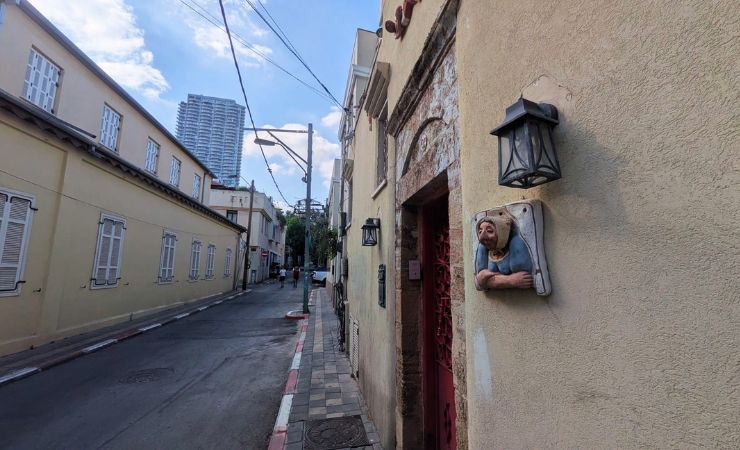
Neve Tzedek is best explored on foot. The neighborhood is compact enough to cover in two to three hours at a relaxed pace, though visitors who stop at museums and cafes will want longer. Shabazi Street is the natural starting point, running through the center of the area and connecting most of the key landmarks within a short walk of one another. The architectural variety rewards close attention: some buildings have been meticulously restored, their Art Nouveau ironwork and decorative stucco facades freshly painted; others are mid-restoration or left in deliberate patina, their old wooden shutters warped by decades of Mediterranean sun.
Shabazi Street — The main artery of Neve Tzedek runs through the center of the neighborhood and is named after the 17th-century Yemenite Jewish poet Rabbi Shalom Shabazi. It is lined with colorful historic buildings housing boutique shops, art galleries, sidewalk cafes, and restaurants, and it is pedestrian-friendly enough that most visitors end up spending more time here than they planned, drawn into a gallery or stopped by a coffee that spills across the pavement. Start here and let the street decide the pace.
Rokach House (36 Shimon Rokach Street) — One of the original 48 houses built in 1887, this was the family home of co-founder Shimon Rokach and is immediately recognizable by its distinctive copper dome, a rare Art Nouveau element in a neighborhood already rich with architectural interest. Today it operates as a museum and visitor center dedicated to Neve Tzedek’s founding period, displaying period furniture, clothing, household items, and photography from the late 19th century, alongside a short film about the neighborhood’s origins. Rokach’s son, Israel Rokach, went on to become Tel Aviv’s second mayor, making this house a direct link between the neighborhood’s founders and the city’s early political life.
Chelouche House / Beit Abulafia (32 Chelouche Street) — Built by Algerian-born co-founder Aharon Chelouche, this was one of the very first houses constructed in Neve Tzedek. It carries two histories: that of its builder, whose family name is embedded in the street outside, and that of its most famous later resident, S.Y. Agnon, who rented an attic room here before winning the Nobel Prize in Literature in 1966. The building now functions as an art gallery, and its rooftop terrace offers panoramic views across Tel Aviv’s rooftops toward the Mediterranean.
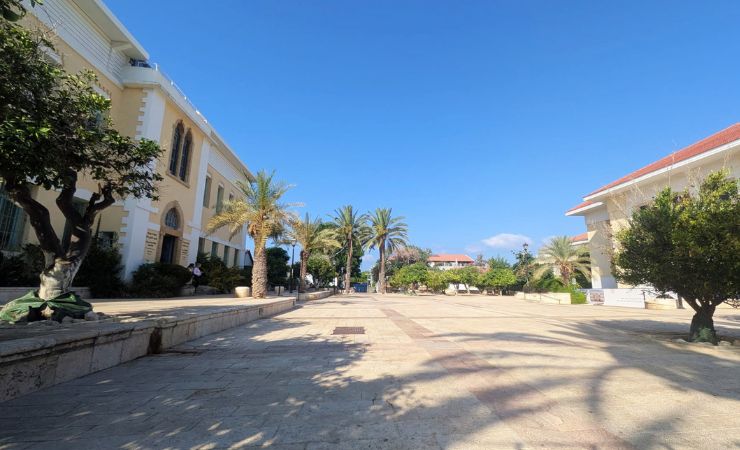
Suzanne Dellal Centre for Dance and Theatre (5 Yehieli Street) — Israel’s premier contemporary dance center occupies a beautifully restored school building that dates from 1908, and its campus is built around an expansive tree-shaded piazza that functions as a public gathering space even on days when no performances are scheduled. Multiple performance spaces inside host Israeli and international dance companies and festivals throughout the year. The Suzanne Dellal Centre was the single most important catalyst for Neve Tzedek’s revival in the 1980s: its establishment brought artists, audiences, and sustained investment into what had been a declining quarter, and its presence continues to define the neighborhood’s identity as a cultural destination. For performance schedules and booking, visit the Suzanne Dellal Centre official website.
Nachum Gutman Museum of Art (21 Shimon Rokach Street) — Founded in 1998, this museum occupies one of the original 1887 houses, a building known historically as the “Writers’ House” because it later served as the editorial hub of the HaPoel HaTzair newspaper and as a home to prominent Hebrew writers. The museum is dedicated to Nachum Gutman, born in 1898, the Tel Aviv painter and sculptor who documented the city’s early life with warmth and humor across paintings, sculptures, drawings, lithographs, and illustrated books. Adult admission costs approximately 30 NIS as of 2024, and the museum is open Sunday through Thursday 10:00 to 17:00, Friday 10:00 to 14:00, and Saturday 10:00 to 15:00. Thematic exhibitions featuring contemporary Israeli artists run alongside the permanent collection, giving the museum a living connection to the present as well as the past.
Eden Cinema Building (corner of Lilienblum and Pines Streets) — The distinctive yellow-and-pink stucco building with a rounded facade at this corner housed Tel Aviv’s first movie theater, which opened on 22 August 1914 with a screening of the Italian silent film The Last Days of Pompeii. The Eden Cinema was a major cultural institution of early Tel Aviv and hosted the debut performance of the Palestine Opera in 1923. The building no longer operates as a cinema but remains one of the most photographed structures in Neve Tzedek, its rounded facade and period color scheme standing out even on a street full of historic architecture.
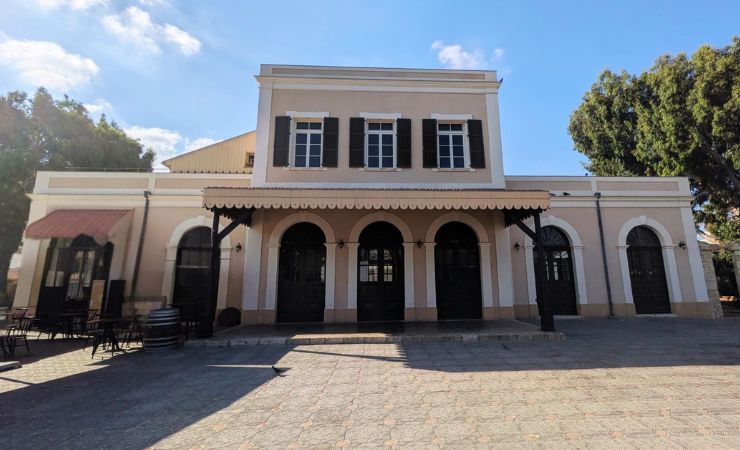
HaTachana (The Station Compound, 1 Koifman Street) — Adjacent to Neve Tzedek at the Mediterranean seafront, HaTachana is a restored complex of Ottoman-era stone buildings that served as the terminus of the historic Jaffa to Jerusalem railway from 1892 until 1948. The railway was the first in Ottoman Palestine, and the station compound is the oldest surviving railway infrastructure in the country. After decades of disuse, the buildings were carefully restored and reopened as a leisure and shopping destination, with cafes, restaurants, boutiques, and galleries occupying the original station structures. An old railway carriage sits on a preserved section of track within the compound, and the complex connects Neve Tzedek’s 19th-century history directly to the seafront promenade.
Park HaMesila — Running along the route of the old Jaffa to Jerusalem railway line, Park HaMesila is a long, narrow green corridor stretching from the HaTachana compound through the southern edge of Tel Aviv. Its name, meaning “the track” in Hebrew, preserves the memory of what once ran through it. The paved, well-maintained path is popular with joggers, cyclists, and families on weekends, and at several points along the route remnants of the original railway infrastructure remain visible, including old stone embankments and preserved sections of track. For visitors combining Neve Tzedek with HaTachana, the park offers a natural and unhurried route between the two, with shade trees and benches along the way.
Practical Information
Neve Tzedek is a residential neighborhood with no admission charge to enter. The Nachum Gutman Museum charges a fee; confirm current times before visiting as hours can vary seasonally.
The neighborhood is bordered by Herzl Street to the east and the HaTachana compound to the west. Parking is limited and the streets are narrow, so arriving by bus or bicycle is the more practical option. The neighborhood is liveliest on Friday mornings, when locals fill the cafes and the nearby Levinsky Market draws additional foot traffic.
Additional Information
Neve Tzedek, Wikipedia: Comprehensive encyclopedia article covering the neighborhood’s founding, historical periods, notable residents, architectural character, name etymology including the Jeremiah 50:7 connection, and modern revival.
Eden Cinema, Wikipedia: Documents the Eden Cinema (1914), located in Neve Tzedek, as Tel Aviv’s first movie theater and a key cultural institution of early pre-state Israel.
Is Neve Tzedek worth visiting?
Yes. Neve Tzedek offers a rare combination of 19th-century architecture, world-class cultural venues like the Suzanne Dellal Centre, and some of Tel Aviv’s best independent cafes and galleries, all within a compact, walkable area. Two to three hours covers the highlights; a full half-day lets you linger properly.
What does Neve Tzedek mean?
The name comes from the Hebrew נְוֵה צֶדֶק, translated as “Oasis of Justice,” “Abode of Justice,” or “Dwellings of Justice.” The founders took the phrase from Jeremiah 50:7, where it appears as an epithet for God, choosing it to express their vision of a fair, peaceful community outside Jaffa.
When was Neve Tzedek founded, and why does it matter?
Neve Tzedek was established in 1887 by 48 Jewish families led by Shimon Rokach and Aharon Chelouche. It was the first Jewish neighborhood built beyond the walls of Jaffa and predates Tel Aviv by 22 years. By 1909, the neighborhood had grown large enough to form part of Tel Aviv’s founding nucleus.
How is rental income tax in Israel calculated for Tel Aviv apartment owners?
Rental income in Israel is taxed under three main tracks: a flat 10% tax on gross rent with no deductions, the standard marginal income tax rate with deductions allowed, or an exemption if monthly rent stays below the statutory threshold. The right track depends on total income. A licensed Israeli tax adviser can run the numbers for your specific property.
Do you pay capital gains tax when selling property in Israel as a foreigner?
Yes, generally. Non-residents selling Israeli property are subject to capital gains tax (mas shevach) on the real gain. The standard rate is 25% on the inflation-adjusted gain. Exemptions that apply to Israeli residents typically do not apply to foreign sellers. Always consult a qualified Israeli real estate lawyer before completing a sale.
What is the difference between living in Tel Aviv and Herzliya Pituach?
Tel Aviv is urban, walkable, and dense, with round-the-clock energy, strong public transport, and neighborhoods like Neve Tzedek that mix culture with residential life. Herzliya Pituach offers larger villas, private pools, quieter streets, and direct beach access, but requires a car for most errands. Families often prefer Herzliya Pituach; young professionals tend to choose Tel Aviv.
Nearby Sites
Neve Tzedek sits within easy reach of several of Tel Aviv’s most distinctive areas, all reachable on foot or by a short ride.
- Old Jaffa Port — A 20-minute walk south, Old Jaffa is one of the oldest continuously occupied port cities in the world.
- Jaffa Clock Tower — Standing at the entrance to Old Jaffa on Yefet Street, the clock tower was built in 1906 during the reign of Ottoman Sultan Abdul Hamid II to mark the 25th year of his rule.
- Jaffa Flea Market (Shuk HaPishpeshim) — Located in the Olei Zion quarter of Jaffa, a short walk from the clock tower, this is one of the most characterful open-air markets in Tel Aviv.
- Rothschild Boulevard — Running north from the edge of Neve Tzedek through central Tel Aviv, Rothschild Boulevard is the city’s most architecturally significant street.
Keep reading
Part of our Tel Aviv & Jaffa Guide →