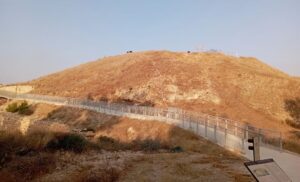
Tel Azeka is an ancient hilltop city in central Israel's Valley of Elah, approximately 26 kilometers northwest of Hebron. The site overlooks the valley where David famously battled Goliath according to biblical accounts. Archaeological excavations reveal layers of settlement spanning from the Bronze Age through the Roman period, making it a significant biblical and historical landmark.
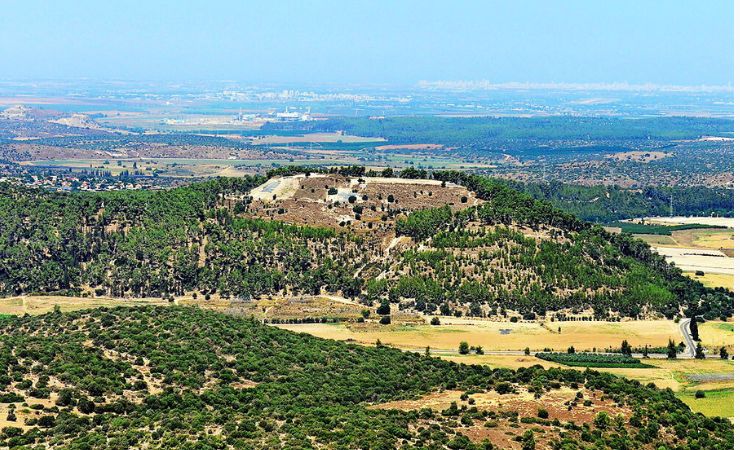
Tel Azeka rises from the floor of the Valley of Elah in the Shephelah, the low hill country of central Israel, commanding views in every direction from its summit. This ancient fortified city witnessed some of the most pivotal episodes in the Hebrew Bible, from the duel between David and Goliath to the final desperate hours of the Babylonian siege of Judah.
Where is Tel Azeka Located?
Tel Azeka sits approximately 26 kilometers southwest of Jerusalem and 18 kilometers southeast of Beit Shemesh, within the Shephelah region. The Shephelah is a band of low limestone hills that separates the coastal plain from the Judean Mountains, and it functioned throughout antiquity as a contested buffer zone between coastal powers and the highland kingdoms.
Biblical Context
The biblical record places Tel Azeka at the center of one of the most retold stories in the ancient world. First Samuel 17 locates the Israelite and Philistine camps in the Valley of Elah, with the Philistines encamped between Socoh and Azeka. It was here that the young shepherd David came down to the valley, chose five smooth stones from the stream bed, and felled the Philistine champion Goliath with a single shot from his sling. The precise geography described in the text matches the landscape visible from the tel today, with a seasonal stream running through the valley floor below.
Azeka appears elsewhere in the biblical record with equal significance. King Rehoboam, Solomon’s son, fortified the city as part of a chain of defensive positions meant to protect the approaches to Jerusalem (2 Chronicles 11:9). Centuries later, during the Babylonian siege of Judah in 587 BCE, Jeremiah 34:7 records that Azeka and Lachish were the only two fortified cities still holding out against Nebuchadnezzar’s forces. A letter discovered at Lachish, one of the famous Lachish Ostraca, appears to reference the moment Azeka’s signal fires went dark, suggesting the city had fallen. For anyone interested in how ancient Hebrew inscriptions corroborate biblical accounts, this connection between Azeka and the Lachish letters is one of the most compelling in all of biblical archaeology.
When the king of Babylon’s army fought against Jerusalem and the cities of Judah that were left, against Lachish and Azekah; for these were the only fortified cities remaining in Judah.
Jeremiah 34:7



Tel Azeka's History
Tel Azeka’s earliest occupation dates to the Early Bronze Age, around 3500 BCE, when settlers first recognized the hilltop’s defensive advantages above the valley floor. By the Middle and Late Bronze Ages, the city had grown into a substantial urban center with documented trade connections to Egypt. Archaeologists have recovered Egyptian scarabs, cylinder seals, and imported pottery at the site, objects that point to Azeka’s participation in the broader Canaanite trade network that linked the Levantine coast to the Nile Delta. These finds are consistent with the ongoing excavations of the Lautenschläger Azekah Expedition, which has been systematically uncovering the site’s stratigraphy since 2012.
At the close of the Late Bronze Age, around 1200 BCE, Azeka suffered a violent destruction. Excavators found human skeletons buried beneath collapsed walls and burned debris, a pattern seen at numerous Canaanite cities during the same period, when the broader Bronze Age collapse disrupted trade networks and toppled cities across the eastern Mediterranean. The city lay largely abandoned for a generation or two before Iron Age settlers rebuilt on the ruins.
Azeka’s Iron Age chapter is the most historically documented. The city became a fortified outpost of the Kingdom of Judah, reinforced by King Rehoboam as part of a defensive line guarding the western approaches to Jerusalem. Its strategic value drew the attention of the Assyrian Empire: in 701 BCE, Sennacherib campaigned through the Shephelah and besieged Azeka. His own royal annals, preserved in Assyrian cuneiform, describe the city as perched on a mountain peak “like iron daggers pointed to heaven,” a rare moment when Assyrian imperial records and the biblical narrative refer to the same place at the same time. The siege ramp his engineers constructed against the city’s walls remains partially visible on the slope of the tel.
Azeka recovered from the Assyrian assault and continued to function as a Judean city into the 7th century BCE. Its final Iron Age destruction came with the Babylonian campaigns of Nebuchadnezzar. By 587 BCE, Azeka was one of only two Judean cities still holding out, as Jeremiah 34:7 records, and its fall shortly before Jerusalem’s is captured in the anguished tone of Lachish Letter IV, in which a military commander reports that he can no longer see Azeka’s fire signals. The city was resettled during the Persian period and continued to be inhabited through the Hellenistic and early Roman eras before its occupation ended in the wake of the Bar Kokhba revolt in the 2nd century CE.
The layered history of Tel Azeka, spanning Canaanite traders, Israelite kings, Assyrian engineers, and Babylonian armies, makes it one of the most archaeologically rich and historically legible sites in the Shephelah.
What Can Be Found at the Site
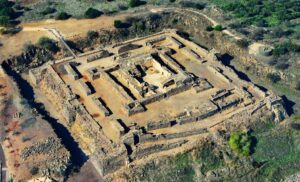
Fortification Walls: Remnants of ancient city walls dating from multiple periods are visible across the tel, including sections attributed to the Canaanite city and later Judean construction. Some stretches of mudbrick wall still stand to a height of several courses, preserving the outline of towers and gate areas.
Assyrian Siege Ramp: One of the most remarkable features at Tel Azeka is the remains of the siege ramp built by Sennacherib’s engineers during the 701 BCE Assyrian campaign. This earthwork, constructed against the western slope of the hill, is among the few surviving examples of an Assyrian siege ramp in the region and connects directly to Sennacherib’s own inscribed account of the battle.
Egyptian Artifacts: Numerous artifacts recovered from Bronze Age strata, including scarabs, cylinder seals, and imported Cypriot and Egyptian pottery, document Azeka’s role as a trading center before the Israelite period. Many of these objects are now held in university collections and are featured in publications by the Lautenschläger Azekah Expedition team.
Scenic Overlook: The summit of the tel provides a panoramic view across the Valley of Elah. Standing here, you can see the streambed where David would have gathered his stones and the open ground where the two armies camped on opposing hillsides. For Christian pilgrims and Jewish visitors alike, this vantage point gives the narrative of 1 Samuel 17 a physical reality that no classroom or church can replicate.
Practical Information
The site is open to visitors and freely accessible. There is no entrance fee. The climb to the summit takes roughly 15 to 20 minutes on an unpaved trail with moderate incline. Sturdy shoes are recommended, especially between November and March when the path can be muddy.
Additional Information
What is Tel Azeka and why is it significant?
Tel Azeka is an ancient fortified city in the Shephelah region of central Israel, occupied from the Early Bronze Age through the Roman period. Its significance spans both archaeology and scripture: it appears in the David and Goliath narrative of 1 Samuel 17, in accounts of Judean fortification under King Rehoboam, and in the final chapters of the Babylonian conquest of Judah. Ongoing excavations by the Lautenschläger Azekah Expedition have confirmed multiple layers of occupation and uncovered physical evidence matching the biblical descriptions.
Where exactly is Tel Azeka located, and how do I get there?
Tel Azeka is located about 26 kilometers southwest of Jerusalem in the Valley of Elah, accessible via Route 383 near Kibbutz Netiv HaLamed Heh. There is a small unpaved parking area at the base of the tel. No direct public bus route serves the site, so most visitors arrive by rental car or as part of a guided tour. The drive from Jerusalem takes roughly 35 to 40 minutes depending on traffic.
What is the connection between Tel Azeka and the David and Goliath story?
First Samuel 17 places the Philistine encampment between Socoh and Azeka in the Valley of Elah, directly below what is now Tel Azeka. The seasonal stream running through the valley floor is the same kind of streambed from which David would have selected his five smooth stones. Standing on the summit of the tel, you can survey the open ground where the opposing armies camped on either side of the valley, making the biblical geography feel concrete and immediate.
What archaeological evidence has been found at Tel Azeka?
Excavations have uncovered Canaanite-period mudbrick fortification walls, Egyptian scarabs and cylinder seals from the Bronze Age, Iron Age destruction layers consistent with the Assyrian and Babylonian campaigns described in ancient texts, and the remains of a siege ramp attributed to Sennacherib’s 701 BCE assault. The Lautenschläger Azekah Expedition, a collaborative project involving Hebrew University and institutions in Germany, has been the primary excavation team working the site since 2012 and publishes regular field reports.
Nearby Sites
Tel Lachish: Another significant biblical city known for its dramatic siege by the Assyrians, located a short drive from Tel Azeka.
Bet Guvrin–Maresha National Park: A UNESCO World Heritage site with ancient cave systems and archaeological sites.
Beit Jamal Monastery – a serene monastery has a beautiful church, and the production of wine and olive oil by the resident monks.
Latrun Monastery: Located near the Ayalon Valley, is a tranquil site renowned for its stunning architecture, vineyards, and the production of exquisite wines by Trappist monk.
Tel Gezer – Tel Gezer is an ancient archaeological site in Israel, known for its biblical significance and well-preserved Canaanite and Israelite ruins.
Keep reading
Part of our Shephelah & Central Israel Guide →