The Karaites are a Jewish sect that emerged over a millennium ago, rejecting rabbinic oral law and the Talmud in favor of strict adherence to the written Torah alone. They interpret scripture individually rather than following rabbinical interpretations. Today, this small community maintains distinct religious practices, including different holiday observances and dietary laws, while preserving their scriptural approach to Judaism.
Karaite Judaism is a community whose roots reach back more than a millennium, small but deeply devoted, fiercely scriptural, and committed to a hands-on, personal relationship with the Torah. For visitors to Israel curious about the full spectrum of Jewish life, encountering Karaite practice offers a perspective that mainstream tourism rarely includes.
The Karaites: A Torah-Only Approach to Judaism
The Karaites base their lives exclusively on the Written Torah, the Five Books of Moses plus the rest of the Hebrew Bible (Tanakh). Unlike Rabbanite, or mainstream, Judaism, they do not follow the Oral Law, meaning the Mishnah, the Talmud, or centuries of rabbinic commentary. Instead, Karaites believe each individual bears responsibility for studying and interpreting scripture themselves. This principle, known in Arabic as ijtihad and in Hebrew as diyyuq, places the reader directly in front of the text with no institutional intermediary required.
This is not a free-for-all, though. Tradition matters. Many Karaite customs have been passed down over generations, especially when the Torah is silent on specifics. But if the choice is between rabbinic rulings and the plain meaning of scripture, the Torah wins. This approach produces some striking practical differences from mainstream Jewish life: Karaites do not use electricity on Shabbat (rather than simply refraining from creating fire), they calculate the Jewish calendar by direct lunar observation rather than the fixed rabbinic calendar, and their prayer posture involves prostration in a manner closer to ancient Temple practice than to modern synagogue convention.
Historical Presence and Migrations
Karaite Judaism emerged in the 9th century in the Islamic Middle East, most likely in Baghdad, where a scholar named Anan ben David is traditionally credited as an early organizer of the movement, though the community itself traces its principles to a much older rejection of post-biblical law. During what many consider their Golden Age, between 900 and 1100 CE, Karaites produced a wealth of scholarship and religious commentary. Figures such as Yefet ben Ali, who translated and commented on the entire Hebrew Bible in Judeo-Arabic, and Daniel al-Qumisi, who urged Karaites to settle in Jerusalem as an act of mourning for the Temple’s destruction, shaped a tradition of rigorous textual engagement. Karaites lived with a degree of autonomy in Muslim lands, and some rose to high-ranking positions in government and society. At their height, Karaites may have made up as much as 10% of the global Jewish population, a striking figure for a community that often flew under the historical radar. For broader context on this era, the Jewish Virtual Library’s overview of Karaite history provides a useful starting point.
Karaite communities have been scattered across the Jewish world, from Egypt to Eastern Europe to the cities of modern Israel. The key places where this tradition has taken root include:
- Egypt: Egypt once hosted one of the oldest and most influential Karaite communities, with a presence lasting roughly 1,300 years. The Ben Ezra Synagogue in Cairo’s Fustat neighborhood, though associated with Rabbanite Jews, stood near the Karaite quarter and reflects the layered religious geography of medieval Egyptian Jewry. There was frequent interaction, and even intermarriage, between Egyptian Karaites and those in Turkey, Jerusalem, and Crimea. The community’s archives, which surfaced partially through the Cairo Geniza discoveries of the late 19th century, revealed extensive correspondence networks spanning the medieval Mediterranean world.
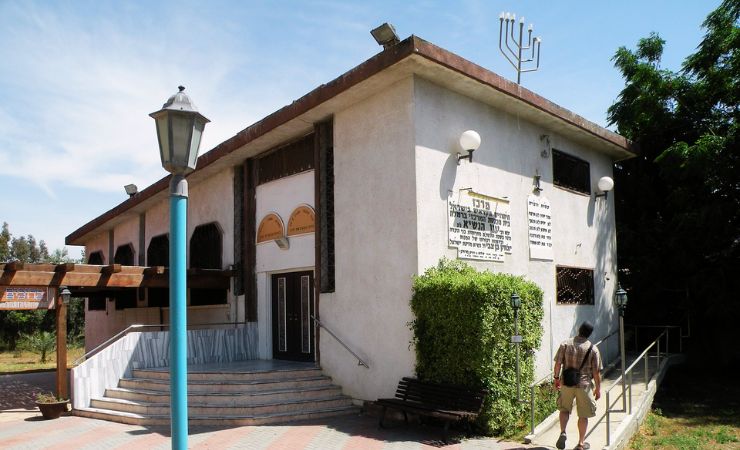
- Ramla, Israel: Karaites have lived in Ramla for about 800 years, and today the city is considered the global center of Karaite life. The Karaite World Center is based there, along with a historic synagogue that continues to serve the local community. Visitors can arrange tours of the center and synagogue by contacting the community in advance.
- Russian Empire and Soviet Union: In the 19th century, Karaite Jews in the Russian Empire were treated differently from their Rabbanite counterparts. Russian officials formally separated the two groups, exempting Karaites from many of the anti-Jewish laws then in force. Karaite leaders argued, in an effort to reinforce this distinction, that their community was not present in Jerusalem at the time of the crucifixion of Jesus, an argument that helped solidify their legal status as a distinct ethnic group in some areas. This claim, however contested historically, had real consequences: during the Nazi occupation of Eastern Europe, some Karaite communities in Lithuania, Crimea, and Ukraine were spared the genocide inflicted on Rabbanite Jews, partly because local leaders and some German officials accepted the ethnic-group argument. The United States Holocaust Memorial Museum has documented this complex and painful chapter of Karaite experience during the Shoah.
- Waves of Aliyah to Israel: With the founding of the State of Israel, Karaites from Egypt, Syria, Iraq, and parts of Europe began making aliyah in significant numbers. The largest wave came from Egypt following the 1956 Suez Crisis and the subsequent deterioration of conditions for Jews in that country. Most Egyptian Karaite immigrants settled in Ramla, Ashdod, Beer Sheva, and Moshav Matzliah, which was established specifically for Karaite olim and remains a predominantly Karaite community today.
Estimates suggest there are between 30,000 and 50,000 Karaites worldwide. About 30,000 to 40,000 of them live in Israel, mostly in Ramla, making it the center of modern Karaite Judaism.
Karaite-Rabbinic Relations in Israel: A Complex Coexistence
In modern Israel, Karaite Jews walk a fine line: they are legally recognized as Jews under the Law of Return and enjoy a unique autonomy in religious life. Karaite communities are permitted to perform their own marriages, divorces, circumcisions, and burials, all independent of the state-run rabbinic system. The Israeli government formally recognized Karaite religious courts in 1971, a significant legal milestone that allowed the community to maintain its distinct identity without assimilating into the Rabbanite institutional framework.
The relationship with mainstream Rabbinic authorities has not always been smooth, however. Orthodox rabbinic authorities have historically questioned whether Karaites can be considered Jewish because the majority view in Karaite Judaism is that Jewish identity can only be transmitted by patrilineal descent, on the grounds that all descent in the Torah goes through the male line for purposes of marriage.
Karaite and Rabbinic Jews share the same Torah, the same Hebrew, and the same holidays by name. The difference appears the moment you ask who decides what a verse means. Rabbinic Judaism answers through an accumulated body of interpretation running from the Mishnah to modern responsa. Karaite Judaism answers by sending the reader back to the text. That single divergence produces most of what a visitor actually notices: a synagogue floor kept clear for prostration rather than lined with pews, a Shabbat with no lights at all, and a kitchen where meat and milk sit side by side.
Many Karaite Israelis participate fully in national civic life, serve in the Israel Defense Forces, and interact daily with Rabbanite neighbors in Ramla and other mixed cities.
Rabbinic and Karaite Judaism Compared
| Topic | Rabbinic (Rabbanite) Judaism | Karaite Judaism |
|---|---|---|
| Source of authority | Written Torah plus the Oral Law, recorded in the Mishnah and Talmud. | The written Tanakh alone. Post-biblical rabbinic law is not binding. |
| Who interprets | Rabbis and halachic codes, through an accepted chain of authority. | Every individual, through personal study and reasoning (diyyuq). |
| Shabbat and electricity | Electricity is treated as fire or building; timers and pre-set devices are widely permitted. | No electricity is used at all, including lights left burning from before Shabbat. |
| Prayer posture | Standing and bowing, centred on the Amidah. Full prostration survives only on Yom Kippur and Rosh Hashanah. | Eight biblical postures are treated as essential to prayer:
|
| Prayer text | A siddur built up over centuries of rabbinic composition. | Prayers drawn almost entirely from Psalms and other biblical passages. |
| Meat and dairy | Strict separation, including separate dishes and waiting times. | No separation required. The Torah verse is read as written, about a kid in its mother's milk. |
| Tefillin and mezuzah | Physical boxes and parchment scrolls, worn and affixed as commanded. | The verses are read figuratively. Doorposts often carry a plaque rather than a scroll. |
| Festivals | Hanukkah is observed; diaspora communities add a second festival day. | Hanukkah is not observed as a religious obligation. Shavuot always falls on a Sunday. |
| Jewish status | Traced through the mother. A child of a Jewish father and a non-Jewish mother is not Jewish. | Traced through the father. The majority Karaite position is that Jewish identity passes down the male line, as all descent does in the Torah. |
| Institutions in Israel | The Chief Rabbinate governs marriage, divorce and burial. | Independent Karaite religious courts, recognised by the state since 1971. |
| Numbers today | The overwhelming majority of world Jewry. | Roughly 30,000 to 50,000 worldwide, most of them in Israel and centred on Ramla. |
Additional Information
What is Karaite Judaism, and how does it differ from mainstream Judaism?
Karaite Judaism is a movement within the Jewish faith that accepts only the Written Torah, meaning the Hebrew Bible (Tanakh), as binding religious law. Unlike Rabbanite Judaism, which treats the Oral Law, including the Mishnah and Talmud, as divinely authoritative, Karaites hold that each person must study and interpret scripture directly. This produces practical differences in Shabbat observance, calendar calculation, prayer posture, and dietary law.
Where did Karaite Judaism originate?
Karaite Judaism emerged in 9th-century Baghdad, in the territory then ruled by the Abbasid Caliphate. The scholar Anan ben David is traditionally associated with organizing the early movement, though Karaites themselves trace their principles to a much older rejection of post-biblical legal authority. The movement grew rapidly across the Islamic world, with significant centers in Jerusalem, Cairo, and the Crimean Peninsula.
Where do most Karaite Jews live today?
The largest Karaite population in the world lives in Israel, with estimates ranging from 30,000 to 40,000 people. Ramla, a city in central Israel, functions as the global center of Karaite life and is home to the Karaite World Center and its synagogue. Other significant Israeli communities exist in Ashdod, Beer Sheva, and Moshav Matzliah, a village established by Egyptian Karaite immigrants after 1956.
Are Karaite Jews recognized as Jewish under Israeli law?
Yes. Karaite Jews are recognized as Jews under Israel’s Law of Return and hold full citizenship rights. Since 1971, the Israeli government has formally recognized Karaite religious courts, allowing the community to conduct its own marriages, divorces, circumcisions, and burials outside the state-run Rabbanite system. However, questions about intermarriage between Karaites and Rabbanite Jews remain sensitive within Orthodox rabbinic circles.
How is the Karaite calendar different from the standard Jewish calendar?
The Karaite calendar is based on direct observation of the new moon crescent rather than on the fixed mathematical calendar adopted by Rabbanite Judaism in the 4th century CE under Hillel II. This means Karaite holidays sometimes fall one or two days later than the Rabbanite equivalent. The practice connects the community to the lunar observation methods described in the Torah itself and used in ancient Israel before the calendar was fixed.
Keep reading
Part of our Jewish Heritage Guide →