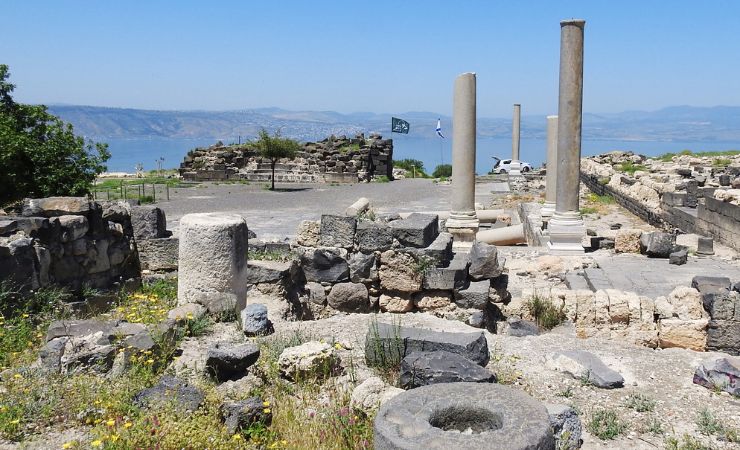
Hippos-Sussita is an ancient Decapolis city perched on a hilltop above the Sea of Galilee's eastern shore. This Hellenistic and Roman archaeological site features impressive ruins including temples, churches, basilicas, and a well-preserved theater. The site officially opened to visitors in 2024, offering panoramic views and insights into ancient urban life.
Above the Sea of Galilee, the ancient city of Hippos-Sussita stands on a windswept plateau, commanding breathtaking views across the Jordan Valley. This remarkable Hippos-Sussita archaeological site, officially opened to the public in 2024, reveals nearly eight centuries of continuous habitation from the Hellenistic period through the Early Islamic conquest.
Location
The Hippos-Sussita archaeological site sits atop a prominent hill rising 350 meters above sea level, 2 kilometers east of the Sea of Galilee. The ancient city occupied a natural fortress position on an isolated plateau measuring approximately 35 hectares, connected to the Golan Heights by a narrow saddle.
History: A Glimpse into the Past
Seleucid rulers established Antiochia Hippos around 200 BCE as part of their systematic colonization of the region with Greek cities. The settlement received its name from the Greek word for horse, likely reflecting the city’s emblem or the cavalry units stationed there. When the Hasmonean ruler Alexander Jannaeus conquered the city around 83 BCE, local inhabitants began using the Aramaic equivalent “Sussita,” though both names continued in use throughout antiquity.
The city flourished as a member of the Decapolis, the confederation of ten recent archaeological research that dominated the eastern Mediterranean trade networks during the Roman period. This prestigious association granted Hippos-Sussita significant autonomy, including the right to mint its own currency, which frequently bore the image of a horse. The city’s coins from the 1st and 2nd centuries CE provide valuable insights into its economic prosperity and cultural identity.
Following Pompey’s reorganization of the eastern provinces in 63 BCE, Hippos-Sussita was incorporated into the Roman Provincia Syria while maintaining its Decapolis status. The city reached its zenith during the Early Roman period, when massive construction projects created the forum, basilica, and other monumental buildings that defined its urban landscape. Despite periodic conflicts, including the Jewish revolt of 66-73 CE, the city continued to thrive until its gradual decline in the Byzantine period and final abandonment following the 749 CE earthquake.
Recent Archaeological Discoveries at Hippos-Sussita
More than two decades of systematic excavations have transformed our understanding of this ancient Israel Antiquities Authority excavations and its role in the broader cultural landscape of the ancient Near East. The most remarkable discovery remains a well-preserved fresco of the Greek goddess Tyche, patron deity of cities and fortune, found within a luxurious peristyle house. This artwork, featuring intricate details and vibrant colors that survived nearly two millennia, demonstrates the sophisticated artistic traditions that flourished in Decapolis cities.
The Hippos-Sussita Excavations Project, launched in 2000 under the direction of the University of Haifa, has systematically uncovered the city’s urban development across eight centuries. Excavations have revealed how successive civilizations adapted and rebuilt the site, creating a complex stratigraphy that documents the transition from Hellenistic settlement to Roman metropolis to Christian sites in Israel center.
The Hellenistic Compound: Archaeologists have uncovered the site’s oldest architectural remains, dating to the late 2nd century BCE. This compound bordered the original agora and contained a sanctuary that served the city’s Greek colonists. The precision of the construction, using carefully cut basalt blocks, reflects the engineering expertise that Seleucid cities brought to the region. When Romans renovated the area in the 1st century CE, they preserved elements of the original temple while adding their own architectural features.
The Forum and Street Network: The excavated forum reveals a rectangular plaza measuring 60 by 45 meters, surrounded by colonnaded porticoes that provided shelter for commercial and civic activities. Multiple construction phases show how the space evolved from a simple Hellenistic agora to an elaborate Roman forum. The main east-west thoroughfare, the decumanus maximus, stretched 600 meters across the city and was paved with massive basalt stones that still show wheel ruts from ancient traffic.
City Fortifications and Gates: The fortification wall, constructed from local basalt ashlar blocks, enclosed the entire urban area with walls averaging 3 meters in thickness. The East Gate complex included guard chambers and a defensive tower equipped with arrow slits for archers. Archaeological evidence suggests the fortifications were strengthened multiple times, particularly during the Byzantine period when the city faced increased threats from Arab raiders.
The Roman Basilica: This magnificent public building served as both courthouse and commercial center. The fully excavated structure measured 50 by 20 meters and featured two rows of columns that supported a clerestory roof allowing natural light to flood the interior. Fragments of decorative stucco and painted plaster indicate the basilica was lavishly decorated with geometric and floral motifs typical of Roman public architecture.
The Southern Bathhouse: The public baths demonstrate the sophisticated hydraulic engineering that Roman cities required. The complex included hot, warm, and cold rooms connected by a hypocaust heating system that circulated hot air beneath raised floors. Imported marble veneer and mosaic floors reflect the wealth that trade brought to the city during its Roman heyday.
The Odeion: This small theater, designed for musical performances and poetry recitations, accommodated 380 spectators in its semicircular seating arrangement. The acoustics, carefully calculated using Roman architectural principles, allowed performers to be heard clearly throughout the audience area without artificial amplification.
What Can Be Seen Today
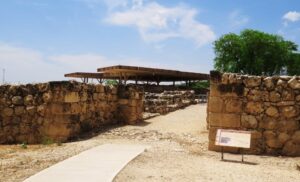
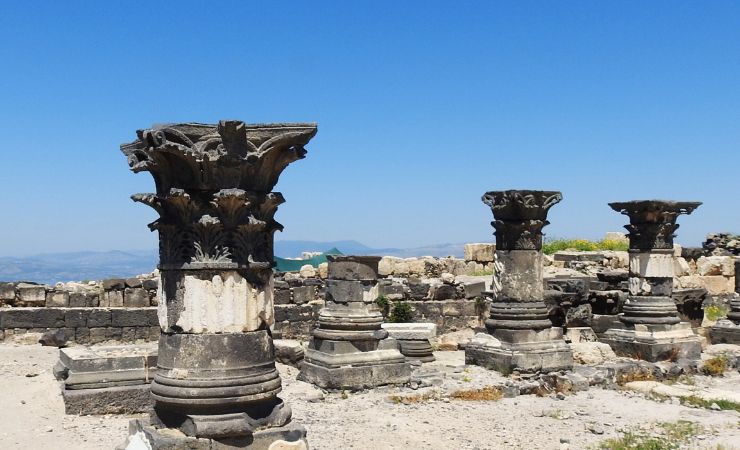
Visitors to the Hippos-Sussita archaeological site can explore extensive remains that showcase the city’s evolution across multiple historical periods. The Roman Basilica displays remarkably preserved columns and wall foundations that allow visitors to understand the scale and grandeur of ancient civic architecture. The Byzantine Churches reveal the transformation of the city into an important Christian center, with mosaic floors and baptismal fonts still visible among the ruins.
The City Fortifications offer dramatic views across the Sea of Galilee while demonstrating ancient military engineering. The Roman Forum preserves the heart of the ancient city, where merchants, politicians, and citizens gathered for Israel activities. The Decumanus Maximus allows visitors to walk the same stone-paved street that connected the city from east to west during its heyday.
Practical Information
Sussita National Park operates year-round with seasonal hour variations. Summer hours (April-September) are 8:00 AM to 5:00 PM Sunday through Thursday, and 8:00 AM to 4:00 PM on Fridays and holiday eves. Winter hours (October-March) are 8:00 AM to 4:00 PM daily except Fridays and holiday eves when the site closes at 3:00 PM. The park remains closed on Yom Kippur and during severe weather conditions.
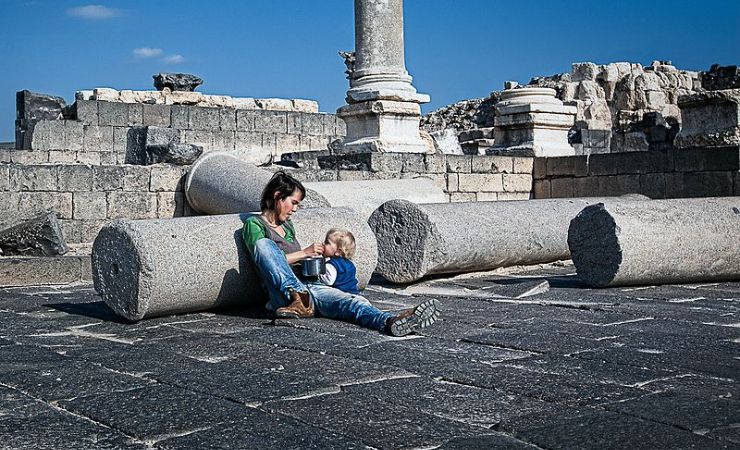
The site involves significant walking over uneven ancient stones and exposed archaeological areas. Comfortable walking shoes with good grip are essential, and visitors should bring sun protection and water, especially during summer months. The exposed hilltop location offers little natural shade.
Additional Information
How long does it take to visit Hippos-Sussita archaeological site?
A complete visit to the Hippos-Sussita archaeological site typically requires 2-3 hours, depending on your level of interest in the ruins and historical details. The main archaeological areas can be covered in about 90 minutes, but visitors often spend additional time enjoying the spectacular views over the Sea of Galilee. Those interested in photography or detailed exploration of the Byzantine churches and Roman structures may want to allow a full half-day.
Can you see Hippos-Sussita ruins without hiking?
Yes, visitors can drive directly to the Hippos-Sussita archaeological site via a paved access road that leads to a parking area near the ruins. The site itself requires some walking over ancient stone pavements and uneven terrain, but no significant hiking is necessary. The elevation change within the archaeological area is minimal, making it accessible for most visitors who can walk on irregular surfaces.
What makes Hippos-Sussita different from other Decapolis cities?
Hippos-Sussita archaeological site is unique among Decapolis cities for its exceptional state of preservation and dramatic hilltop location overlooking the Sea of Galilee. Unlike other Decapolis cities that were continuously occupied and rebuilt, Hippos-Sussita was abandoned after the 749 CE earthquake and never resettled. This abandonment preserved the Roman and Byzantine layers intact, providing an unparalleled snapshot of ancient urban life without modern interference.
Is Hippos-Sussita accessible for visitors with mobility limitations?
The Hippos-Sussita archaeological site presents challenges for visitors with significant mobility limitations due to its ancient stone surfaces, uneven terrain, and lack of paved pathways. However, the parking area is located relatively close to the main ruins, and some areas of the site can be viewed without extensive walking. Visitors with mobility concerns should contact the Israel Nature and Parks Authority in advance to discuss accessibility options and determine which areas of the site may be suitable for their needs.
Nearby Sites
- Kursi: Kursi is believed to be the site where Jesus performed the Miracle of the Swine. Today, it houses the remains of a Byzantine monastery and church.
- Ein Kshatot (Umm el Kanatir): This site showcases the impressive ruins of a Jewish village from the Byzantine period. Its highlights include a restored ancient synagogue.
- Capernaum: Often referred to as “Jesus’ own city,” The ancient ruins include a synagogue and the supposed home of Saint Peter and the Orthodox Church of the twelve Apostles.
- Bethsaida: Bethsaida is mentioned is the birthplace of apostles Peter, Andrew, and Philip and the site of several of Jesus’ miracles.
Keep reading
Part of our Galilee & Northern Israel Guide →