The Church of All Nations stands in the Garden of Gethsemane on the Mount of Olives in Jerusalem. Built in 1924 over the rock where Jesus prayed before his arrest, the church received funding from twelve nations, hence its name. The Byzantine-style basilica features stunning mosaics and preserves ancient olive trees.
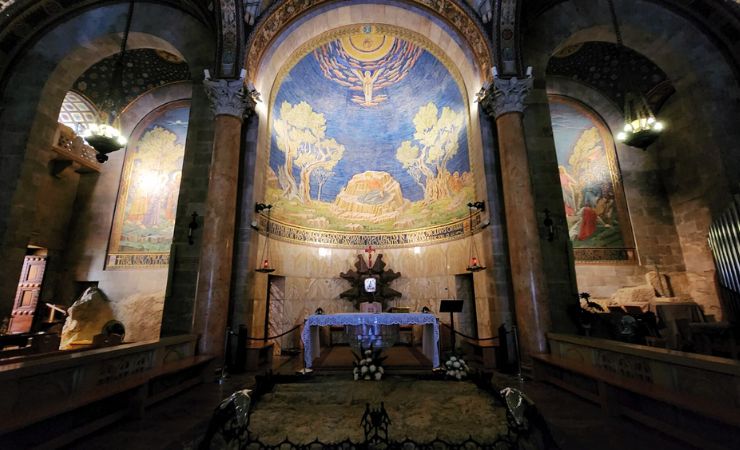
Within the ancient olive groves of Gethsemane stands an architectural marvel known as the Church of All Nations, one of the Holy Land most sacred pilgrimage sites. Christian tradition identifies this church as built over the actual rock where Jesus prayed in agony on the night before his death. Inside the basilica, this weathered stone remains visible beneath the altar, serving as the focal point for the thousands of pilgrims and visitors who come to contemplate this pivotal moment in Christian history. The rock itself, worn smooth by centuries of reverent touch, measures approximately three meters in diameter.
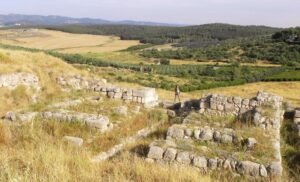
The current Church of All Nations was completed in 1924 under the direction of Italian architect Antonio Barluzzi, but archaeological excavations have revealed it stands on the foundations of two earlier churches.
Location
The Church of All Nations sits prominently on the western slope of the Mount of Olives, approximately 200 meters east of Jerusalem’s Old City walls. The basilica occupies the lower portion of the Garden of Gethsemane, positioned at the intersection of several ancient pilgrimage routes that connected Jerusalem with Bethany and Jericho.
The site overlooks the Kidron Valley and provides commanding views westward toward the Temple Mount and the Old City.
Biblical Context
The biblical narrative associated with the Church of All Nations centers on Jesus’s Agony in the Garden of Gethsemane. This pivotal event appears in all four Gospels (Matthew 26:36-56, Mark 14:32-52, Luke 22:39-53, and John 18:1-12), marking the final hours before Jesus’s arrest and crucifixion. The Gospel accounts describe how Jesus brought Peter, James, and John to this olive grove after celebrating the Passover meal in Jerusalem.
According to the biblical text, Jesus withdrew approximately a stone’s throw from his disciples to pray alone. The Gospels record his intense spiritual struggle as he faced his impending death, describing how “his sweat became like great drops of blood falling to the ground” (Luke 22:44). The name Gethsemane itself derives from the Aramaic “gat shemanim,” meaning “oil press,” reflecting the garden’s function as an olive oil production site. Archaeological evidence supports this interpretation, with ancient olive pressing stones discovered throughout the area.
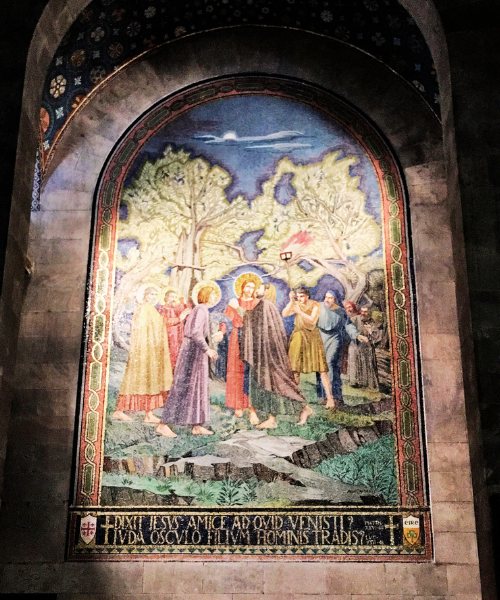
The site gained additional significance when Judas Iscariot arrived with a cohort of Roman soldiers and Temple guards to arrest Jesus. This moment of betrayal, marked by Judas’s kiss of identification, transformed Gethsemane from a place of prayer into the starting point of the Passion narrative that defines Christian theology.
“Then Jesus came with them to a place called Gethsemane, and said to His disciples, ‘Sit here while I go over there and pray.’ He took along Peter and the two sons of Zebedee and began to feel sorrow and distress. Then he said to them, ‘My soul is sorrowful even to death. Remain here and keep watch with me.’ He advanced a little and fell prostrate in prayer, saying, ‘My Father, if it is possible, let this cup pass from me; yet, not as I will, but as you will.’ When he returned to his disciples, he found them asleep. He said to Peter, ‘So you could not keep watch with me for one hour? Watch and pray that you may not undergo the test. The spirit is willing, but the flesh is weak.’ Withdrawing a second time, he prayed again, ‘My Father, if it is not possible that this cup pass without my drinking it, your will be done!’
The Architectural Marvel: Antonio Barluzzi
Italian architect Antonio Barluzzi, known throughout the Middle East as the “Architect of the Holy Land,” designed the Church of All Nations between 1919 and 1924. Barluzzi received this commission through the Franciscan Custody of the Holy Land, which had purchased the property in 1681 and maintained stewardship over the site. His architectural vision masterfully combines Byzantine solemnity with early 20th-century construction techniques, creating a structure that honors both ancient traditions and modern engineering.
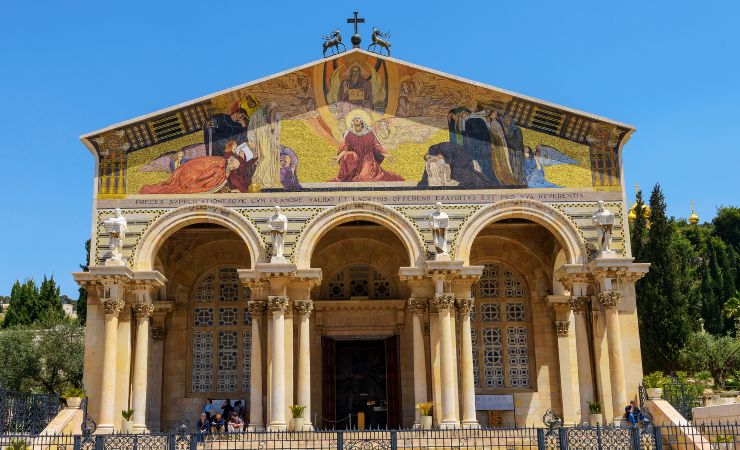
The church’s distinctive facade features a triangular pediment supported by six massive columns, each carved from local Jerusalem stone. Above the entrance, a golden mosaic depicts Christ as the mediator between God and humanity, flanked by symbolic representations of the twelve apostles. The building measures 60 meters in length and 25 meters in width, with walls reaching 15 meters in height. Twelve nations funded the church’s construction: Argentina, Brazil, Chile, Mexico, Italy, France, Spain, the United Kingdom, Belgium, Canada, Germany, and the United States, each contributing between $10,000 and $30,000 in 1920s currency.
The church gained its alternative name, the Basilica of the Agony, from its central focus on Jesus’s emotional and spiritual suffering before his arrest. This designation reflects both the biblical event commemorated here and the building’s liturgical significance within the Catholic Church. Pope Pius XI formally consecrated the basilica in 1924, establishing it as a major pilgrimage destination.
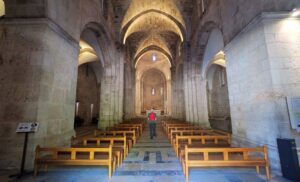
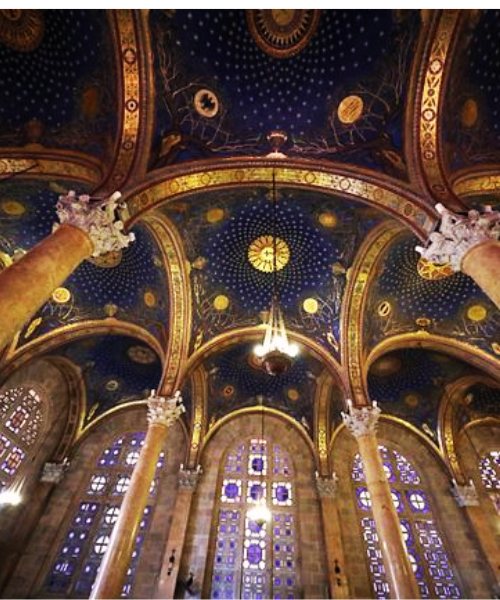
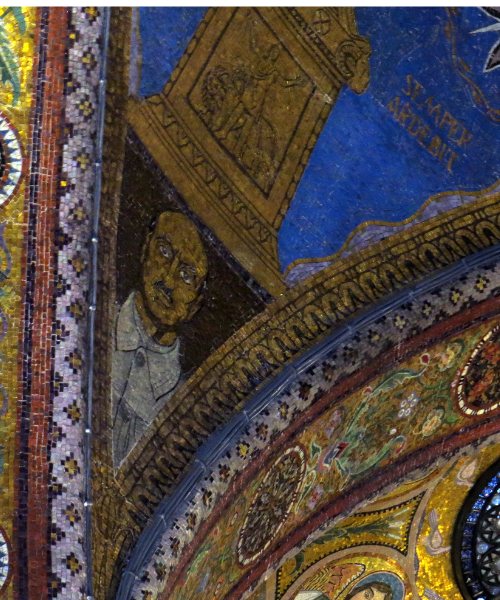
Inside the basilica, visitors encounter Barluzzi’s masterpiece: a soaring nave adorned with twelve small domes, each decorated with national symbols of the contributing countries. The ceiling mosaics, created by artist Giulio Bargellini, depict angels holding chalices representing the Cup of Sorrows mentioned in Jesus’s prayer. The most striking feature remains the sanctuary’s golden mosaic showing Christ’s agony, executed by the Venice-based company Salviati using traditional Byzantine techniques.
The church’s unique lighting system creates an atmosphere of perpetual twilight, achieved through small windows set with purple and blue stained glass. Barluzzi intentionally designed this subdued illumination to evoke the darkness of Gethsemane and encourage contemplation among visitors. The floor incorporates original Byzantine mosaics discovered during the foundation excavations, seamlessly blending 4th-century craftsmanship with modern design.
Archeological Findings at the Church of All Nations
- Ancient Olive Trees: The garden surrounding the church contains olive trees that botanical experts estimate to be between 900 and 2,000 years old, making them among the oldest living trees in Jerusalem. Carbon dating of the root systems suggests some specimens may have been saplings during the Second Temple period, providing a tangible connection to the time of Jesus.
- Byzantine Mosaics: Excavations beneath the current structure revealed extensive remains of the 4th-century Byzantine basilica, including beautifully preserved mosaic floors featuring geometric patterns and Christian symbols. Barluzzi incorporated sections of these original mosaics into the modern church floor, creating a literal foundation of ancient worship. The mosaics include Greek inscriptions mentioning donors from Constantinople and Alexandria.
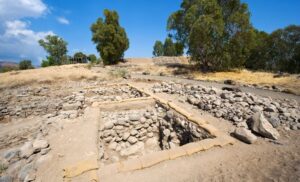
- Second Temple-era Ritual Bath: In December 2020, during construction work on a modern tunnel beneath the Church of All Nations, archaeologists from the recent archaeological research discovered the remains of the foundations of a Second Temple-era ritual bath (mikveh) and a 1,500-year-old Byzantine church. The mikveh, measuring 4 by 6 meters, includes seven stepped levels leading to a collection pool, indicating its use for Jewish purification rituals before Temple worship.
- Crusader Church Foundations: Excavations revealed substantial stone foundations from the 12th-century Crusader chapel, including carved limestone capitals and column fragments decorated with typical Crusader artistic motifs. These remnants show evidence of deliberate destruction, likely during the Islamic reconquest of Jerusalem in the 13th century.
- Roman Road: Archaeological surveys identified portions of a first-century Roman road running east-west through the Kidron Valley, approximately 100 meters south of the church. This road connected Jerusalem with Bethany and formed part of the route Jesus would have traveled during his final week, making it historically significant for understanding the geography of the Passion narrative.
Practical Information
- Opening Hours: The Church of All Nations is open daily from 8:00 AM to 6:00 PM (April-September) and 8:00 AM to 5:00 PM (October-March). The church closes during mass services, typically held at 6:00 AM, 12:00 PM, and 5:00 PM.
- Admission: Entry to the church and garden is free of charge. Donations are welcome and help maintain the site.
- Dress Code: Modest attire is required. Visitors must cover shoulders and knees. Hats should be removed upon entering the church.
- Accessibility: The church is partially accessible for visitors with mobility challenges. The main entrance has several steps, but a wheelchair-accessible side entrance is available upon request from the custodians.
Additional Information
Early Christian Period (up to 70 CE):
- According to Christian tradition (1st Century CE): Jesus went with his disciples to the Garden of Gethsemane, located on the western part of the Mount of Olives, after leaving the temple. This was on the night before his crucifixion. In the garden, Jesus prayed in agony, was betrayed by Judas Iscariot, and was arrested by the Romans. Following the early generations of Christ’s followers: The site was frequented.
- 4th Century: A Byzantine basilica was erected on the traditional site. The Church of the Holy Sepulcher was also constructed in this century.
- 5th Century: Remnants of the mosaic floor from the 5th-century Byzantine basilica were preserved and are visible under the floor of the current church. The crypt of the Greek Orthodox Church of St. John the Baptist dates from this century and is considered the oldest surviving church building in Jerusalem. The Nea Church was built by Emperor Justinian in 543.
- 746: The 4th-century Byzantine basilica was destroyed by an earthquake.
- 12th Century: A small Crusader chapel was built on the site of the former basilica. The Church of St. Anne is an example of surviving 12th-century Romanesque architecture.
- Probably 1347: The large Crusader church that stood at the location was destroyed and abandoned.
- 1919-1924: Italian architect Antonio Barluzzi was commissioned to design the current church. The current Church of All Nations, also known as the Basilica of the Agony, was constructed.
- 1920: During work on the foundations for the new church, discoveries were made that led to the excavation of the earlier Byzantine-era church.
- December 2020: Archaeological reveals occurred of a Second Temple-era ritual bath and a 1,500-year-old Byzantine church beneath the current church.
What is the significance of the rock inside the Church of All Nations?
The exposed rock beneath the altar is believed by Christian tradition to be the actual stone where Jesus prayed during his agony in Gethsemane. The rock measures approximately three meters in diameter and has been worn smooth by centuries of pilgrims touching it in reverence. Archaeological evidence suggests this bedrock formation has been venerated since the 4th century when the first Byzantine church was built over it.
Why is it called the Church of All Nations?
The church received its name because twelve different nations funded its construction between 1919-1924: Argentina, Brazil, Chile, Mexico, Italy, France, Spain, the United Kingdom, Belgium, Canada, Germany, and the United States. Each nation’s contribution is commemorated in the ceiling mosaics and floor emblems throughout the building. This international cooperation symbolizes the universal nature of Christian faith.
How old are the olive trees in the Garden of Gethsemane?
Botanical experts estimate the olive trees surrounding the Church of All Nations to be at least 900 old years old, making them among the oldest living trees in Jerusalem. Carbon dating of root systems suggests some specimens may date to the Second Temple period. While the visible trunks are younger due to natural regeneration, the root systems could potentially have been present during Jesus’s time.
What happened to the earlier churches built on this site?
Archaeological excavations have revealed two earlier churches: a 4th-century Byzantine basilica destroyed by an earthquake in 746 CE, and a 12th-century Crusader chapel abandoned around 1345 CE. The Byzantine church was larger than the current structure, while the Crusader chapel was smaller. Antonio Barluzzi incorporated surviving mosaics from the Byzantine church into the floor of the modern basilica.
Nearby Sites
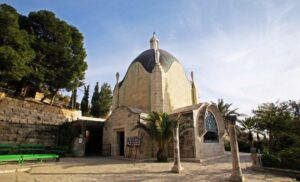
- Dominus Flevit Church: A short walk to the north unveils the Dominus Flevit Church, marking the spot where Jesus wept over Jerusalem’s future destruction.
- Tomb of the Virgin Mary: A mere 200 meters from the Church of All Nations lies the crypt considered to be the final resting place of Mary, mother of Jesus. Next to the entrance to the Tomb is the Grotto of Gethsemane.
- Kidron Valley Tombs: The monumental Kidron Valley tombs offer fascinating insights into Jewish burial practices during the Second Temple period. That include the Tomb of Absalom, the Tomb of Zacharia, and the Tomb of Benei Hezir.
- Mount of Olives Viewpoint: Uphill from the Church of All Nations is a viewpoint that offers a panoramic vista of Jerusalem’s old city – the perfect place to start or end a day of exploration.
Keep reading
Part of our Christian Pilgrimage Guide →