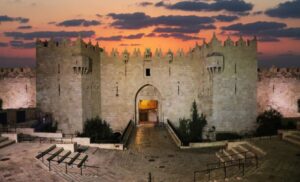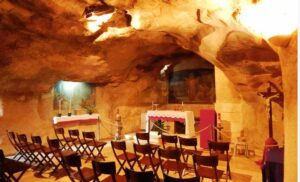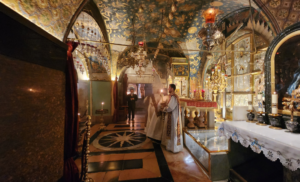
Ketef Hinnom contains rock-hewn burial chambers carved from natural caverns, dating to the 7th and 6th centuries BCE during the Iron Age. Excavations in the 1970s uncovered these ancient tombs, which are located in Jerusalem and represent significant archaeological findings from the First Temple period.
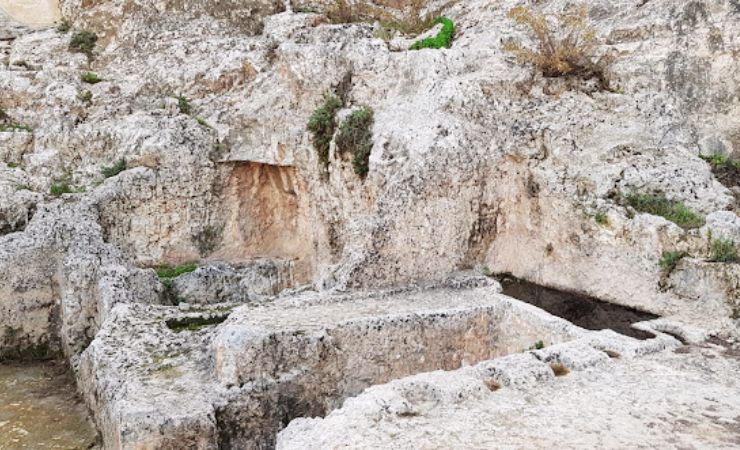
Excavations at Ketef Hinnom in the 1970s revealed a series of rock-hewn burial chambers based on natural caverns. These Iron Age chambers, dating to the 7th and 6th centuries BCE, transformed our understanding of pre-exilic biblical texts when they yielded the oldest known fragments of biblical scripture. The discovery of the silver amulets at Ketef Hinnom burial chambers proves that biblical texts existed in written form centuries before the Dead Sea Scrolls.
Location
The Ketef Hinnom burial chambers occupy a strategic ridge southwest of Jerusalem’s Old City, commanding sweeping views over the Hinnom Valley. The archaeological site sits approximately 500 meters west of Zion Gate, between the modern neighborhoods of Yemin Moshe and the German Colony.
Amulets with the oldest surviving texts from the Bible known to date
Professor Gabriel Barkay’s excavations at Ketef Hinnom between 1975 and 1989 uncovered a complex of First Temple period burial chambers carved into the soft limestone bedrock. The site, located near St. Andrew’s Church, consisted of multiple family tomb chambers that served Jerusalem’s elite during the final centuries of the Kingdom of Judah. Archaeological evidence indicates they continued from approximately 650 BCE through the Babylonian destruction of Jerusalem and into the Persian period.
The breakthrough discovery occurred in Chamber 25 when thirteen-year-old Nathan, one of Barkay’s young volunteers, struck an overlooked repository chamber hidden beneath the burial benches. This secret compartment had escaped ancient tomb robbers and contained over 1,000 artifacts spanning three centuries of use. The treasure trove included 125 silver objects, 40 iron arrowheads, glass vessels, bone needles, and jewelry crafted from gold, ivory, and precious stones, along with 150 semi-precious gems and human skeletal remains representing multiple generations.
Two tiny silver scrolls emerged as the most significant finds. These paper-thin amulets, each barely larger than a fingernail, contained the earliest known biblical texts ever discovered, predating the Dead Sea Scrolls by approximately 400 years.
The Silver Amulets of Ketef Hinnom
The silver amulets functioned as protective charms worn around the neck, a common practice in ancient Near Eastern societies. Each scroll measured approximately one inch in length when rolled, crafted from 99% pure silver and inscribed with minute Hebrew characters using a sharp stylus.
Unrolling these delicate artifacts required three years of painstaking conservation work at the Israel Museum. Advanced photography techniques developed by the West Semitic Research Project at USC in 1994 finally revealed the complete inscriptions. The larger amulet (KH1) unrolled to 10 centimeters in length and contained 18 lines of Hebrew text. The smaller scroll (KH2) measured 3.9 centimeters when opened and bore 12 lines of microscopic script.
Both amulets preserve variations of the Priestly Blessing from Numbers 6:24-26, making them the oldest surviving Jewish bible text ever found. The inscriptions demonstrate that biblical texts existed in standardized written form during the final decades of the First Temple period, centuries before scholars previously believed such texts were committed to writing.
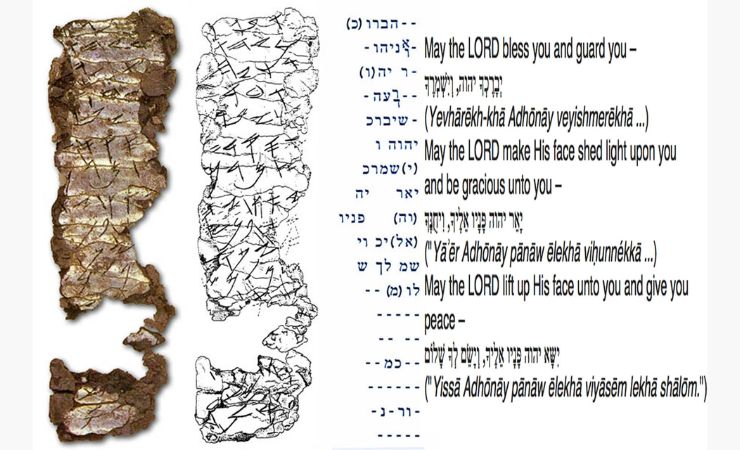
Physical Description
- KH1 (the larger amulet): Measured 2.7 cm in height and 1 cm in diameter when discovered. When unrolled, it measured 9.7 cm in height and 2.7 cm in width, containing approximately 18 lines of ancient Hebrew script.
- KH2 (the smaller amulet): Initially measured 1.5 cm in height and 0.5 cm in diameter. When carefully unrolled, it reached 3.9 cm in height and 1.1 cm in width. This scroll contained 12 lines of text inscribed on silver foil thinner than modern aluminum wrap.
Paleographic Analysis
The Hebrew script on both amulets represents the late First Temple period paleographic tradition, consistent with 7th-6th century BCE inscriptions found elsewhere in Judah. Letter forms match those found on contemporary ostraca (pottery sherds) from sites like Lachish and Arad, confirming the Iron Age dating. The scribal technique involved carefully scratching letters into the silver surface before the final rolling process.
Significance and Interpretation
The Ketef Hinnom amulets revolutionized biblical scholarship by providing physical evidence of textual traditions during the monarchy period. KH1 references Yahweh as “the one who shows graciousness to those who love him and keep his commandments,” echoing language found in Exodus 20:6 and Deuteronomy 7:9. KH2 specifically invokes Yahweh’s power to “rebuke the evil one,” demonstrating sophisticated theological concepts about divine protection against malevolent forces.
The amulets confirm that the Priestly Blessing was already fixed in written form during the late monarchy, suggesting a literate religious establishment capable of producing and preserving sacred texts. This discovery supports the antiquity of significant portions of the Hebrew Bible and challenges theories that place biblical composition entirely in post-exilic periods.
What's in the name?
“Ketef Hinnom” translates from Hebrew as “Shoulder of Hinnom,” where “ketef” (כתף) describes a topographical feature resembling a human shoulder. The term appears in biblical geographical descriptions, referring to ridges, slopes, and elevated terrain that project from larger landforms. The Ketef Hinnom burial chambers sit on precisely such a shoulder-shaped ridge extending into the Hinnom Valley.
The Hinnom Valley carries profound historical and theological significance far beyond its role as a burial ground. Biblical texts describe this valley as the site where kings Ahaz and Manasseh conducted child sacrifices to Molech, a practice that horrified later biblical writers. King Josiah’s religious reforms around 621 BCE specifically targeted these cultic sites, as recorded in Jerusalem historical sources that detail his systematic destruction of pagan worship centers.
This dark history transformed “Ge-Hinnom” (Valley of Hinnom) into “Gehenna,” the Hebrew term for hell that entered Jewish, Christian, and Islamic traditions. The valley’s reputation as a place of divine judgment contrasts sharply with its later function as a peaceful cemetery for Jerusalem’s affluent families, including those whose tombs at Ketef Hinnom contained precious silver amulets invoking divine blessing and protection.
Practical Information
The Ketef Hinnom burial chambers are an open site that are accessible to the public. The original silver amulets are permanently housed in the Israel Museum in Jerusalem, where they appear in the Archaeology Wing’s First Temple period exhibit.



Additional Information
When were the Ketef Hinnom burial chambers discovered?
The burial chambers were discovered in 1979 by Professor Gabriel Barkay during excavations that began in 1975. The famous silver amulets were found specifically in Chamber 25 by thirteen-year-old volunteer Nathan, who accidentally broke through to a hidden repository chamber that ancient tomb robbers had missed.
How old are the Ketef Hinnom burial chambers?
The burial chambers date to the Iron Age, specifically the 7th and 6th centuries BCE. Archaeological evidence shows they were in continuous use from around 650 BCE through the Babylonian destruction of Jerusalem in 587/586 BCE and into the Persian period.
What makes the Ketef Hinnom silver scrolls historically significant?
The silver amulets contain the oldest known biblical texts ever discovered, predating the Dead Sea Scrolls by approximately 400 years. They preserve portions of the Priestly Blessing from Numbers 6:24-26 and prove that biblical texts existed in written form during the final decades of the First Temple period.
What other artifacts were found in the Ketef Hinnom burial chambers?
Chamber 25 contained over 1,000 artifacts including 125 silver objects, 40 iron arrowheads, glass vessels, bone needles, gold jewelry, ivory items, and 150 semi-precious stones. The burial chambers also contained human skeletal remains representing multiple generations of elite Jerusalem families.
What do the inscriptions on the Ketef Hinnom amulets say?
Both amulets contain variations of the Priestly Blessing from Numbers 6:24-26, invoking divine protection and blessing. The larger amulet references Yahweh showing graciousness to those who love him and keep his commandments, while the smaller scroll invokes Yahweh’s power to rebuke evil forces threatening the wearer.
Nearby Sites
King David’s Tomb: Located on Mount Zion, this revered site is traditionally believed to be the burial place of King David.
Room of the Last Supper: This ancient room is believed by Christians to be the site where Jesus had his Last Supper with his disciples.
Zion Gate: One of the eight gates in the walls of the Old City of Jerusalem, Zion Gate bears the scars of battles fought over the city.
- German Colony Jerusalem: A picturesque neighborhood established by German Templars in the 19th century.
- Scots Memorial Church (St. Andrew’s): Built as a memorial to the Scottish soldiers who died fighting the Turkish Army during the Sinai and Palestine campaign of World War I.
Montefiore Windmill: This windmill was built in the 19th century by Sir Moses Montefiore as part of his efforts to help Jews live outside the Old City walls.
Keep reading
Part of our Jewish Heritage Guide →