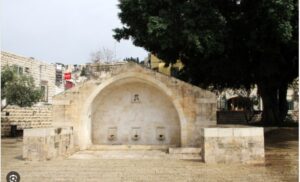
Herod's Family Tomb is located near Damascus Gate in Jerusalem and was once believed to be the burial site of the Herodian dynasty. The tomb offers valuable insights into Second Temple period burial practices and architecture, though scholarly debate continues about whether it actually housed Herod's family members or other Jerusalem elites from that era.
Located in East Jerusalem, Herod’s Family Tomb provides fascinating insights into first-century burial practices and Herodian architectural techniques. This ancient monument, discovered in the late 19th century, continues to intrigue archaeologists and visitors with its sophisticated construction methods and disputed connections to the infamous ruler of Judea.
Location
Herod’s Family Tomb is located in the Sheikh Jarrah neighborhood of East Jerusalem, approximately 800 meters north of the Damascus Gate and outside the Old City walls. The tomb sits beneath a modern apartment building on Nablus Road, making access to the actual burial chambers extremely limited.
The Story Behind the Tomb
Herod’s Family Tomb, also known as Herod’s Monument, was first identified as a significant Herodian site due to its grand construction and strategic location near the ancient city’s walls. Discovered in 1892 by Swiss archaeologist Conrad Schick, the tomb features intricate stonework and a unique architectural style typical of Herodian-era monuments. Schick’s excavations revealed a complex structure with multiple chambers and sophisticated Roman building techniques previously unknown in Jerusalem.
The tomb’s association with King Herod stems from its elaborate architectural style and the use of opus reticulatum, a Roman wall-building technique involving a lattice pattern of stones. This method was uncommon in the Near East but found in other Herodian structures, indicating a possible connection. The Jewish historian Flavius Josephus mentioned “Herod’s Monument” in his writings about Jerusalem during the first century, providing historical support for the tomb’s identification with the Herodian dynasty.
Archaeological evidence suggests the monument originally served as both a tomb and a memorial structure, following Roman traditions of commemorating important families. The presence of decorated sarcophagi and the tomb’s proximity to the Second Temple period city walls reinforces its connection to Jerusalem’s elite during Herod’s reign from 37 to 4 BCE.



Current Archaeological Understanding
Recent research conducted by Israel Antiquities Authority excavations suggests that while the tomb reflects Herodian architectural grandeur, it may not be Herod’s personal tomb. Scholars now believe it likely served as the burial site for a prominent family of the period, possibly members of Herod’s extended court or wealthy Jerusalem aristocrats who adopted Roman burial customs. The tomb’s design follows patterns seen in other elite burials from the late Second Temple period, when wealthy Jews increasingly incorporated Hellenistic and Roman architectural elements into their funerary monuments.
The debate over the tomb’s true occupants reflects broader challenges in biblical archaeology, where limited written records and centuries of urban development complicate efforts to definitively identify ancient sites. Nevertheless, the structure remains one of the finest examples of Roman-influenced Jewish burial architecture from the Herodian period.
Herod's Family Tomb's Structure and Archaeological Findings
The structure’s plan of Herod’s Family Tomb mirrors Roman round tomb-monuments, particularly those of Augustus and Hadrian in Rome. This similarity, combined with Herodian period pottery sherds and decorated ashlar blocks found at the site, supports the theory that it dates to Herod’s reign (37-4 BCE). The tomb’s sophisticated engineering demonstrates the influence of Roman architectural principles on elite Jewish burial practices during the late Second Temple period.
Schick’s original excavations and subsequent archaeological investigations have revealed the tomb consists of several notable features:
- Rock-Cut Chambers: Five underground burial rooms arranged in a cross-shaped layout, each measuring approximately 2.5 by 3 meters. The chambers were carved directly into the bedrock using iron tools, with smooth walls indicating skilled craftsmanship.
- Sarcophagi: Originally housed intricately carved limestone sarcophagi decorated with rosettes and geometric patterns typical of the Land of Israel Herodian period burial containers. These sarcophagi were relocated to the Monastery of Constantine for preservation.
- Entrance and Rolling Stone: The tomb entrance featured a large rolling stone weighing several tons, a common feature in wealthy Jewish burial sites of the period. The stone moved along a carved track to seal the tomb entrance.
- Decorative Elements: Walls built with precisely cut Herodian-style ashlars and decorated with opus reticulatum, a Roman construction technique involving a lattice pattern of small stones filled with concrete and covered with decorated plaster.
Detailed Findings and Structure:
- Opus Reticulatum: This sophisticated technique involved laying small, diamond-shaped stones in diagonal rows, creating a net-like pattern. Behind this decorative lattice, workers poured concrete to form a strong structural core. Painted plaster covered the entire surface, sometimes decorated with frescoes depicting floral motifs or geometric designs.
- Concentric Circles: Excavations revealed two concentric circular walls suggesting the original structure was an imposing cylindrical monument. The outer wall measured approximately 33 meters (110 feet) in diameter, while the inner wall was about 12 meters (40 feet) across, creating a substantial funerary monument visible from Jerusalem’s walls.
- Herodian-Style Ashlars: Both Schick and later archaeologists discovered meticulously dressed stone blocks with characteristic margins and smooth central surfaces. These ashlar blocks, some weighing over 200 kilograms, indicate the monument’s original magnificence and the significant resources invested in its construction.
Practical Information
Due to the tomb’s location beneath modern apartment buildings in East Jerusalem, direct access to Herod’s Family Tomb is not available to regular visitors. The site requires special archaeological permits for professional researchers.
Additional Information
Where is Herod’s Family Tomb located exactly?
Herod’s Family Tomb is located approximately 800 meters north of Damascus Gate in the Sheikh Jarrah neighborhood of East Jerusalem. The tomb sits beneath residential buildings on Nablus Road, outside the Old City walls. The site’s urban setting makes it one of Jerusalem’s least accessible archaeological monuments.
What makes archaeologists think this is connected to King Herod?
The tomb’s attribution to Herod’s family is based on its sophisticated Roman construction techniques, particularly the use of opus reticulatum rarely found in the Near East. The structure’s architectural style matches other known Herodian monuments, and the Jewish historian Josephus mentioned “Herod’s Monument” in this general area. However, definitive proof remains elusive.
What artifacts were found in Herod’s Family Tomb?
Archaeologists discovered decorated limestone sarcophagi with rosettes and geometric patterns, Herodian period pottery sherds, and precisely cut ashlar blocks typical of first-century elite construction. The sarcophagi were relocated to the Monastery of Constantine for preservation. Some artifacts from the excavation can be viewed at Jerusalem’s Rockefeller Museum.
When was Herod’s Family Tomb built?
Based on pottery fragments and architectural analysis, archaeologists date the tomb to the late first century BCE, during Herod’s reign (37-4 BCE). The sophisticated Roman construction techniques and Herodian-style stonework support this dating. The tomb represents the cultural fusion of Roman and Jewish traditions characteristic of Herod’s building projects.
Nearby Sites
- The Mount of Olives: A historical and spiritual site with many churches including Dominus Flevit, Chapel of the Ascension, Church of All Nations, and more. The place offers stunning views of Jerusalem.
- The Kidron Valley: Known for its ancient tombs and significance in both Jewish and Christian traditions.
- The City of David: An archaeological park providing insights into Jerusalem’s early history.
- The Garden Tomb: A site of Christian pilgrimage believed by some to be the burial and resurrection place of Jesus.
Keep reading
Part of our Jerusalem Travel Guide →