Israel contains the major sites of the Christian faith, including the Church of the Holy Sepulchre in Jerusalem, the Via Dolorosa, Capernaum, the Basilica of the Annunciation in Nazareth, and the Jordan River baptismal sites. These sites span Jerusalem, the Galilee, and the Jordan Valley.
Israel holds the largest concentration of Christian holy sites in the world. What surprises most pilgrim groups is how close together it all is. Israel is a small country, and the major Christian sites sit within a few hours of each other. I can (in theory) take you through the Via Dolorosa in Jerusalem in the morning and have you standing on the shore of the Sea of Galilee at Capernaum in the same afternoon. It is that compact.
The sites have been quiet since the October 7th 2023 war. I hope to see them full again soon.
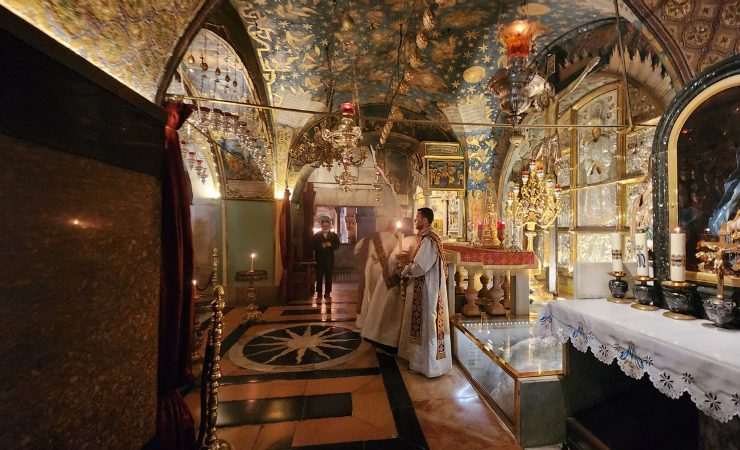
Where Are the Christian Holy Sites in Israel Located?
Christian holy sites in Israel are concentrated in two main regions. Jerusalem and its immediate surroundings contain the sites of the Passion, Crucifixion, and Resurrection, including the Church of the Holy Sepulchre, the Via Dolorosa, and the Garden of Gethsemane. The Galilee region in northern Israel, including Nazareth, the Sea of Galilee, Capernaum, and Tabgha, contains the sites associated with Jesus’s birth, childhood, and three years of public ministry.
Bethlehem, located approximately 10 kilometers south of Jerusalem in the Palestinian Authority, marks the traditional birthplace of Jesus. The Jordan River, which runs along the eastern border of Israel, contains two baptismal sites: Qasr el-Yahud near Jericho, and Yardenit at the southern tip of the Sea of Galilee. Together, these sites form the geography of the Christian faith.
Why is Israel called the “Holy Land”?
The term “Holy Land” derives from the Hebrew “Eretz HaKodesh,” meaning the holy or sanctified land. For Christians, it refers specifically to the territory where Jesus Christ lived, taught, was crucified, and rose from the dead, stretching from the Galilee in the north to Jerusalem and the Judean Desert in the south. The phrase entered common Christian usage during the early medieval period, largely through the influence of pilgrimage literature and Crusader-era documents.
The designation is shared with Judaism and Islam, both of which regard the same territory as sacred for distinct historical and theological reasons. For Christian pilgrims, however, “the Holy Land” is inseparable from the New Testament narrative, and visiting these sites is understood as walking the same ground Jesus walked.
Historical Background
Christian pilgrimage to Israel has a documented history stretching back to the 4th century CE. The earliest organized effort to identify and mark the sites of Jesus’s life was undertaken by Emperor Constantine the Great, who constructed churches over the most significant locations beginning around 326 CE. His mother, Helena, is credited in tradition with identifying key sites in Jerusalem and Bethlehem during her pilgrimage around 326 to 328 CE.
The Franciscan Custody of the Holy Land has served as the official Catholic custodian of the major Christian shrines since 1342, when it was formally appointed by papal bulls. Founded in 1217 by Saint Francis of Assisi, the Custody currently administers 74 shrines and sanctuaries across the Holy Land, including shared custody of the Church of the Holy Sepulchre and the Church of the Nativity in Bethlehem. The official website of the Franciscan Custody of the Holy Land provides detailed history and current pilgrimage information for each site under its care.
Inside Christian Holy Sites in Israel: What to See
The Christian holy sites in Israel span more than 300 kilometers from north to south. Each site preserves a distinct layer of biblical history, from 1st-century archaeological remains to 4th-century Byzantine foundations, Crusader construction, and modern Catholic and Orthodox churches.
As a tour guide, I can promise you that no two sites are alike in character. When you go into the Church of the Holy Sepulchre, you will notice the dense incense, candlelight, and the simultaneous prayers of six Christian denominations. When you visit the open-air archeological site such as Capernaum, you will find basalt foundations sit quietly beside the lake. Here are the main sites you should visit:
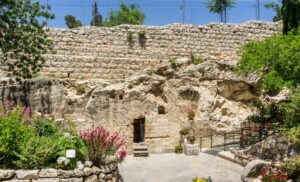
Church of the Holy Sepulchre (Jerusalem) — Built by Emperor Constantine the Great between 326 and 335 CE, the Church of the Holy Sepulchre is considered the holiest site in Christianity. The building contains both Golgotha, the site of the Crucifixion, and the Aedicule, the stone structure enclosing the tomb of Jesus. Six Christian denominations share custody of the church holding a 175 year old status quo: Greek Orthodox, Roman Catholic, Armenian Apostolic, Coptic, Ethiopian, and Syriac. Think how difficult it is to agree on renovation in the Church. Everyone needs to agree on it. The Aedicule, for instance, was last fully restored between 2016 and 2017 by the National Technical University of Athens. Renovations are still running now in 2026.
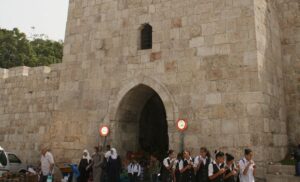
Via Dolorosa (Jerusalem) — The Via Dolorosa, Latin for “Way of Suffering,” is a route approximately 600 meters long through the Muslim and Christian Quarters of the Old City. It is marked by 14 Stations of the Cross, beginning at the traditional site of the Praetorium of Pontius Pilate and ending inside the Church of the Holy Sepulchre, where the final five stations are located. Pilgrimage along this route has been recorded since the mid-4th century. The Franciscans lead a public procession every Friday afternoon, open to all visitors, which moves slowly through the stone-paved alleyways of the Old City regardless of the season.
Garden of Gethsemane and the Church of All Nations (Jerusalem) — At the foot of the Mount of Olives, east of the Old City, lies the Garden of Gethsemane, named in all four Gospels as where Jesus prayed before his arrest. Franciscans have cared for the compound since 1666. Its olive trees date to at least the 12th century, and DNA testing shows they all descend from a single parent tree. The adjacent Church of All Nations, or Basilica of the Agony, was built 1919 to 1924 with donations from twelve countries. What strikes me is how silent it goes the moment you step inside, exactly what architect Antonio Barluzzi intended. At its center lies the Rock of Agony, traditionally the spot where Jesus knelt on the night of his arrest.
Basilica of the Annunciation (Nazareth) — The Basilica of the Annunciation is the largest Christian church in the Middle East under exclusive Roman Catholic jurisdiction. Designed by Italian architect Giovanni Muzio and completed in 1969, it was built over the remains of earlier Byzantine and Crusader churches on the same site. At its heart is the Grotto of the Annunciation, a cave identified since at least the 4th century as the home of Mary and the site where the Angel Gabriel appeared to her. Excavations inside the grotto revealed a column inscription reading “XE MAPIA”, “Hail Mary”, one of the earliest known written invocations of Mary. The church’s walls are decorated with internationally donated mosaics depicting the Virgin Mary in artistic styles from dozens of countries. Full details on the site’s Franciscan stewardship are available on the official Franciscan Custody page for the Basilica of the Annunciation.
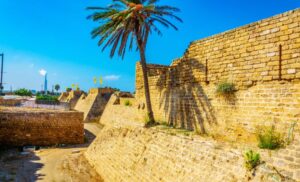
Capernaum Archaeological Site (Sea of Galilee) — Capernaum, on the northern shore of the Sea of Galilee, served as the operational base for Jesus’s Galilean ministry. The archaeological site preserves the basalt foundations of a 1st-century synagogue where, according to the Gospels, Jesus taught and healed. Adjacent to the synagogue are the excavated remains of an insula, a multi-room residential compound, identified by archaeologists as the house of Peter. Over this structure, a Byzantine octagonal church was built in the 5th century. The Biblical Archaeology Society’s detailed report on Peter’s house at Capernaum documents the excavation evidence in full. .
Church of the Multiplication of the Loaves and Fishes (Tabgha) — On the northwestern shore of the Sea of Galilee, the Church of the Multiplication marks the traditional site of one of the best-known Gospel miracles, recorded in Matthew 14 and John 6. Its centerpiece is the Byzantine mosaic floor showing a basket of loaves flanked by two fish. The present church, completed in 1982, was built directly over the ancient mosaics to protect and display them in situ. Take a moment to absorb the the beautiful courtyard and look at the two beautiful bronze doors with scenes from the life of Jesus before you go in.
Mount of Beatitudes (Sea of Galilee) — The Mount of Beatitudes is a low hill overlooking the northwestern shore of the Sea of Galilee, traditionally identified as the site of the Sermon on the Mount, recorded in Matthew chapters 5 to 7. An octagonal Italian-designed church, built in 1937, crowns the summit. Its eight sides correspond to the eight Beatitudes. From the terrace surrounding the church, visitors have a clear view across the water toward Capernaum and Tabgha, placing the Sermon’s setting in immediate visual context.
Jordan River Baptismal Sites: Qasr el-Yahud and Yardenit — Two sites on the Jordan River receive Christian pilgrims for baptism or the renewal of baptismal vows. Qasr el-Yahud, located near Jericho in the West Bank, is widely considered the most historically accurate location of Jesus’s baptism by John. Closed for decades as a military zone, it was reopened to the public in 2011. Yardenit, at the southern outlet of the Sea of Galilee, is a purpose-built baptismal facility opened in 1981 that draws approximately 500,000 visitors annually. At both sites, pilgrims may enter the water wearing white robes available for purchase on site.
The Upper Room / Cenacle (Jerusalem) — Located on Mount Zion, just outside the Old City walls, the Cenacle is the room traditionally identified as the site of the Last Supper and the descent of the Holy Spirit at Pentecost. The current Gothic-style chamber dates to the Crusader period, built in the 12th to 14th centuries. The room is accessed through a doorway from a courtyard shared with the Tomb of David on the floor below. The site is open to visitors of all faiths, though no religious services are currently held in the room itself.
Mount Tabor and the Basilica of the Transfiguration (Lower Galilee) — Mount Tabor is a dome-shaped, free-standing mountain rising 588 meters above the Jezreel Valley in Lower Galilee. It is traditionally associated with the Transfiguration of Jesus, described in Matthew 17:1 to 8. The current Franciscan Basilica of the Transfiguration, completed in 1924 and designed by Antonio Barluzzi, features two distinctive towers and interior mosaics depicting the Transfiguration scene. The view from the summit takes in the entire Jezreel Valley, from Mount Gilboa in the east to the Carmel ridge in the west.
Visiting Christian Holy Sites in Israel: Practical Information
The Christian holy sites in Israel are distributed across Jerusalem, the Galilee, and the Jordan Valley, making it impractical to visit all of them in a single day. Most pilgrims and visitors allocate at least four to five days to cover the major sites across both regions.
Opening hours listed below are based on the Commission for the Coordination of the Interchurch Committee on Tourism in the Holy Land (CICTS) updated hours guide, which is the most reliable consolidated source for current opening times across the major holy sites. Hours are subject to change on religious holidays and during liturgical seasons, so checking directly with CICTS or the individual site before visiting is advisable.
- Jerusalem sites (Church of the Holy Sepulchre, Via Dolorosa, Garden of Gethsemane, Upper Room): The Old City is walkable. The Church of the Holy Sepulchre is open daily, with hours varying by season; summer hours run later into the evening than winter hours. The Garden of Gethsemane is generally open mornings and early afternoons, with a midday closure. The Upper Room on Mount Zion is open Sunday to Friday, closed Saturday. Modest dress covering shoulders and knees is required at all sites. No admission fee at any of these sites.
- Nazareth (Basilica of the Annunciation): Open Monday to Saturday, closed Sunday mornings for worship. Free entry. Located approximately 100 kilometers north of Jerusalem. Hours can shift during major feasts; the CICTS guide publishes updated schedules around Christmas and the Feast of the Annunciation (March 25).
- Galilee sites (Capernaum, Tabgha, Mount of Beatitudes, Yardenit): Clustered within 10 kilometers of each other on the northern shore of the Sea of Galilee, these four sites can be visited in a single full day. Capernaum charges a small entrance fee; the others are free or donation-based. The Church of the Multiplication at Tabgha closes at midday and reopens in the afternoon. The Mount of Beatitudes church has limited afternoon hours.
- Qasr el-Yahud: Located in the Jordan Valley near Jericho. Hours are published on the CICTS site. Free entry.
Where can you Find Up-to-date Opening Hours of Christian Sites in the Holy Land?
The CICTS updated opening hours page covers the full range of holy sites across Israel, including less-visited churches and seasonal changes around Easter, Christmas, and Jubilee events. The Franciscan Custody of the Holy Land at custodia.org publishes liturgical schedules and visiting rules for the 74 shrines under its care.
Additional Information
Which Christian holy sites in Israel are the most important to visit?
The Church of the Holy Sepulchre in Jerusalem is considered the central site of Christianity, containing both Golgotha and the tomb of Jesus. Beyond Jerusalem, the essential sites are the Basilica of the Annunciation in Nazareth, Capernaum on the Sea of Galilee, the Garden of Gethsemane, and the Via Dolorosa. For pilgrims with limited time, a minimum of three days is recommended: at least two days in Jerusalem and one in the Galilee. The Franciscan Custody administers 74 of these shrines and publishes updated visiting information on its official website at custodia.org.
Do I need to pay admission to enter Christian holy sites in Israel?
Most of the major Christian holy sites in Israel have free entry, including the Church of the Holy Sepulchre, the Via Dolorosa, the Garden of Gethsemane, the Basilica of the Annunciation, and the Upper Room. Capernaum charges an entrance fee. The Church of the Nativity in Bethlehem is also free. Yardenit, the baptismal site at the southern end of the Sea of Galilee, charges for white baptismal robes if pilgrims wish to enter the water, but entry to the grounds is free. Some sites accept donations rather than fixed fees.
What is the dress code for visiting churches and holy sites in Israel?
All major Christian holy sites in Israel require modest dress for both men and women. This means covered shoulders and knees as a minimum. The Church of the Holy Sepulchre and the Basilica of the Annunciation enforce this requirement at the entrance. Sleeveless shirts and shorts are not permitted inside the buildings. Scarves or shawls are useful to carry and are sometimes available for loan at site entrances. At baptismal sites such as Qasr el-Yahud and Yardenit, white robes are worn over regular clothing when entering the water.
When is the best time of year to visit the Christian holy sites in Israel?
Easter and Christmas are the most significant liturgical seasons for pilgrimage to Israel, and both draw very large crowds. Jerusalem’s Church of the Holy Sepulchre holds capacity crowds during Holy Week, particularly on Holy Saturday for the ceremony of the Holy Fire, attended by tens of thousands. Spring (March to May) and autumn (September to November) offer milder temperatures and fewer tourists than summer.
Is it possible to be baptized in the Jordan River as a pilgrim?
Yes. Two sites on the Jordan River offer baptism and renewal of baptismal vows for Christian pilgrims. Qasr el-Yahud, near Jericho, is considered the historically more accurate location of Jesus’s baptism and was reopened to the public in 2011 after decades as a military zone. Yardenit, at the southern tip of the Sea of Galilee, is a modern facility specifically built for this purpose and receives approximately 500,000 visitors per year. At both sites, pilgrims wade into the river in white robes. Pre-booking a group ceremony through a pilgrimage organizer is recommended, particularly at Qasr el-Yahud.
What role do the Franciscans play at the Christian holy sites in Israel?
The Franciscan Custody of the Holy Land has served as the official Catholic guardian of the major Christian shrines since 1342, formally appointed by papal decree. Founded by Saint Francis of Assisi in 1217, the Custody currently administers 74 shrines and sanctuaries, including shared custody of the Church of the Holy Sepulchre and the Church of the Nativity in Bethlehem. Franciscan friars lead a public procession along the Via Dolorosa every Friday afternoon. They also maintain daily liturgical services at Capernaum, the Garden of Gethsemane, the Basilica of the Annunciation, and dozens of other sites across Israel.
Keep reading
Part of our Christian Pilgrimage Guide →