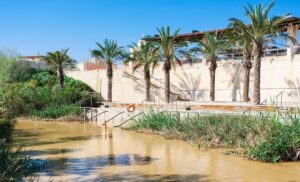
Yardenit is a baptismal site on the Jordan River in northern Israel's Galilee region, near the Sea of Galilee's southern outlet. Established in 1981, it serves as an alternative Christian pilgrimage destination to the traditional baptism site at Qasr al-Yahud. The facility welcomes thousands of pilgrims annually who perform baptismal ceremonies in the river's flowing waters.
Note: At of 2026, Yardenit is temporarily closed
Yardenit baptismal site offers Christian pilgrims an alternative location for river baptism ceremonies along the Jordan River in northern Israel. Established in 1981 following geopolitical changes that limited access to traditional baptismal sites, Yardenit provides year-round access to the Jordan’s flowing waters just south of the Sea of Galilee. The site welcomes over half a million visitors annually, combining spiritual significance with modern amenities for pilgrimage groups and individual travelers seeking to experience baptismal traditions in the Holy Land.
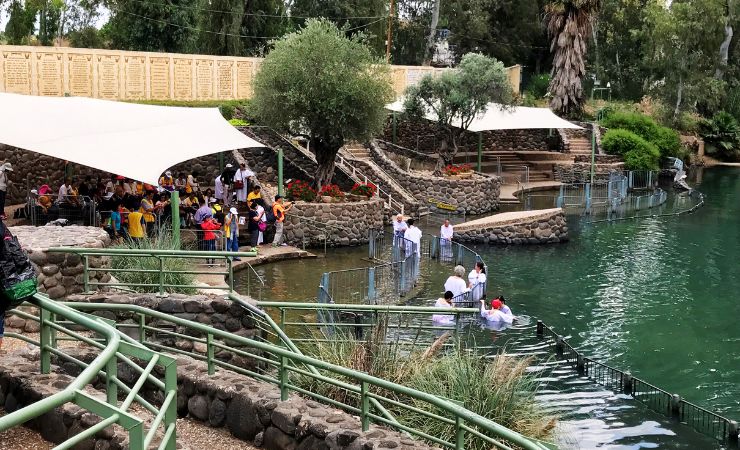
Location of Yardenit
The Yardenit baptismal site sits alongside the Jordan River approximately 10 kilometers south of Tiberias, where the river exits the Sea of Galilee at its southern tip. Kibbutz Kvutzat Kinneret, established in 1913 as one of Israel’s earliest collective communities, owns and maintains the site. The location provides direct access to the Jordan River’s continuous flow, distinguishing it from other baptismal sites that may experience seasonal variations in water levels.
History of Yardenit
Christian tradition originally centered baptismal ceremonies at Qasr El-Yahud, the site near Jericho believed to be Bethany Beyond the Jordan where John the Baptist performed Jesus’ baptism according to Gospel accounts. For centuries, pilgrims traveled to this location despite its remote desert setting and limited infrastructure. The 1967 Six-Day War significantly altered access patterns when the site came under Israeli military control, creating security concerns and restricting pilgrim movement.
The Israeli Ministry of Tourism collaborated with Kibbutz Kvutzat Kinneret to establish the Yardenit baptismal site in 1981, creating a purpose-built facility that could accommodate large groups safely year-round. The development included engineered steps leading into the Jordan River, changing facilities, and ceremonial areas designed specifically for baptismal services. This planning addressed practical challenges that had long complicated baptisms at traditional sites, including unpredictable water levels and limited visitor amenities.
Every year, Yardenit witnesses an influx of tourists and pilgrims. They are drawn to this tranquil spot, eager to experience the spiritual beauty and serenity it offers. Many come with a desire to relive the profound moment when Jesus was baptized by John the Baptist. The site provides baptism robes available for rent or purchase.


Yardenit Today
The Jordan River Living Stones installation represents one of Yardenit’s most distinctive features, comprising thousands of personal ceramic tiles installed by visitors from around the world. Each tile carries individual dedications, prayers, or commemorative messages, creating a global mosaic of faith and remembrance. Complementing this display, olive trees planted by community leaders from various nations symbolize peace initiatives and international Christian fellowship, with plaques identifying contributing churches and organizations.
A multilingual stone monument at Yardenit displays the baptism account from Mark 1:9-11 in dozens of languages, demonstrating the site’s commitment to welcoming pilgrims from diverse linguistic backgrounds. The monument includes scripts ranging from traditional Latin and Greek to modern Korean, Amharic, and Russian, reflecting the global nature of contemporary Christian pilgrimage to Jerusalem and surrounding holy sites.
The Wall of New Life features hand-painted ceramic artwork by Armenian artist Hagop Antreassian, depicting Jesus’ baptism scene in over 80 languages and dialects. This artistic installation extends beyond the Biblical text to include liturgical phrases and baptismal prayers in various Christian traditions, acknowledging the theological diversity among visitors. The wall’s design incorporates traditional Middle Eastern ceramic techniques with contemporary artistic interpretation, creating a bridge between ancient baptismal practices and modern pilgrimage experiences.
Additional Information
What are Yardenit opening hours and when is the best time to visit?
Yardenit operates daily from 8:00 AM to 5:00 PM during winter months and 8:00 AM to 6:00 PM in summer. The site remains open year-round including weekends and most holidays. Early morning or late afternoon visits often provide more peaceful experiences with smaller crowds.
Can you be baptized at Yardenit without a group or organized tour?
Individual baptisms are welcome at Yardenit without advance reservation. The site provides self-service access to the Jordan River baptismal areas, with staff available to assist if needed. Many visitors perform personal baptismal ceremonies or renewal rituals independently using the site’s facilities.
Is the water at Yardenit baptismal site safe for immersion?
The Jordan River water at Yardenit is regularly monitored for safety and maintained according to health standards. The site’s location at the river’s exit from the Sea of Galilee provides cleaner, flowing water compared to downstream locations. Visitors should avoid drinking the water and rinse thoroughly after baptism.
What denominations can hold baptismal ceremonies at Yardenit?
Yardenit welcomes Christians of all denominations including Protestant, Catholic, Orthodox, and other traditions. The site maintains religious neutrality while providing facilities suitable for various baptismal practices. Clergy from different denominations can be arranged for group ceremonies through advance coordination.
Nearby Sites
-
Horns of Hattin: This is a hill in the Lower Galilee region of Israel, known for the Battle of Hattin that took place between the Crusaders and the Muslim army led by Saladin in 1187.
-
Jesus Boat at Genosar: Located at the Yigal Allon Museum in Kibbutz Ginosar, the “Jesus Boat” is an ancient fishing boat from the 1st century CE, discovered in the Sea of Galilee.
-
Magdala: Situated near the Sea of Galilee, Magdala is an ancient city known for its archaeological significance. It’s believed to be the hometown of Mary Magdalene.
-
Arbel Synagogue: Located in the ancient village of Arbel, this synagogue dates back to the 4th century. The synagogue is part of the Arbel National Park.
- Jordan Star Crusader fortress (Belvoir Castle): Also known as Belvoir Castle or Kochav HaYarden (“Star of the Jordan”), this Crusader fortress was constructed in 1168 by the Knights Hospitaller and stands as the best-preserved Crusader castle in Israel.
Keep reading
Part of our Jordan Valley & Dead Sea Guide →