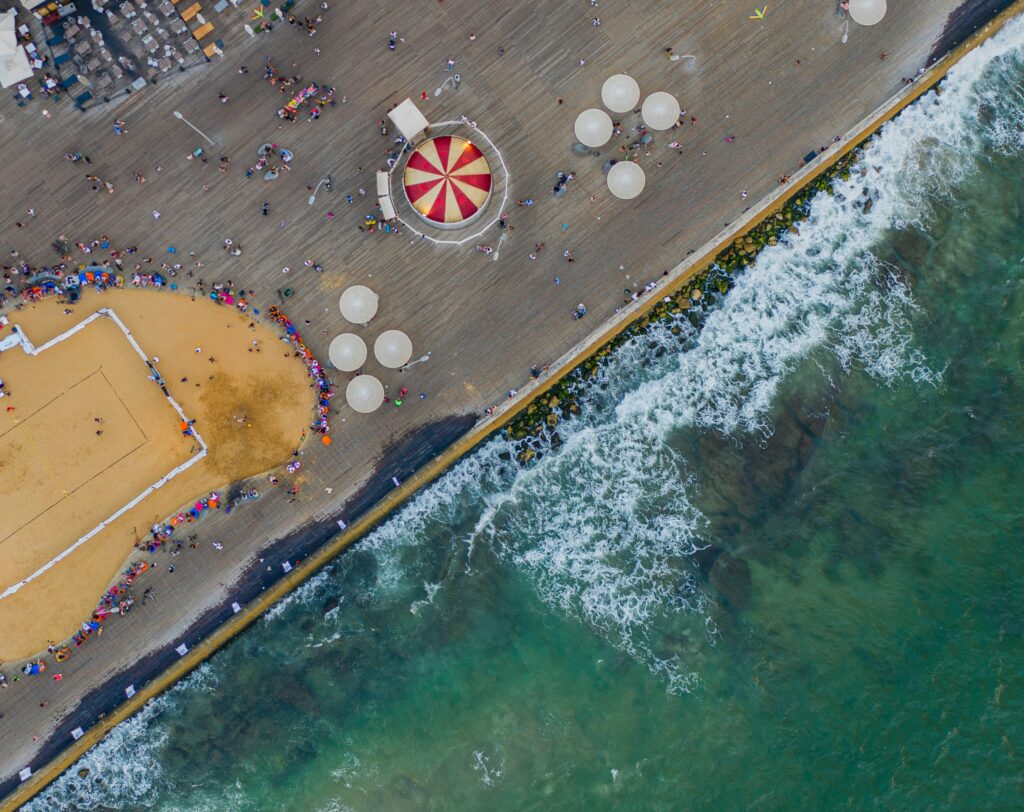
The Tel Aviv Promenade, called the Tayelet in Hebrew, is a 14-kilometer beachfront walkway along the Mediterranean coast of Tel Aviv-Yafo, connecting Jaffa Port to Tel Baruch Beach and providing access to 13 beaches. The main central section, the Shlomo Lahat Promenade, was redesigned between 2012 and 2018.
The Tel Aviv Promenade, known in Hebrew as the Tayelet (טיילת), is a 14-kilometer beachfront walkway running along the Mediterranean coastline of Tel Aviv-Yafo. It connects Jaffa Port in the south to Tel Baruch Beach in the north, providing access to 13 distinct beaches. When I was a student many years ago, I used to jog along this coastline with no organized path, running either by the water or by the road, and a beautiful promenade like today was only a dream.
What Is the Tel Aviv Promenade?
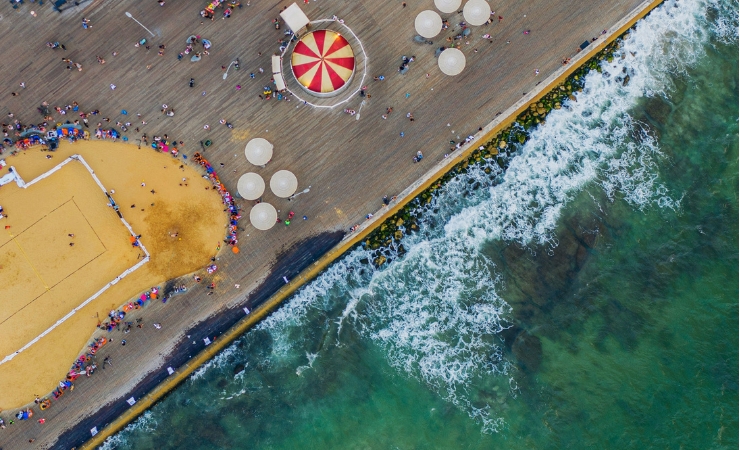
The Tel Aviv Promenade is the city’s primary public waterfront, a continuous urban space combining pedestrian walkways, cycling lanes, beach access, cafes, parks, and public art along the Mediterranean shore. At its widest, the 2018-renovated central section spans a 2.5-kilometer stretch designed as a two-level urban landscape, with an upper promenade and a lower bamboo-decked terrace zone leading directly to the sand. According to the Tel Aviv Municipality’s official visitor guide, the promenade ranks among the city’s top ten attractions, drawing visitors to its restaurants, cafes, street performers, and year-round beach culture.
The promenade runs parallel to Tel Aviv’s UNESCO-listed White City, meaning the walk offers inland views of Bauhaus and International Style architecture while the western horizon is open Mediterranean sea.
The Tel Aviv Promenade Story
The Tel Aviv Promenade has a history shaped as much by neglect and pollution as by civic ambition. Its origins date to the late 1930s, when the city council decided to build a walkway separating bathing areas from hiking and promenading paths.
During World War II, the British Mandate authorities banned bathing on the beaches entirely. The coastline fell into disuse, and conditions worsened as the growing city discharged sewage directly into the sea, triggering further bans on swimming for sanitary reasons. For roughly four decades, Tel Aviv’s beaches were more liability than asset.
The character of the promenade shifted again in 1965, when the port of Ashdod opened and the ports of both Tel Aviv and Jaffa were closed. The stretch of promenade between the two former ports lost its commercial purpose and needed rethinking as a public space.
In the 1980s, the city redirected sewage to a treatment plant, cleaned the beaches, and constructed breakwaters that caused significant expansion of the sandy shoreline. The main central section was demolished and rebuilt, with the first new segment opening to the public in 1982. In 1998, this central section was renamed the Shlomo Lahat Promenade in honor of the mayor who held office through the construction years and championed the rebuilding.
The most recent major phase was a renovation of the central 2.5-kilometer section. Construction ran from 2012 to 2018. The project covered 150,000 square meters of land area, including 3,500 square meters of beach buildings.
What Can You See Along the Tel Aviv Promenade?
The Tel Aviv Promenade rewards slow exploration. Each section has a distinct character, from the polished central boardwalk to the quieter northern stretches where the city gives way to open dunes. The 14-kilometer length means most visitors choose a section and explore it on foot, by rental bike, or on skates, then return on another visit to cover more ground. What follows is a guided account of what you will actually encounter.
Shlomo Lahat Promenade (Central Section) — This is the iconic heart of the Tayelet, running along Herbert Samuel Street from Gordon Beach south to Aviv Beach. Originally constructed in 1939, it now functions as a two-level urban space. The upper level carries pedestrians, cyclists, and skaters. A series of ramps and wide seating terraces descend to a lower bamboo-decked zone that flows directly onto the sand. All made using ecologically friendly materials with construction elements reused wherever possible. I recommend buying a coffee here and watching the sunset as people around you play volleyball, footvolley, or matkot with the sun dipping into the horizon at the end of the day.
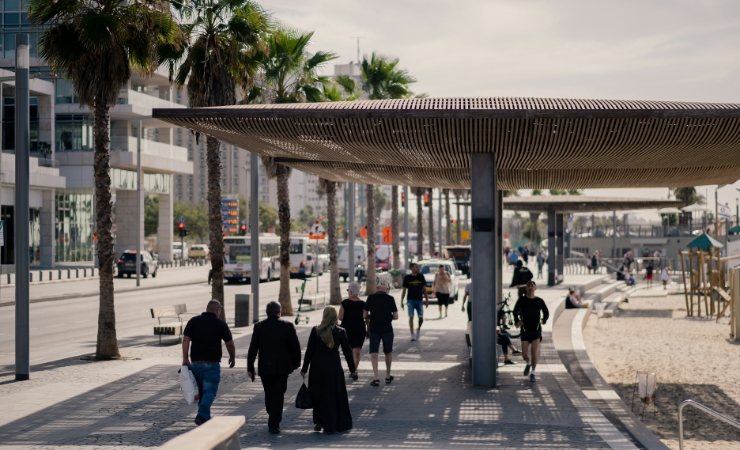
The 13 Beaches — The promenade provides direct access to 13 named beaches, each with its own identity and regular crowd. Gordon Beach is family-oriented, with volleyball courts and a seawater pool. Hilton Beach is divided into three sections: a gay-friendly zone, a surf zone, and a dog beach. Frishman Beach is the central hub, always busy, with full facilities including lifeguards, showers, and changing rooms. Alma Beach, near Jaffa in the south, is quieter and favored by locals who prefer to avoid the tourist core. According to the Tel Aviv Municipality’s beaches page, all beaches along the promenade are equipped with lifeguard stations, outdoor showers, and changing facilities
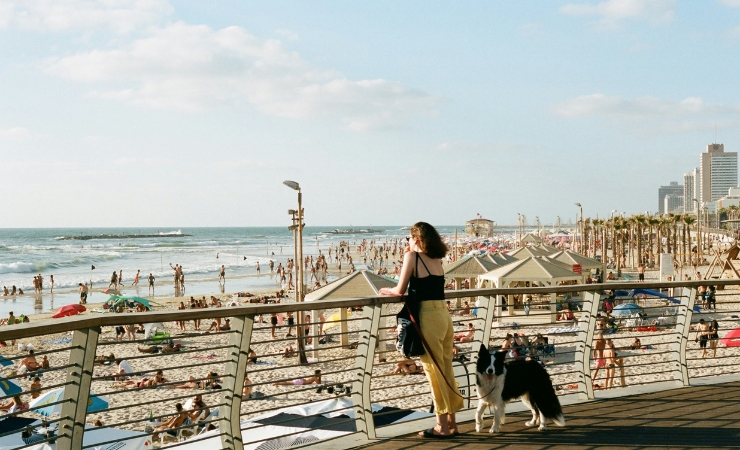
Port Promenade (Namal Section) — North of the central Lahat section, the promenade transitions into the restored Tel Aviv Port district, known as the Namal. This section runs along the mouth of the Yarkon River and connects to Metzizim Beach. The port itself was decommissioned as a commercial facility in 1965 and transformed decades later into a leisure zone with restaurants, bars, a market, and open-air event spaces. The Namal section of the promenade opened in 2005 and serves as the northern gateway to the city’s main nightlife corridor. The wooden deck of the port plaza, curved in a wave shape, is itself a piece of public design frequently photographed and used as a film location.
Tel Baruch Promenade — The northernmost section of the Tayelet opened in 2009, running from the Yarkon River mouth to Tel Baruch Beach. The bridge itself is a visual landmark in this section, offering elevated views of the industrial waterfront and open sea simultaneously. The beach here is less developed than the central sections, attracting visitors who prefer space and quiet over facilities.
Sha’ar Le’Yafo Promenade (Gate to Jaffa Section) — The southern section of the promenade links the central boardwalk to ancient Jaffa. I personally love this spot because you can stand at a single point with Jaffa’s 5,000 years of history to your south and Tel Aviv, the first Hebrew city and the best representation of the Zionist story, only 125 years old, to your north.From here, the clock tower, hilltop churches, and the curved bay of the ancient harbor are visible without obstruction.
Gan Ha’Atzmaut (Independence Garden) — Founded in 1953 on a low gravel hill above Hilton Beach, this public park offers shade, elevated sea views, and a calmer alternative to the promenade activity below. The garden has served as a community gathering space for over 70 years and remains a reliable retreat from the sun and noise of the main boardwalk.
Beachfront Cafes, Restaurants, and Cultural Venues — The promenade’s rebuilt lower terrace level includes cafe and restaurant spaces, many with seating platforms constructed as part of the renovation. The inland side of the promenade is lined with major international hotels, including the InterContinental and the Hilton, whose high-rise facades are visible from the water.
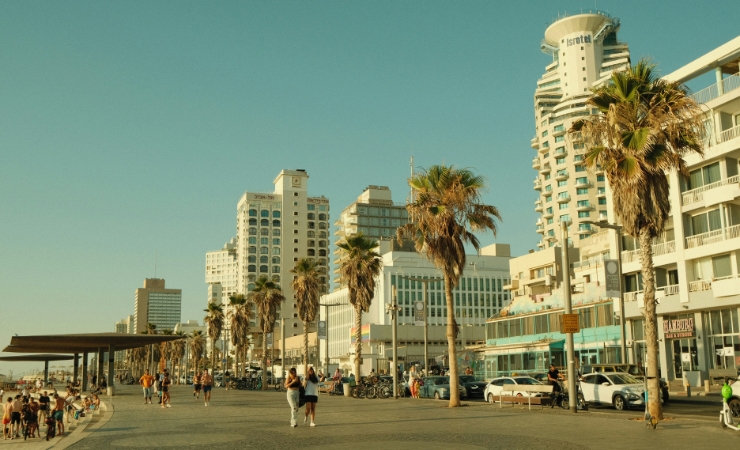
The White City Backdrop and Public Art — Walking the Tayelet northward, the inland side reveals the edge of Tel Aviv’s White City, the world’s largest concentration of Bauhaus and International Style buildings, built primarily in the 1930s and 1940s. In 2003, UNESCO designated the White City a World Cultural Heritage Site. The white-stucco facades and rounded balconies of these buildings are visible from the promenade’s upper level, particularly along the Herbert Samuel Street corridor. Several public sculptures and memorial plaques are positioned along the Tayelet itself, reflecting the promenade’s role as an urban cultural space as well as a recreational one.
Active Recreation Along the Promenade — Surf schools near Hilton Beach offer board rentals and lessons for all levels. Stand-up paddleboarding is common along the central section. The promenade is confirmed wheelchair and stroller accessible, with a flat, even surface across all major sections, as documented by Access Israel.
Visiting the Tel Aviv Promenade
The Tel Aviv Promenade is open at all hours, every day of the year, with no admission charge. The full 14-kilometer route runs from Jaffa Port in the south to Tel Baruch Beach in the north. The central Lahat Promenade section along Herbert Samuel Street is the most accessible starting point, reachable by bus lines 4 and 104 from central Tel Aviv. Tel-O-Fun bike rental stations are available at regular intervals; a short-term rental costs approximately 17 NIS for the first 30 minutes. The official Tel Aviv tourism portal at visit.tel-aviv.gov.il publishes current beach status, lifeguard hours (typically 7:00 to 19:00 in summer), and seasonal event schedules. Parking is available along Herbert Samuel Street and in paid lots near the Namal, but traffic on Friday afternoons and summer weekends is heavy; arriving by public transport or bike is faster and less costly.
Additional Information
Beaches | Tel Aviv-Yafo Municipality (Official City Site): The official Tel Aviv municipality tourism page describing the city’s long promenade running alongside the seashore.
Tel Aviv Promenade – Wikipedia: Overview of the promenade’s history, sections, and key dates.
Tel Aviv–Yafo: City Layout – Britannica: Encyclopaedia Britannica’s article on Tel Aviv–Yafo’s urban layout.
TA’s Promenade Is Breaking Out All Over – Haaretz: The Tel Aviv/Jaffa Municipality’s plans to extend the beachside promenade from Bat Yam to Herzliya, the obstacles involved.
Frequently Asked Questions
What is the Tel Aviv Promenade called in Hebrew?
The Tel Aviv Promenade is called the Tayelet (טיילת) in Hebrew, simply meaning “the promenade.” The full official Hebrew name is Tayelet Tel Aviv-Yafo. The main central section carries the specific name Shlomo Lahat Promenade, given in 1998 to honor former mayor Shlomo Lahat, who held office during the 1980s reconstruction and championed the rebuilding of the beachfront. Most locals and visitors simply call the entire waterfront “the Tayelet.” International signage along the promenade uses both Hebrew and English, so navigating on foot is straightforward even without Hebrew language skills.
How long is the Tel Aviv Promenade?
The Tel Aviv Promenade extends approximately 14 kilometers along the Mediterranean coastline, running from Jaffa Port in the south to Tel Baruch Beach in the north. Walking the full length continuously takes roughly three to four hours at a relaxed pace. Most visitors focus on the central 2.5-kilometer Lahat Promenade section, which covers the stretch from Gordon Beach south to Aviv Beach and was comprehensively redesigned between 2012 and 2018. Cycling the full length using the Tel-O-Fun bike-share system takes approximately 45 to 60 minutes depending on stops.
Is the Tel Aviv Promenade accessible for wheelchairs and strollers?
Yes. The Tel Aviv Promenade is fully accessible for wheelchair users and stroller pushers across its main sections. Access Israel (aisrael.org) confirms the promenade has a flat, even surface suitable for all mobility levels. The 2018 renovation of the central Lahat section specifically replaced the old elevated boardwalk, which created barriers, with a continuous two-level system of ramps and terraces allowing unobstructed movement from street level to the sand. Bike-share stations are at ground level. Accessible restrooms are available at several beach facilities along the route, including Gordon Beach and Frishman Beach.
What is the best section of the Tel Aviv Promenade to visit?
The central Lahat Promenade, running along Herbert Samuel Street between Gordon Beach and Frishman Beach, is the most developed and visitor-friendly section, with cafes, public seating, bike rental, and direct beach access at every point. Visitors interested in architecture benefit most from this stretch, as the White City’s Bauhaus buildings are visible from the upper level. For quieter walking, the Sha’ar Le’Yafo southern section offers garden paths and views of Old Jaffa’s skyline. The Port Promenade (Namal section) is preferable for evening visits, given its concentration of restaurants and bars.
Are there bike rentals on the Tel Aviv Promenade?
Yes. The Tel-O-Fun city bike-sharing system operates rental stations at multiple points along the promenade, making it easy to pick up and drop off a bike at different locations along the 14-kilometer route. Short-term rentals cost approximately 17 NIS for the first 30 minutes. Surf schools near Hilton Beach also rent surfboards and offer lessons. Stand-up paddleboard rentals are available along the central promenade section. The upper level of the Lahat Promenade has a designated cycling and skating lane separated from the pedestrian walkway, so bike riding along the main section is both safe and straightforward.
When does the Tel Aviv Pride Parade take place on the promenade?
The Tel Aviv Pride Parade takes place annually in June, typically on a Friday, and routes along the Tel Aviv Promenade before concluding at Charles Clore Beach Park. Pride events in Tel Aviv date back to 1998, and the parade now draws approximately 250,000 to 300,000 participants, making it among the largest LGBTQ+ events in the Middle East. The full Pride weekend includes beach parties, concerts, and events across the city. During the parade day, significant sections of the promenade and adjacent streets are closed to vehicle traffic. Visitors planning to be in Tel Aviv in June should check exact dates in advance, as accommodation books up months ahead.
Sites Nearby
Carmel Market: A Vibrant Marketplace at the Heart of Tel Aviv: A related central israel article on kenisrael.com.
Habima Square Tel Aviv: Israel’s Cultural Plaza: A related tel aviv & jaffa article on kenisrael.com.
Jaffa Clock Tower: A Significant 28-meter Ottoman Landmark: Built at the dawn of the 20th century, the Jaffa Clock Tower is an architectural gem serves as a reminder of the Ottoman Empire’s extensive influence and the locality’s transition into modernity.
Old Jaffa Port: Israel’s Ancient Maritime Gateway: A related tel aviv & jaffa article on kenisrael.com.
Park HaMesila: Tel Aviv’s Historic Railway Park: A related central israel article on kenisrael.com.
Keep reading
Part of our Tel Aviv & Jaffa Guide →