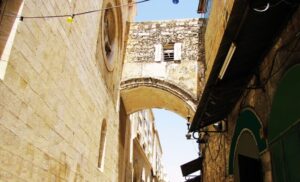
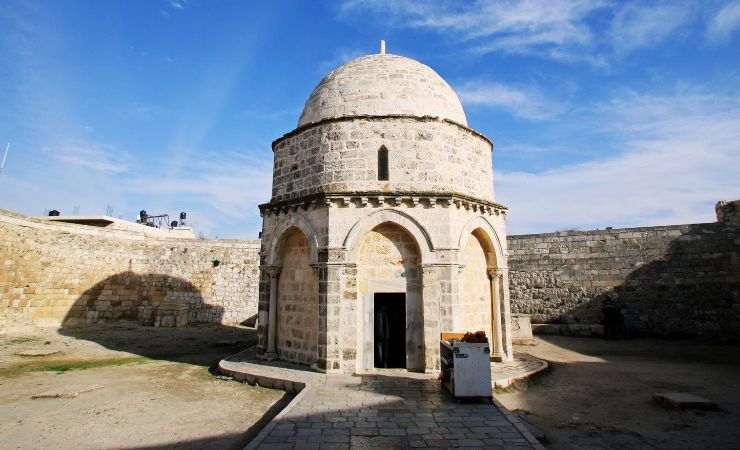
The Chapel of the Ascension on the Mount of Olives marks the traditional site where Jesus ascended to heaven forty days after his resurrection. Originally built as a Byzantine church in the 4th century, the octagonal structure was later converted into a mosque but remains accessible to Christian pilgrims who visit to venerate this sacred location.
Perched atop the Mount of Olives, the Chapel of the Ascension marks the traditional site where Jesus ascended to heaven following his resurrection. This ancient structure, now functioning as an Islamic shrine called the Dome of the Ascension, draws both Christian pilgrims and Muslim worshippers to its sacred grounds. The octagonal chapel, with its distinctive dome and Islamic architectural elements, encapsulates the complex religious history of Jerusalem while preserving the memory of one of the most significant events in the Holy Land.
Location of the Chapel of the Ascension
The Chapel of the Ascension sits on the highest point of the Mount of Olives, approximately 818 meters above sea level, offering spectacular views across Jerusalem and the surrounding Judean hills. The chapel occupies the summit location 400 meters north of the village of et-Tur, positioned directly east of the Temple Mount and Old City.
Biblical Context
The Chapel of the Ascension derives its spiritual significance from the biblical account of Jesus’ final departure from earth, recorded in the Gospel of Luke and the Acts of the Apostles. According to Christian tradition, Jesus led his disciples to a place near Bethany on the Mount of Olives forty days after his resurrection. As documented in the Holy Land scripture, he blessed them before ascending bodily into heaven while they watched. The Gospel accounts describe how Jesus commanded his followers to remain in Jerusalem until they received the Holy Spirit, promising his eventual return. Early Christian pilgrims identified this summit location as the precise spot where the ascension occurred, leading to the construction of successive churches and shrines beginning in the 4th century CE.
Transformation from Church to Mosque to Chapel: A Historical Evolution
The Chapel of the Ascension has witnessed a remarkable succession of religious transformations spanning nearly seventeen centuries, reflecting the changing political and spiritual landscape of Jerusalem. The site’s first formal structure emerged in 378 CE when the Roman noblewoman Poimenia commissioned a circular church to commemorate the ascension. This initial Byzantine basilica, expanded during the reign of Emperor Justinian in the 6th century, established the location as a major pilgrimage destination.
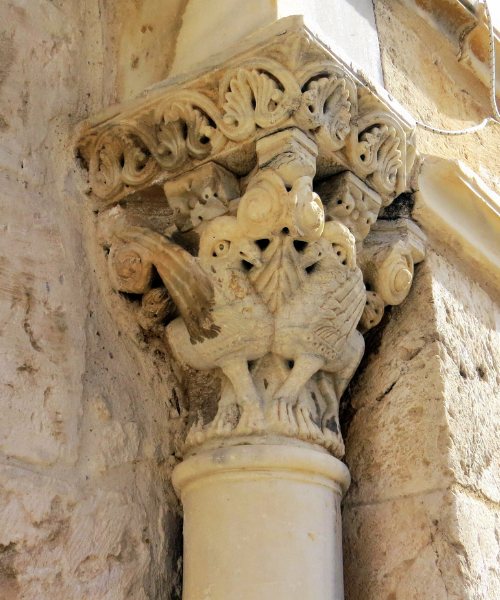
Following the Islamic conquest of Jerusalem in 638 CE, the church initially remained under Christian control through protective agreements between the Muslim rulers and local Christian communities. However, during the Crusader period of 1099-1187, European knights rebuilt the structure as a magnificent octagonal church with an open roof, symbolizing Jesus’ direct ascent to heaven. The Crusaders added elaborate Romanesque capitals featuring carved griffins and decorative stonework that remains visible today.
The most dramatic transformation occurred in 1187 when Saladin’s forces recaptured Jerusalem from the Crusaders. The site was converted into an Islamic shrine known as Qubbat al-Mi’raj (Dome of the Ascension), acknowledging both the Christian tradition and Islamic reverence for Jesus as a prophet. Muslim architects added the distinctive dome and enclosed the previously open structure, while incorporating Islamic calligraphy and geometric patterns into the interior design.
During Ottoman rule (1517-1917), the shrine received regular maintenance and renovations while remaining under Islamic administration. The Ottomans installed the current mihrab (prayer niche) and added Arabic inscriptions celebrating both the ascension of Jesus and the night journey of the Prophet Muhammad. Interestingly, local Muslim tradition also associates the site with Muhammad’s ascension during his miraculous night journey from Mecca to Jerusalem.
The 20th century brought new challenges to the site’s religious identity. Under British Mandate rule (1917-1948), the building functioned primarily as an Islamic mosque while occasionally allowing Christian pilgrims access for prayer services. Following the establishment of Israel in 1948 and the Jordanian occupation of East Jerusalem, the site remained under Islamic administration. After Israel’s capture of East Jerusalem in 1967, arrangements were made to accommodate both Muslim worshippers and Christian pilgrims, though the Islamic identity of the structure predominates.
The current arrangement reflects centuries of interfaith coexistence and adaptation. While Muslim families hold the keys to the shrine and maintain its daily operations, Christian tour groups and individual pilgrims can visit during designated hours.
Architecture: Tracing the Crusader and Islamic Influences
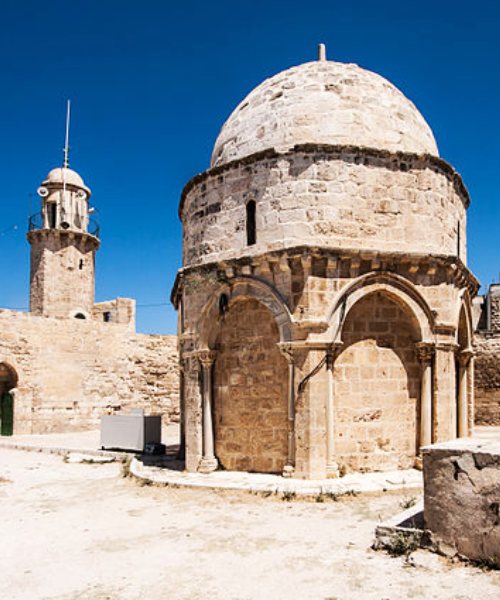
The present structure of the Chapel of the Ascension represents an extraordinary synthesis of Crusader Christian and Islamic architectural traditions, preserved within a compact octagonal building measuring approximately 8 meters in diameter. The exterior walls, constructed from the honey-colored Jerusalem stone typical of the region, rise to a height of 6 meters before supporting the distinctive Islamic dome added during the Ayyubid period.
The most striking surviving elements from the Crusader era include the eight massive stone columns that define the building’s octagonal plan. These columns, carved from single blocks of limestone, support intricately decorated capitals featuring griffins, lions, and stylized foliage typical of 12th-century Romanesque sculpture. Each capital displays unique iconography, with some showing eagles with spread wings symbolizing the ascension, while others feature intertwined vines representing the Christian concept of eternal life. The craftsmanship of these capitals ranks among the finest examples of Crusader stonework in the Holy Land.
The architectural genius of the original Crusader design lay in its open-air concept. The eight arches between the columns originally supported no roof, allowing worshippers to gaze directly upward toward heaven while commemorating Jesus’ ascension. This innovative approach reflected the theological symbolism of the ascension narrative, creating a direct visual connection between earth and sky. Archaeological evidence suggests that the original floor featured elaborate mosaic decorations, fragments of which were discovered during 20th-century excavations.
Islamic architectural additions fundamentally transformed the building’s character while respecting its underlying structure. The octagonal dome, added by Saladin’s builders around 1200 CE, employs traditional Islamic construction techniques including pointed arches and ribbed vaulting. The dome’s interior features intricate geometric patterns painted in deep blues and greens, with Arabic calligraphy proclaiming religious verses about divine ascension. These decorative elements demonstrate the sophisticated artistic traditions of Ayyubid craftsmen.
The Islamic conversion also involved practical modifications to accommodate Muslim worship. Walls were constructed between the original Crusader arches, transforming the open pavilion into an enclosed prayer hall. A mihrab was installed in the southeastern wall to indicate the direction of Mecca, while the floor was redesigned with prayer carpets replacing the original mosaics. Windows were added at regular intervals to provide natural light while maintaining the building’s octagonal symmetry.
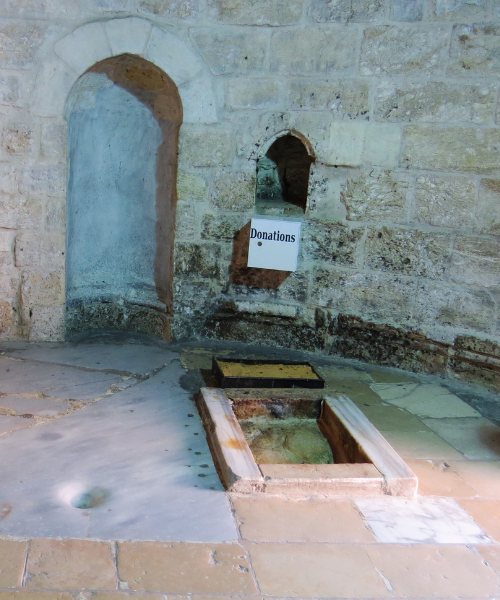
Most remarkably, a small depression in the stone floor is traditionally venerated as the footprint left by Jesus during his ascension. This feature, measuring approximately 30 centimeters in length, has been protected by successive religious communities and remains visible behind a decorative metal grating. Both Christian and Muslim traditions acknowledge this impression as authentic, making it one of the few physical relics recognized by both faiths.
Visitors approaching the Chapel of the Ascension encounter a complex architectural narrative written in stone, where medieval Christian symbolism coexists with Islamic geometric beauty. This unique fusion creates a visual testament to Jerusalem’s role as a crossroads of civilizations, where competing religious traditions found ways to honor shared sacred geography while expressing their distinct theological perspectives.
What Can Be Seen
The Chapel of the Ascension reveals its complex history through multiple architectural layers and sacred elements visible throughout the compact octagonal structure.
Crusader Capitals and Columns: Eight magnificent Romanesque capitals crown the limestone columns, each featuring unique carved iconography including griffins, eagles, lions, and intricate foliate designs representing various Christian theological concepts.
The Sacred Footprint: A small depression in the stone floor, traditionally venerated as the last earthly footprint of Jesus, lies protected behind decorative metalwork and remains the focal point for pilgrims of both Christian and Islamic faiths.
Islamic Dome and Calligraphy: The interior dome showcases intricate geometric patterns and Arabic calligraphy proclaiming verses about divine ascension, painted in traditional Islamic colors of deep blue and gold.
Mihrab and Prayer Elements: The southeastern wall features a carved mihrab indicating the direction of Mecca, while the prayer hall includes Islamic architectural elements adapted to the octagonal Crusader foundation.
Panoramic Viewing Terrace: The surrounding courtyard provides spectacular 360-degree views across Jerusalem, the Judean Desert, and the Dead Sea valley, offering some of the finest photographic vantage points in the Holy Land.
Archaeological Foundations: Exposed sections of the original Byzantine foundations and medieval construction layers are visible along the building’s exterior walls, providing insight into the site’s multi-phase development.
Practical Information
The Chapel of the Ascension is open daily from 8:00 AM to 5:00 PM, with shortened hours during Ramadan and Islamic holidays. Admission costs 10 NIS (approximately $3 USD) per person, with discounts available for students and groups of 10 or more. Children under 12 enter free when accompanied by adults.
Access requires a moderate uphill walk of approximately 10-15 minutes from the main road through the Mount of Olives cemetery. Limited parking is available near the Seven Arches Hotel, with additional street parking along the winding access roads. The site is not wheelchair accessible due to the uneven stone pathways and steps leading to the entrance.
Visitors should dress modestly when entering this active place of worship.
Additional Information
Can you see the footprint of Jesus at the Chapel of the Ascension?
The chapel preserves a small stone depression traditionally believed to be the last footprint left by Jesus before his ascension to heaven. This impression, measuring about 30 centimeters long, is protected behind decorative metalwork and remains visible to visitors. Both Christian and Muslim traditions acknowledge this feature as authentic.
What architectural styles are visible in the Chapel of the Ascension?
The chapel displays a unique combination of 12th-century Crusader Romanesque architecture and Islamic design elements added after 1187 CE. Visitors can see original Crusader columns with carved capitals, an Islamic dome with geometric patterns, Arabic calligraphy, and a mihrab indicating the direction of Mecca.
How long does it take to visit the Chapel of the Ascension?
A typical visit lasts 20-30 minutes, allowing time to explore the chapel interior, examine the architectural details, and enjoy the panoramic views from the surrounding terrace. The site can be combined with other Mount of Olives attractions for a half-day tour.
What are the admission fees for the Chapel of the Ascension?
Admission costs 10 NIS (approximately $3 USD) per person, with discounts available for students and groups of 10 or more visitors. Children under 12 enter free when accompanied by adults. The site is open daily from 8:00 AM to 5:00 PM.
Is the Chapel of the Ascension wheelchair accessible?
Unfortunately, the site is not wheelchair accessible due to uneven stone pathways, steps leading to the entrance, and the uphill walk required to reach the chapel. The approach involves navigating through the Mount of Olives cemetery on ancient stone paths.
Nearby Sites
- Pater Noster (Eleona) Church: A significant pilgrimage site believed to be the place where Jesus ascended to heaven and where he taught his disciples the Lord’s Prayer.
- The Garden of Gethsemane: Located at the foot of the Mount of Olives, this serene garden holds immense spiritual significance as the place where Jesus prayed before his arrest. The Grotto of Gethsemane is part of the Gardens.
- Dominus Flevit Church: The exquisite teardrop-shaped church commemorates the moment when Jesus wept over the impending destruction of Jerusalem.
- Mount Zion: This historic hilltop is home to several important religious sites, including the Last Supper Room and the Tomb of King David, providing a deeper understanding of the roots of Christianity and Judaism.
Keep reading
Part of our Christian Pilgrimage Guide →