Mamilla Pool is an ancient reservoir in Jerusalem that served as a crucial water source for the city throughout history. Located within Mamilla Cemetery, the pool is surrounded by notable graves from the Mamluk period. This historic site reflects Jerusalem's sophisticated water management systems and stands as an important archaeological landmark connecting the city's past to its present urban landscape.
Discover the intriguing history and significance of the Mamilla Pool, an ancient reservoir that served as Jerusalem’s primary water supply for over a millennium. This rectangular basin, measuring nearly 300 feet long, stands at the center of the historic Mamilla Cemetery, where notable figures from Jerusalem’s Islamic period rest among weathered headstones. The pool’s sophisticated engineering and strategic location reveal the complex water management systems that sustained one of the world’s most contested cities through Byzantine, Crusader, and Ottoman periods.
Mamilla Pool Location
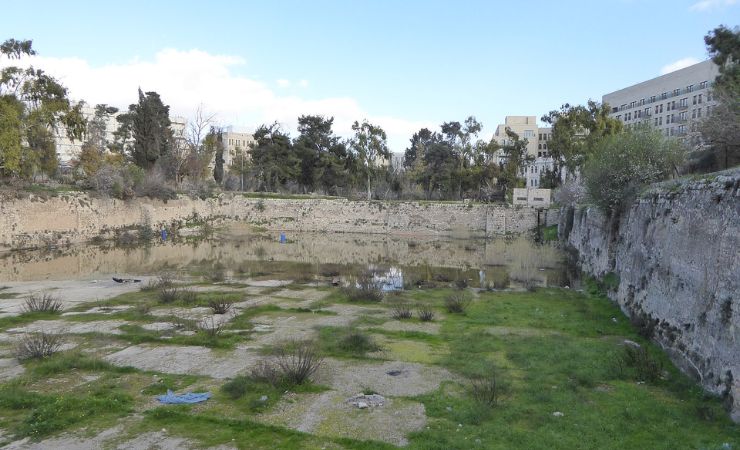
The Mamilla Pool lies outside the Old City walls of Jerusalem, approximately 650 meters northwest of Jaffa Gate, and close to the New Gate and the Waldorf Astoria Hotel. The rectangular reservoir occupies the central area of the Mamilla Cemetery, positioned at an elevation that once allowed gravity-fed water distribution to the Old City.
The Source of the Name "Mamilla"
The name “Mamilla” carries multiple etymological possibilities that reflect the site’s diverse cultural heritage. The most practical theory traces it to the Hebrew “m’malle,” meaning “the filler,” which directly describes the pool’s function as a water reservoir. A second interpretation connects it to the Arabic phrase “مأمن الله” (Ma’man Allah), signifying “refuge of God” or “place of divine safety,” reflecting the pool’s life-sustaining role in a frequently besieged city.
Christian sources offer a third possibility, suggesting the name derives from Saint Mamilla or Saint Babila, early Christian martyrs. Byzantine-era records mention a nearby church dedicated to one of these saints, which may have lent its name to the surrounding area. Some Christianity in Israel scholars propose an alternative Christian connection to Maximilla, an early follower associated with the Montanist movement, though this theory lacks strong archaeological support. The diversity of these explanations reflects Jerusalem’s position as a crossroads of religious and cultural traditions throughout its long history.


The Site's History
Archaeological evidence suggests the Mamilla Pool functioned as early as the 5th century CE during the Byzantine period, when it served as the primary water source for public baths located near Jaffa Gate. The pool’s original Roman-era name, “Upper Pool of Gihon,” reflects its elevated position and connection to Jerusalem’s ancient water sources. Byzantine engineers constructed a sophisticated system of channels and aqueducts that directed rainwater and spring water from the surrounding hills into the reservoir, creating a reliable supply that could sustain the city through dry seasons and military sieges.
During the Crusader occupation (1099-1187 CE), the pool underwent significant modifications and earned the name “Patriarch’s Lake.” Crusader records describe its role in feeding the Pool of the Patriarch’s Bath within the Old City walls, demonstrating the continuation of Byzantine water management practices. The Crusaders enhanced the pool’s stone lining and constructed additional channels to improve water flow.
The Ottoman period brought further changes to the Mamilla Pool’s infrastructure. Ottoman tax records from the 16th century document payments for pool maintenance, indicating its continued municipal importance. By the 19th century, European travelers like Horatio Balch Hackett observed local residents using the stone steps to collect water and water their livestock, demonstrating the pool’s enduring role in daily life. The surrounding area developed into a mixed Muslim-Christian neighborhood, with the cemetery expanding around the pool throughout this period.
The British Mandate era (1920-1948) marked the pool’s transition from traditional water source to modern infrastructure component. British engineers installed pumping equipment, including a Caterpillar pump whose remains are still visible today. However, these modernization efforts proved short-lived, and by the 1960s, the pool had largely ceased functioning as an active water source, becoming instead a seasonal collection point for rainwater that supports local wildlife.
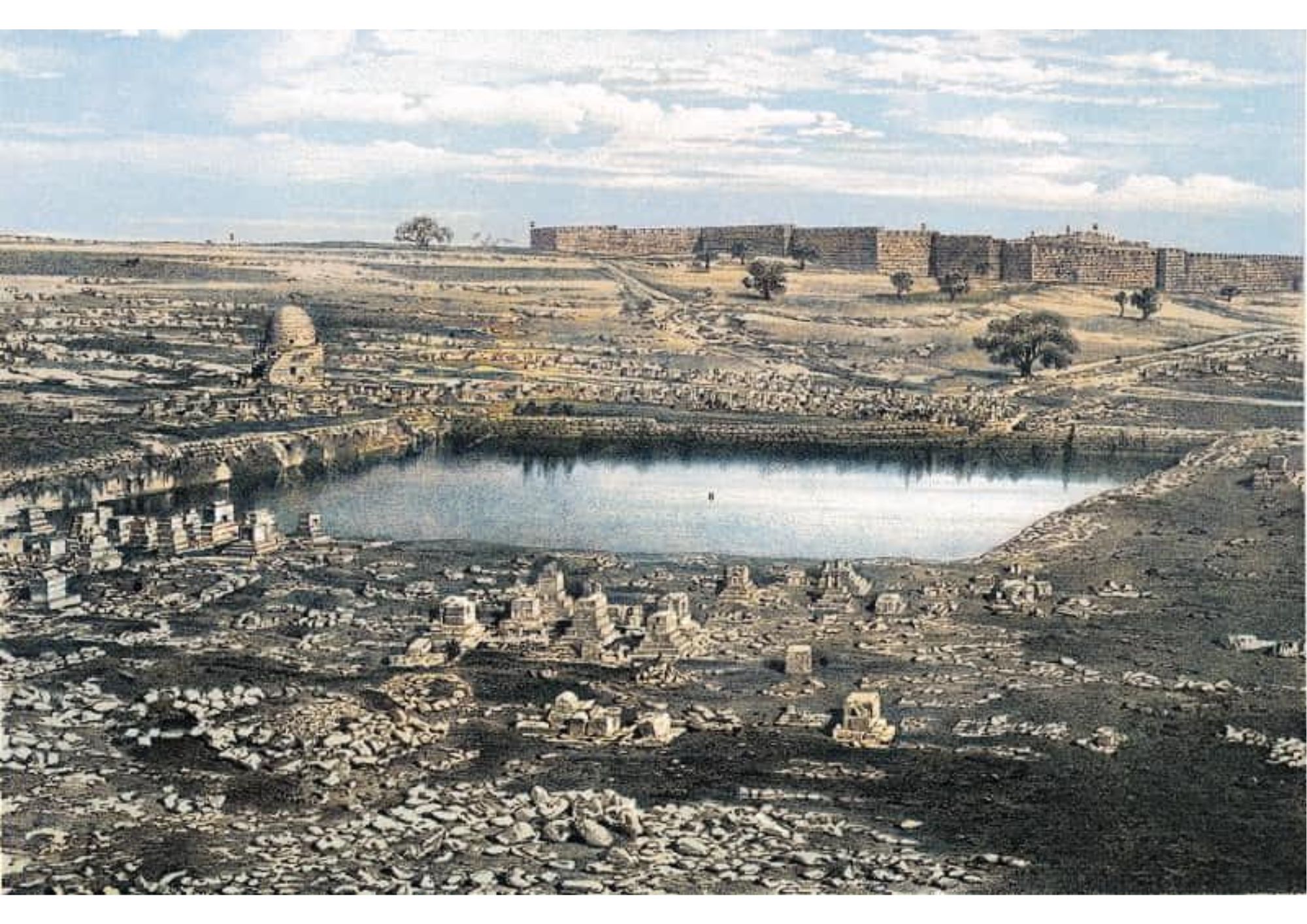
The Pool's Dimensions and Archaeological Findings
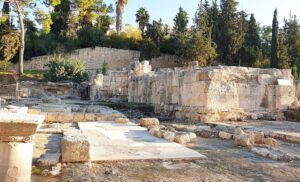
The Mamilla Pool measures approximately 89 meters (291 feet) in length, 58 meters (192 feet) in width, and 6 meters (19 feet) in depth, making it one of the largest ancient water reservoirs discovered in the Jerusalem area. The pool features carefully constructed stone steps at its northeastern and southwestern corners, each measuring approximately 0.4 meters wide and designed with a gentle gradient to allow safe descent for water collection and livestock watering. Archaeological excavations have revealed that the original Byzantine construction used large limestone blocks secured with iron clamps, a technique that allowed the structure to withstand centuries of seasonal flooding and earthquake activity.
The pool’s ecological transformation reflects its current state as a seasonal wetland habitat. Winter rains create temporary aquatic ecosystems that support populations of freshwater crabs, marsh frogs, and various amphibians. Migratory bird species, including herons, ibises, and ducks, use the pool as a stopover point during spring and autumn migrations along the Jordan Rift Valley flyway. This ecological function, while unintended by the original builders, demonstrates the pool’s continued contribution to Jerusalem’s urban environment.
Practical Information
The Mamilla Pool is accessible 24 hours daily through Independence Park and surrounding public streets, with no admission fee required for viewing. The best approach is via Agron Street or through the main entrance to Independence Park near the Waldorf Astoria Hotel.
Additional Information
How does the Mamilla Pool relate to other ancient Jerusalem water systems?
The Mamilla Pool was part of a comprehensive Byzantine-era water management network that included the Pool of Siloam, Hezekiah’s Tunnel, and various aqueducts and cisterns. Unlike internal water sources that were vulnerable during sieges, the Mamilla Pool’s external location provided Jerusalem with a strategic backup water supply. Its elevated position allowed gravity-fed distribution to multiple points within the Old City walls.
What archaeological discoveries have been made at the Mamilla Pool?
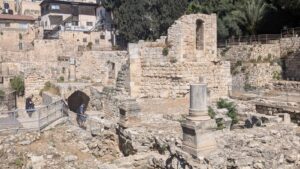
Excavations have revealed evidence of continuous use from the Byzantine period through the British Mandate era, including original limestone construction blocks, iron clamps, clay pipe systems, and Ottoman-era repairs. The site has also yielded pottery fragments, coins, and inscriptions that help date different construction phases. The British-era Caterpillar pump remains visible as the most recent archaeological artifact.
Why was the Mamilla Pool built outside Jerusalem’s city walls?
The pool’s external location served multiple strategic purposes: it captured rainwater from a larger catchment area, remained accessible even when the Old City was under siege, and provided space for a reservoir of substantial capacity. The elevated terrain also created natural water pressure for distribution throughout the city’s lower elevations.
How long did the Mamilla Pool serve as Jerusalem’s water source?
The pool functioned continuously as a significant water source for approximately 1,400 years, from its Byzantine construction in the 5th century CE through the early British Mandate period in the 1940s. While its primary municipal role ended in the mid-20th century, the pool continues to collect seasonal rainwater and serves ecological functions within Jerusalem’s urban landscape.
Sources and Additional Information
Nearby Sites
- Waldorf Astoria Hotel: Located near the Mamilla Cemetery. Was once the Palace Hotel, a location rich with historical significance.
- Museum of Tolerance: A modern museum showcasing the region’s historical layers.
- YMCA Building: This historic building features beautiful architecture and offers a variety of cultural and recreational activities.
- Tower of David: An ancient citadel offers a museum that presents the history of Jerusalem through exhibitions and stunning views of the city.
Keep reading
Part of our Jerusalem Travel Guide →