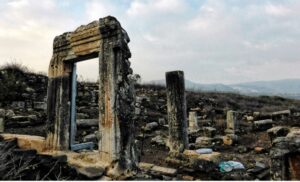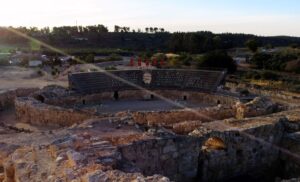
Saint-Étienne Church (St. Stephen's Basilica) stands near Damascus Gate as a Catholic site marking Christianity's first martyr. The complex contains First Temple period tombs and a modern basilica built by French Dominicans in the 1900s. Archaeological excavations revealed ancient burial caves and Byzantine-era remains, connecting Jewish heritage with early Christian tradition in one remarkable Jerusalem location.
Just steps from the bustling Damascus Gate, Saint-Étienne Church rises as one of Jerusalem’s most unique archaeological treasures. This Catholic basilica, also known as St. Stephen’s Basilica, combines Christian martyrdom history with extraordinary First Temple period burial chambers discovered beneath its grounds.
Location
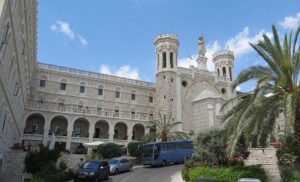
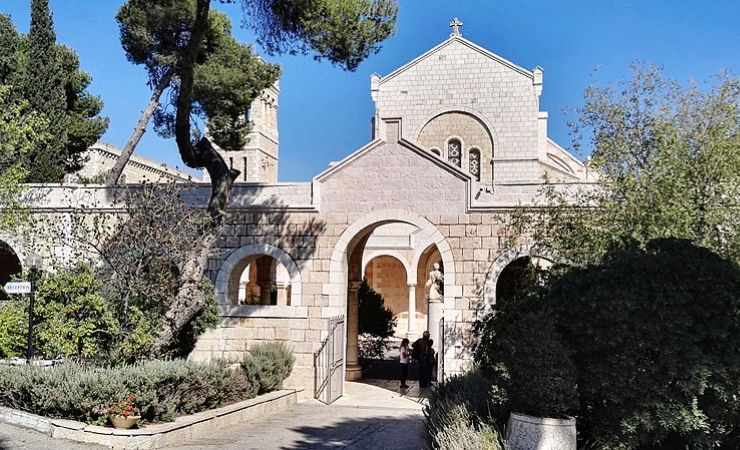
Saint-Étienne Church occupies a commanding position on Nablus Road (Derekh Shekhem), approximately 200 meters north of Damascus Gate. The basilica sits within the walled compound of the École Biblique et Archéologique Française, a prestigious Dominican institution established in 1890.
History
The site’s Christian significance begins with Empress Eudocia’s decision in 439 AD to honor St. Stephen, Christianity’s first martyr, with a magnificent basilica. Stephen’s martyrdom, recorded in Acts 7:54-60, occurred when he was stoned to death outside Jerusalem’s gates after delivering a powerful speech before the Sanhedrin. The original Byzantine church was constructed to house Stephen’s relics, which tradition holds were miraculously discovered in 415 AD in Kafr Gamala (modern-day Beit Jimal) through a vision received by the priest Lucian.
The Byzantine basilica flourished for nearly two centuries as a major pilgrimage destination. Pilgrims from across the Christian world came to venerate the protomartyr’s relics and pray at the site where he was believed to have been stoned. However, the Persian invasion of 614 AD brought devastating destruction to Christian sites throughout the Holy Land, and Saint-Étienne was razed along with hundreds of churches and monasteries.
The Crusaders later restored parts of the church, but it was again demolished during conflicts with Sultan Saladin.
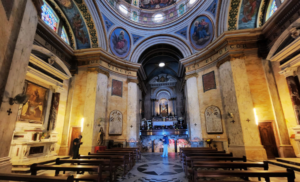
The modern Saint-Étienne Church emerges from a remarkable 19th-century restoration story. French nobleman Comte Marie-Joseph de Piellat purchased the abandoned site in 1882, driven by both archaeological curiosity and religious devotion. The Dominican Order, renowned for their scholarly pursuits, took responsibility for both the spiritual and academic mission of the site. The current Neo-Byzantine basilica was consecrated in 1900 under the direction of architect Émile Guillemot, who incorporated elements from the original Byzantine foundations discovered during excavation.



Architectural and Archaeological Highlights
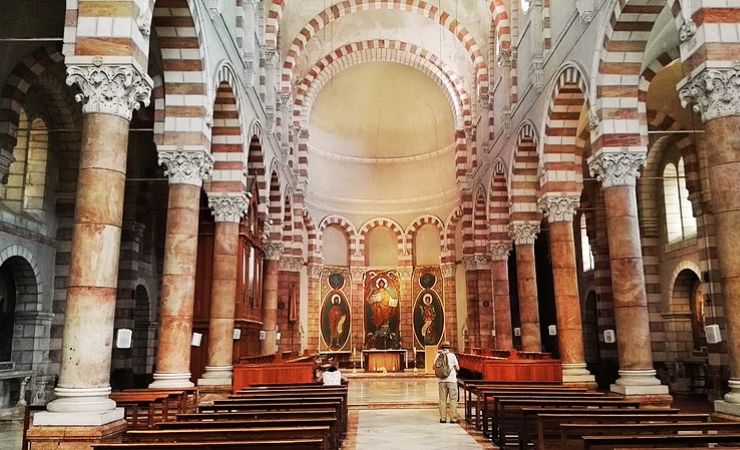
- Neo-Byzantine Architecture: The current basilica showcases exceptional Neo-Byzantine craftsmanship, featuring a single-apsed design with a distinctive polygonal apse that creates optimal acoustics for liturgical services. The imposing 30-meter bell tower, serves as a landmark for pilgrims and locals alike. Interior elements include hand-painted frescoes depicting scenes from Stephen’s martyrdom, an ornate wooden altar screen, and stained glass windows that filter Mediterranean sunlight into patterns of color across the stone floors.
- École Biblique Library: The library within the Saint-Étienne complex ranks among the world’s premier biblical and archaeological research centers. Its collection exceeds 200,000 volumes and includes 500 specialized periodicals covering biblical exegesis, ancient Near Eastern studies, Dead Sea Scroll research, and archaeology. The library houses rare manuscripts dating to the medieval period, early printed editions of biblical texts, and the complete archaeological records from major excavations conducted by the École Biblique throughout the Levant.
The First Temple Period Tombs
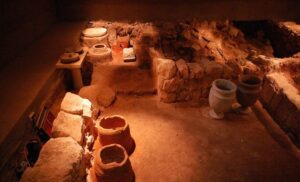
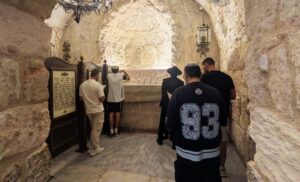
The most extraordinary discovery at Saint-Étienne Church occurred during the 1885 restoration when Dominican archaeologists uncovered an intact complex of Iron Age burial chambers dating to the 7th-6th centuries BCE. These tombs represent some of the finest examples of First Temple period funerary architecture discovered in Jerusalem, providing invaluable insights into the burial practices of ancient Judah during the reigns of kings Josiah and Jehoiachin.
The tomb complex demonstrates the sophisticated burial customs of Jerusalem’s elite during the final century before Babylonian conquest:
- Rock-Cut Architecture: The tombs were meticulously carved into the natural limestone bedrock using iron tools, creating chambers with perfectly smooth walls and precisely cut niches. The entrance passages, sealed with rolling stones, feature stepped approaches typical of high-status burials from this period.
- Family Burial Complex: The site contains seven interconnected chambers arranged around a central courtyard, indicating use by multiple generations of a wealthy Jerusalem family. Individual loculi (burial niches) line the chamber walls, with evidence suggesting primary burial followed by secondary bone collection in ossuaries.
- Funerary Assemblages: Archaeological excavation revealed extensive grave goods including locally produced pottery vessels, bronze jewelry, carved bone implements, and imported items that indicate trade connections with Egypt and Mesopotamia. Seal impressions found within the tombs bear names recorded in biblical texts, providing rare direct connections between archaeological evidence and scriptural records. The artifacts suggest the deceased held positions in Jerusalem’s administrative or priestly hierarchy.
Dating to the decades immediately preceding Nebuchadnezzar’s destruction of the First Temple in 586 BCE, artifacts preserve burial practices described in biblical accounts and illuminate the daily life of Judah’s ruling class. The tomb complex continued in use during the early Persian period, documenting Jerusalem’s gradual recovery after the Babylonian exile.
Practical Information
Saint-Étienne Church welcomes visitors throughout the year, though access requires advance coordination with the École Biblique due to its active academic environment. The site is open Monday through Friday from 8:00 AM to 12:00 PM and 2:00 PM to 5:00 PM, with limited weekend access by appointment. Admission is free, though donations are welcomed to support archaeological research and site maintenance.
Additional Information
Can visitors see the First Temple tombs at Saint-Étienne Church?
Access to the ancient tombs requires advance arrangement with the École Biblique as they are preserved archaeological sites. Specialized tours led by Dominican scholars provide detailed access to the burial chambers during scheduled visits. The tombs are not wheelchair accessible due to steps and narrow passages.
What makes Saint-Étienne Church Jerusalem unique compared to other Jerusalem churches?
Saint-Étienne Church Jerusalem combines two distinct historical layers: a Neo-Byzantine basilica honoring Christianity’s first martyr and exceptionally preserved First Temple period burial chambers dating to the 7th-6th centuries BCE. This unique combination allows visitors to experience both Christian martyrdom history and ancient Jewish burial practices in a single location.
Can I visit the École Biblique library at Saint-Étienne?
The École Biblique library is primarily for academic researchers and requires advance permission for access. Scholars with legitimate research credentials may apply for library privileges through the Dominican administration. The library houses over 200,000 volumes on biblical studies, archaeology, and ancient Near Eastern history, including rare manuscripts and the complete Qumran excavation archives.
Nearby Sites
- Damascus Gate: A historic entrance to the Old City, renowned for its vibrant market and rich history.
- Garden Tomb: A peaceful site considered by some to be the burial and resurrection place of Jesus.
- Rockefeller Archaeological Museum: Home to a vast collection of artifacts from the region, offering deep insights into Jerusalem’s history.
- Mamilla Mall: An open-air mall , perfect for shopping and dining with scenic views of Jerusalem. Minutes away from the Jaffa Gate, the Mamilla Pool, and the YMCA Building.
Keep reading
Part of our Christian Pilgrimage Guide →