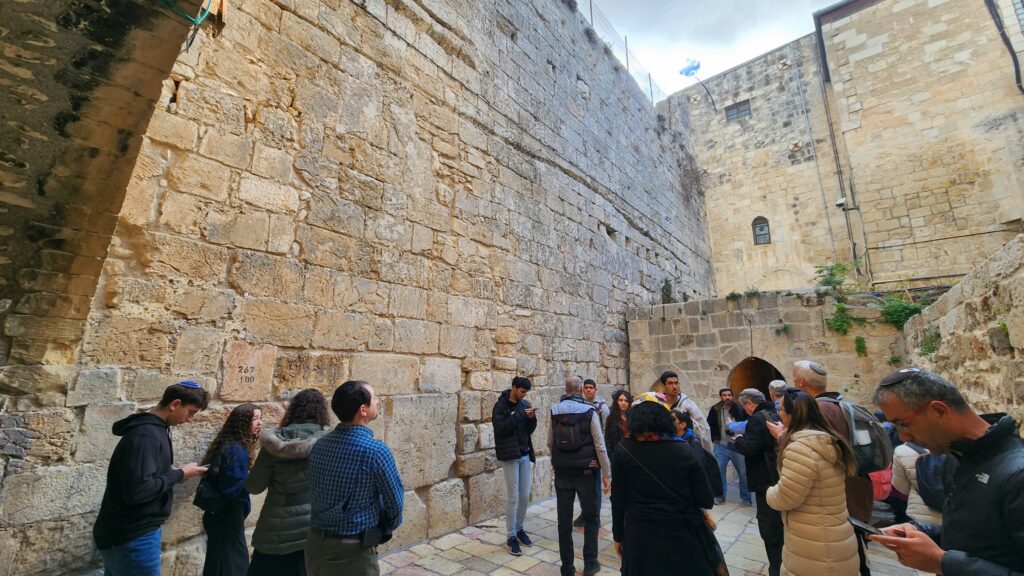
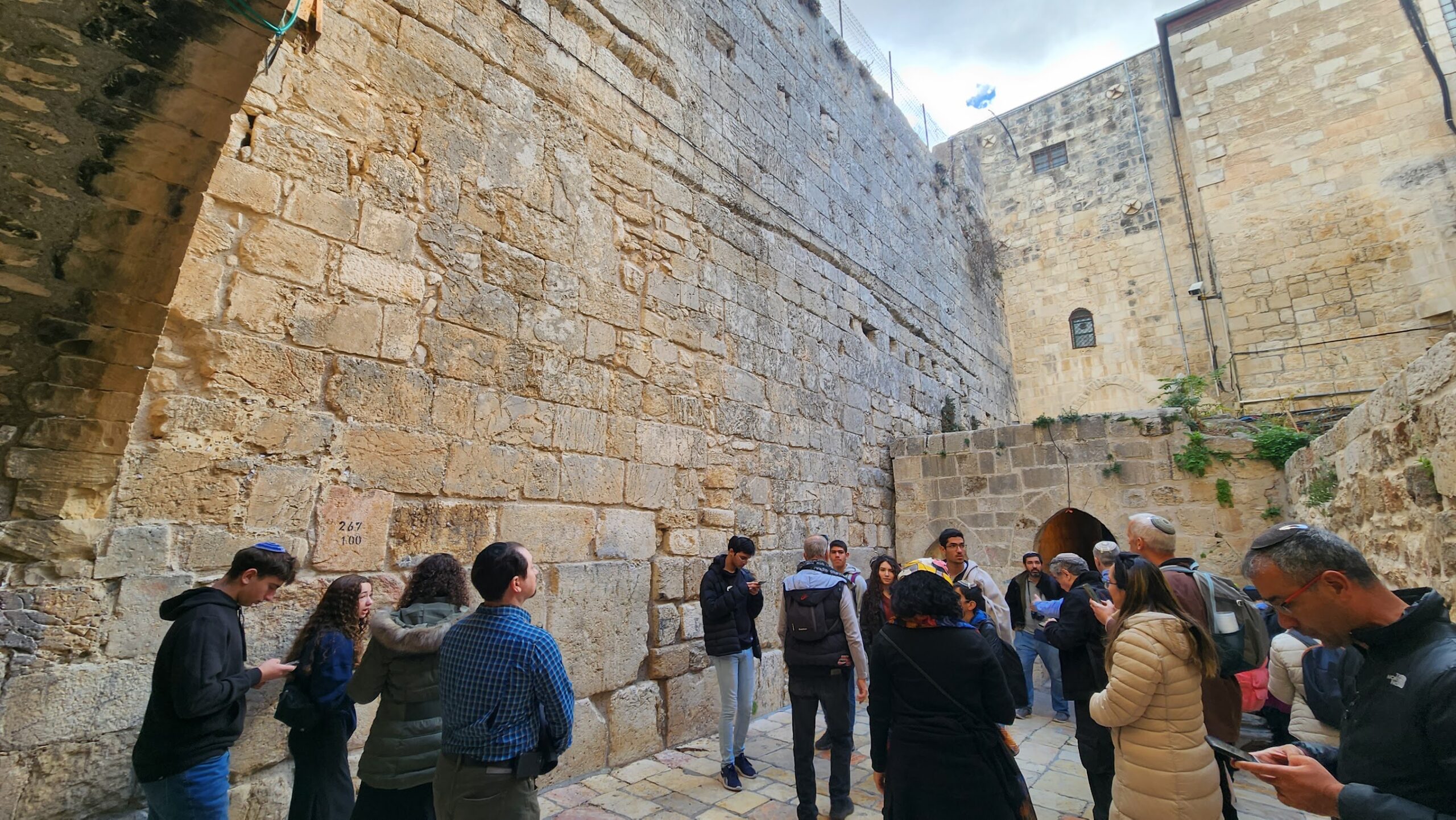
The Little Western Wall is a 26-foot section of the Western Wall located north of the main plaza in Jerusalem's Old City. It stands closer to the Temple's Holy of Holies than the main Western Wall and offers a quieter, more intimate prayer experience. Orthodox Jewish tradition considers it particularly sacred due to this proximity.
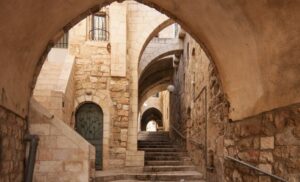
Though the Little Western Wall is not as well-known or visited as the main Western Wall, this modest stretch of ancient stone is a meaningful site for prayer and reflection, especially for those who value its proximity to the Holy of Holies. The wall sits within a narrow alleyway, partially framed by medieval structures, and offers a quieter encounter with Jerusalem’s sacred geography than the crowded plaza to the south.
Location of the Little Western Wall
The Little Western Wall is located in the Muslim Quarter of Jerusalem’s Old City, roughly 175 meters north of the main Western Wall Plaza. It sits along HaGai Street, also known as El-Wad Road, one of the Old City’s main north-south arteries.
Religious Significance
The Little Western Wall is considered by many rabbinic authorities to be the second holiest Jewish prayer site after the Temple Mount itself. The reason is straightforward: this section of the retaining wall runs closest to the location of the Holy of Holies, the innermost chamber of the ancient Temple where the Ark of the Covenant was kept. Because the wall curves slightly here and the Temple platform narrows, this stretch sits nearer to that sacred point than much of the main Western Wall to the south. Some have long recognized the special sanctity of this section, and prayers offered here are considered by some traditions to carry particular weight.
The site has become a favored location for small Brit Milah (circumcision) ceremonies and organized prayer groups who prefer its intimacy. Regular services take place on Friday evenings, Shabbat afternoons, and on weekday afternoons around the Mincha prayer hour. The atmosphere is markedly different from the main Western Wall: no crowds, no dividers for large congregations, and no amplified sound.
Over the years, advocates have pushed to grant the site formal protection under Israel’s Law for the Protection of Holy Places. The goal has been to improve upkeep and allow basic prayer items, such as a Torah ark, prayer books, and seating, to remain permanently in place. Because the surrounding buildings are owned and occupied by Muslim families and the space is used as a shared thoroughfare, Israeli police have not permitted permanent installations. Prayer equipment must be brought in before each service and removed afterward.
What You’ll Find at the Site
- Herodian Stonework: The two visible courses of large, finely dressed limestone blocks are part of the same retaining wall built by Herod the Great between roughly 20 BCE and 10 BCE to expand and support the Temple Mount platform. The characteristic Herodian margin, a narrow flat border chiseled around each stone face, is visible on the exposed blocks and matches the stonework seen throughout the Western Wall complex.
- Prayer Notes: Like the main Western Wall, visitors place small folded notes with prayers and wishes into the cracks between the stones. The practice follows the same custom, rooted in the kabbalistic tradition of writing prayers and inserting them into holy places, and the notes accumulate in the mortar joints of the ancient masonry.
- Simple Setting: The prayer space is narrow, quiet, and lacks the permanent infrastructure of the main Western Wall Plaza. There is no fixed seating, no Torah ark, and no resident prayer books. These items are brought in and set up by prayer groups before services and removed when the service ends. The simplicity of the space is part of its appeal for many visitors.
- Historic Structures: The alleyway around the Little Western Wall incorporates elements of the Mamluk-era Ribat Kurd, a charitable hostel and residential complex built in the 13th century. Original stone arches, corbels, and carved lintel work from that period are visible in the surrounding walls, giving the site a layered architectural character that spans more than two millennia.
Practical Information
The Little Western Wall is open to visitors at all hours and has no admission fee.
Modest dress is required, as at all Jewish holy sites in Jerusalem: shoulders and knees should be covered, and men are expected to cover their heads. Disposable kippot are not provided here as they are at the main Western Wall Plaza, so men should bring their own head covering.
Accessibility is limited. The approach through the Old City’s Muslim Quarter involves uneven stone paving and narrow alleys with no ramp access. Visitors with mobility challenges may find the route difficult.
Additional Information
What is the Little Western Wall?
The Little Western Wall, known in Hebrew as HaKotel HaKatan, is a small exposed section of the western retaining wall of the Temple Mount, located in the Muslim Quarter of Jerusalem’s Old City. It is part of the same Herodian wall as the main Western Wall but sits roughly 175 meters to the north, within a narrow alleyway rather than an open plaza. Because this section runs closest to the estimated location of the Holy of Holies, it holds particular religious significance for Jewish worshippers.
How does the Little Western Wall differ from the main Western Wall?
The main Western Wall Plaza is a large, managed open-air prayer site with permanent infrastructure including a Torah ark, prayer books, seating sections for men and women, and security checkpoints. The Little Western Wall is a quiet alleyway with no permanent facilities; prayer items are brought in and removed for each service. The atmosphere is considerably more intimate, and the site sees only a fraction of the visitors who come to the main Western Wall each day.
Why is the Little Western Wall considered especially holy?
Rabbinic and kabbalistic sources have long taught that the Divine Presence rests most intensely on the western side of the Temple Mount, nearest to where the Holy of Holies stood. This section of the wall is geographically closer to that location than the main prayer section of the Western Wall, which is why some authorities consider it the most sacred point along the entire exposed wall. The 16th-century kabbalist Rabbi Isaac Luria is among those traditionally associated with recognizing the sanctity of this stretch of wall.
Is the Little Western Wall free to visit?
Yes, there is no admission fee and no ticket is required. The site is open at all hours. Visitors simply walk through the alleyway off HaGai Street to reach it. No reservation or advance booking is needed for individual visitors, though organized prayer groups typically coordinate in advance to arrange for prayer equipment.
How do I get to the Little Western Wall from the main Western Wall?
Walk north from the main Western Wall Plaza and enter the Muslim Quarter via one of the passages leading to HaGai Street (El-Wad Road). Head north along HaGai Street for roughly 175 meters and look for the narrow passage branching left (west), marked by a small sign for HaKotel HaKatan. The walk takes about five minutes at a comfortable pace. Alternatively, enter the Old City through Damascus Gate and walk south along HaGai Street; the site will appear on your right after several minutes.
Nearby Sites
- Western Wall Tunnels: These tunnels run alongside the full length of the Western Wall, including areas even closer to the Holy of Holies than the Little Western Wall itself.
- Temple Mount: A deeply important location for Jews, Muslims, and Christians. It includes the Dome of the Rock and Al-Aqsa Mosque.
- Jewish Quarter: Includes sites such as the Broad Wall, the Roman Cardo, the Hurva Synagogue, the Burned House, the Herodian Quarter, and more.
- Christian Quarter: This includes the Church of the Holy Sepulchre, the Via Dolorosa, Church of the Redeemer, St. Anne’s Church, Alexander Nevski Church, and more.
Keep reading
Part of our Jewish Heritage Guide →