Tel Aviv beaches stretch 14 kilometres along the Mediterranean Sea, comprising 13 officially designated beaches within the Tel Aviv-Yafo municipality. All are free to enter. National Geographic ranked Tel Aviv the 9th best beach city in the world. Each beach has a distinct character, from a gender-segregated Orthodox beach to a dedicated LGBTQ+ beach and a dogs beach.
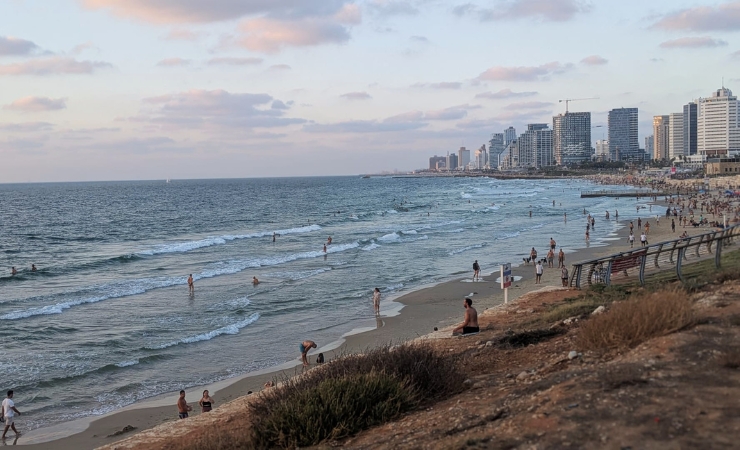
Tel Aviv beaches stretch 14 kilometres along the Mediterranean, and every one of the 13 municipal beaches is free to enter. Everyone looks so beautiful here, the promenade is in constant motion, people in swimwear moving on bikes, scooters, or just running.
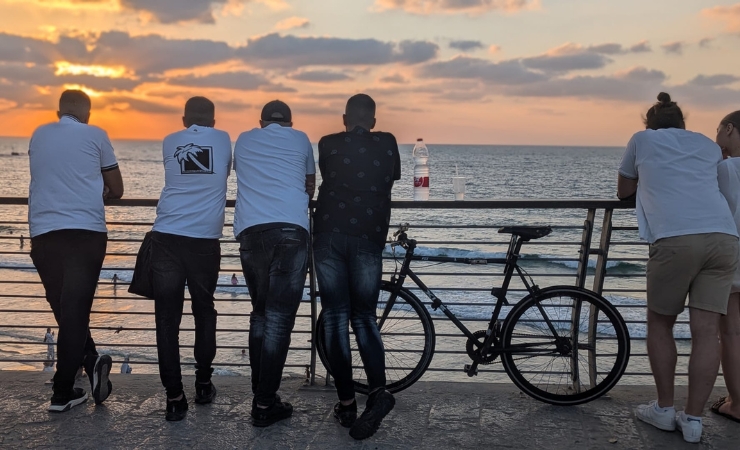
The best time to see the full coastline is at sunset, when the sky turns red over the sea. Standing at the northern end, you see Jaffa’s skyline to the south; facing north, you see the Tel Aviv city skyline lit against the evening sky.
National Geographic ranked Tel Aviv the 9th best beach city in the world, alongside Barcelona, Rio de Janeiro, Nice, and Cape Town, and once you arrive, that ranking is easy to believe.
What makes Tel Aviv beaches worth visiting?
There is almost no other city in the world where you can cross the road from a dense, busy urban centre and reach wide sandy beaches this quickly. The 14-kilometre coastline within the Tel Aviv-Yafo municipality is a public asset: no gates, no admission fees, public showers, drinking fountains, and shaded seating at no cost. The Israeli Ministry of the Environment consistently ranks these beaches among the cleanest in the country.
The variety is what sets the strip apart. Within a single walk you pass a gender-segregated Orthodox beach, a designated LGBTQ+ beach, a dogs-only beach, a surfer’s beach with night-surf lighting, a calm family bay behind a breakwater, and a beach in ancient Jaffa framed by natural stone arches. Knowing which beach suits you before you arrive saves time and sets expectations correctly.
Lonely Planet placed Tel Aviv among the top ten beach resort cities in the world. The city treats its coastline as a public living room, open year-round, not as a seasonal attraction that closes after summer.
What can you see and do at each Tel Aviv beach?
The Tayelet (beach promenade) — The Tayelet is the backbone of the entire beach experience: a renovated two-level seafront promenade running roughly 14 kilometres from the Old Tel Aviv Port in the north down to Jaffa in the south. The upper level is a wide paved lane shared by pedestrians, cyclists, and skaters, watch your step, because a scooter will come through fast if you wander into the bike lane. The lower level is a bamboo-decked walkway descending toward the sand, lined with beach bars, kiosks, and sun-lounger rental stations. The Tayelet was first opened in 1939, making it one of the oldest continuous public works on the Tel Aviv seafront.
Mona Beach and HaTzuk Beach — HaTzuk sits at the base of a kurkar cliff face at the northern end of the municipal strip; the name comes from the Hebrew word for cliff, tzuk. The cliffs give it a sheltered, enclosed feel that the open central beaches do not have. It is one of four beaches in the city with full disability access and draws a quieter local crowd. Mona Beach is the small bay immediately adjacent, equally low-key and rarely crowded.
Hilton Beach — Directly below the Tel Aviv Hilton Hotel, which opened in 1965, this beach divides into three functionally separate sections. The northern end is Hof Haklavim, the city’s official dogs beach, where owners bring their dogs into the sea year-round. The central section is Tel Aviv’s designated LGBTQ+ beach, one of the most recognised gay beaches in the Middle East. The southern section is the Surfer’s Beach, where night-surf lighting allows sessions after dark, and a kayaking school operates from the water’s edge. Hilton Beach is also one of four beaches with full disability access, alongside Tzuk, Northern Tzuk, and Metzitzim.
Gordon, Frishman, and Bograshov beaches — Gordon is the centrepiece of Tel Aviv beach life. It has volleyball courts, outdoor gym equipment, and a dense promenade of cafes and bars. The adjacent Gordon Pool is a saltwater swimming pool popular with lap swimmers. This is also the home of matkot, the paddle-and-ball game played on hard packed sand that has become an unofficial symbol of Israeli beach culture, the sound of the paddles striking the ball may seem repetitive at first, but you will tune into it quickly. Frishman Beach, a short walk south, sits directly opposite the main hotel strip and is the easiest beach to reach on foot from most city center hotels.
Aviv Beach and Jerusalem Beach — Jerusalem Beach takes its name from Jerusalem Boulevard, the historic road connecting Tel Aviv to Jerusalem. It has volleyball courts, workout equipment, a playground, and a designated kite-surfing area. The beach hosts occasional evening events in summer and is known for parasailing. Aviv Beach sits nearby on the central strip, drawing a young local crowd throughout the season.
Alma Beach and Charles Clore Beach — Charles Clore Beach is named after British Jewish philanthropist Sir Charles Clore, who funded Charles Clore Park directly behind it. The park has grass, it is one of the only spots on the beach strip where you can spread out on a lawn rather than sand, which makes it the best place for a picnic lunch. Waves here tend to be larger and more consistent than at the central beaches, making it a low-key surfing spot as well. Alma Beach, immediately to the north, is a quieter stretch popular with local families.
Nordau Beach (religious beach) — Nordau is unlike any other beach on the strip. It operates as a gender-segregated beach for the Orthodox Jewish community: women-only on Sundays, Tuesdays, and Thursdays; men-only on Mondays, Wednesdays, and Fridays; open to all on Saturdays. It is the only beach of its kind in the municipal system.
What are the beach guidelines and tips for visitors?
The official bathing season runs from May to October. During those months, lifeguards and tourist police are present at all 13 municipal beaches. Four beaches, Tzuk, Northern Tzuk, Metzitzim, and Hilton, have full disability access year-round.
- All 13 beaches are free to enter. No booking, no gates.
- Public showers and drinking fountains are free along the promenade.
- Stay out of the marked bicycle lane on the upper Tayelet, scooters travel fast and will not slow down.
- For current lifeguard hours, beach rules, and accessibility details at each beach, the Tel Aviv-Yafo Municipality beaches page is the authoritative source.
- The DigiTel app, Tel Aviv’s official city residents and visitors app, carries real-time updates on beach conditions, events, and facilities. It is free to download and available in English.
- Parking along the seafront is limited in summer and is very expensive; public transport or cycling is the practical choice on weekday mornings and throughout weekends.
What is the fun fact about Jerusalem Beach?
Jerusalem Beach has an unusual origin story. Tel Aviv Mayor Shlomo Lahat gave this strip of beach to the legendary Jerusalem Mayor Teddy Kollek on a live “This Is Your Life” television broadcast, declaring it a gift to Jerusalem, a city that has everything except a beach of its own. The gesture stuck, and the name stayed.
What is matkot and where can you play it?
Matkot is a paddle-and-ball game played on firm wet sand. Two or more players stand apart and volley a small rubber ball back and forth using wooden paddles, with no net and no points, the goal is simply to keep the rally going. It is played up and down the Tel Aviv beach strip, but Gordon Beach is where it has been played longest and where the largest informal games tend to gather.
Additional Information
The beachside promenade, the Tayelet, was first opened in 1939 during the British Mandate period. It closed twice: once due to World War II and again when years of sewage discharge made the water unsafe. A major renovation launched in 2012 under Mayor Ron Huldai transformed it into a two-level boardwalk lined with boutique hotels, restaurants, and bars, with the project reaching completion around 2018.
Gordon Beach carries a specific historical detail. In 1939, British gunboats intercepted and beached the illegal immigration vessel Tiger Hill just offshore. The ship carried approximately 750 Jewish refugees fleeing Nazi Europe as part of the clandestine Aliya Bet network. Two passengers were killed; the rest were arrested. A memorial garden now stands on the promenade near the site, with photographs and name tablets for ships whose passengers were turned back by British authorities.
Are Tel Aviv beaches free?
Yes. All 13 municipal Tel Aviv beaches are free to enter, with no gates or admission fees. Public showers, drinking fountains, and shaded seating along the promenade are also free. Sun-lounger and umbrella rental from private operators on the sand is the only paid option.
Which is the best beach in Tel Aviv?
Gordon Beach is the most popular and most complete beach, with volleyball courts, outdoor gym equipment, the saltwater Gordon Pool, and the densest stretch of beachfront cafes. Families with small children often prefer Metzitzim, where a breakwater creates calm, shallow water. The answer depends on what you are looking for.
Can you swim in the sea in Tel Aviv?
Yes. The official bathing season runs May to October, when lifeguards are on duty at all 13 beaches. Water quality is monitored by the Israeli Ministry of the Environment and consistently rated among the cleanest in the country.
What is matkot?
Matkot is a two-player paddle-and-ball game with no net and no scoring system, players simply keep the rally going as long as possible using wooden paddles and a small rubber ball. It originated on Israeli beaches and is played year-round on firm wet sand. Gordon Beach is its traditional home in Tel Aviv.
Is there a separate beach for religious visitors?
Nordau Beach operates on a gender-segregated schedule: women-only on Sundays, Tuesdays, and Thursdays; men-only on Mondays, Wednesdays, and Fridays; mixed on Saturdays. It is the only municipally designated religious beach in Tel Aviv and is named after Zionist leader Max Nordau.
Are Tel Aviv beaches open on Shabbat?
All Tel Aviv beaches, including Nordau Beach, are physically open on Saturday. Nordau is mixed-access on Saturdays specifically. Municipal lifeguard rosters on Shabbat vary by season; the Tel Aviv-Yafo Municipality beaches page publishes current Saturday staffing schedules each summer.
Nearby sites
- Tel Aviv Port (Namal) – The Old Tel Aviv Port, at the northern end of the beach promenade, is a restored 1930s harbour now filled with restaurants, a weekend farmers market, and live music venues.
- Suzanne Dellal Centre Tel Aviv – Located in the Neve Tzedek neighbourhood just inland from Charles Clore Beach, the Suzanne Dellal Centre is Israel’s main stage for contemporary and modern dance.
- Rothschild Boulevard Tel Aviv: Rothschild Boulevard is the tree-lined avenue where Tel Aviv’s Bauhaus architecture is most concentrated, running from the city centre toward Neve Tzedek.
- Rabin Square Tel Aviv: Rabin Square is the large public plaza in central Tel Aviv where Prime Minister Yitzhak Rabin was assassinated in 1995, and where a permanent memorial and museum now stand.
- Park HaTachana: Park HaTachana is the restored Ottoman-era railway station in the Neve Tzedek area, now a complex of boutique shops, restaurants, and event spaces a short walk from the southern beaches.
Keep reading
Part of our Tel Aviv & Jaffa Guide →