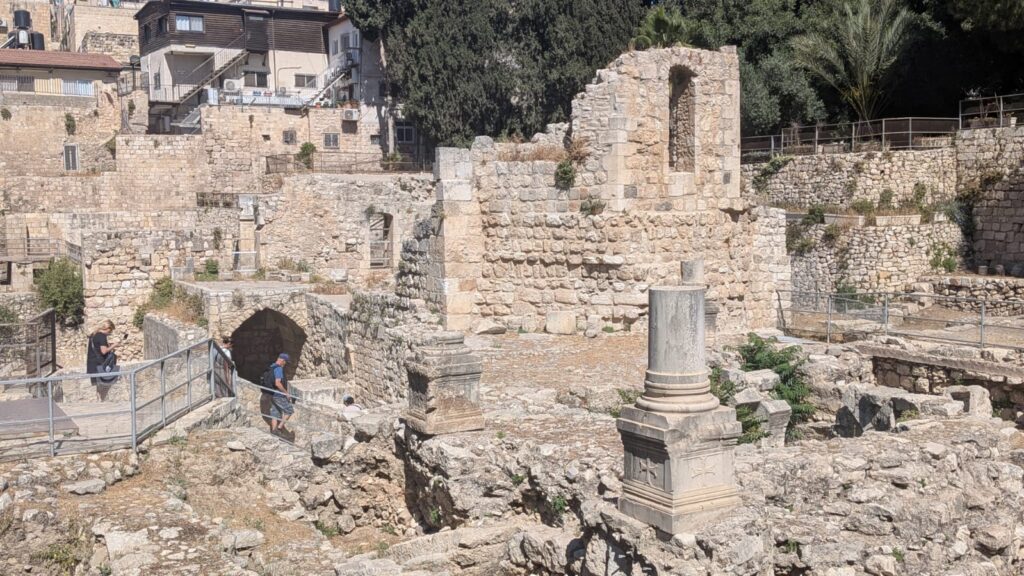
The Pool of Bethesda is an ancient Jerusalem pool where Jesus healed a paralyzed man, as described in John 5:1-15. Located in the Old City near St. Anne's Church, the site features excavated remains of twin pools dating to the Second Temple period, surrounded by five porticoes where the sick gathered.
The Pool of Bethesda is a first-century double pool in Jerusalem’s Old City, identified as the site where Jesus healed a man who had been paralysed for thirty-eight years, as recorded in John 5. The pool sits in the Muslim Quarter, roughly 50 metres inside Lions’ Gate, directly adjacent to the Church of Saint Anne. Beneath the current street level, excavations have exposed layers of history reaching from the eighth century BC through to the Crusader period.The site is not to be confused with a site near the Sea of Galilee called Bethsaida.
Where is The Pool of Bethesda Located?
The Pool of Bethesda is located in the Muslim Quarter of Jerusalem’s Old City, north of the Temple Mount and approximately 50 metres inside Lions’ Gate, also known as St. Stephen’s Gate. The site sits within the compound of the Church of Saint Anne, which also contains a museum and a Melkite seminary. To reach it, visitors enter through Lions’ Gate and walk a short distance along the Via Dolorosa.
What Does the Name Bethesda Mean?
The name Bethesda derives from the Aramaic “Beit Hesda,” most commonly translated as “House of Mercy” or “House of Grace.” Ancient manuscripts also record the name as Bethzatha or Bezatha, reflecting variation in early Greek transcriptions of the Aramaic original. The pool is identified in John 5:2 by its Aramaic name, which fits the linguistic context of first-century Jerusalem, where Aramaic was the everyday spoken language.
What Miracle Happened at The Pool of Bethesda?
The miracle recorded at the Pool of Bethesda is one of the seven signs in the Gospel of John. Jesus encountered a man at the pool who had been unable to walk for thirty-eight years. The man had been waiting at the water’s edge because a popular belief held that the first person to enter the pool when its water stirred would be healed. Unable to move quickly enough to enter before others, he had remained unhealed despite years of waiting.
“When Jesus saw him lying there and learned that he had been in this condition for a long time, he asked him, ‘Do you want to get well?'”
“‘Sir,’ the invalid replied, ‘I have no one to help me into the pool when the water is stirred. While I am trying to get in, someone else goes down ahead of me.'”
“Then Jesus said to him, ‘Get up! Pick up your mat and walk.'”
“At once the man was cured; he picked up his mat and walked.
The healing took place on the Sabbath, which led to a confrontation with Jewish religious authorities who objected to the man carrying his mat. The account is significant theologically because Jesus did not require the man to enter the water at all. The pool’s healing power, whether understood literally or as a communal hope, was bypassed entirely. Jesus healed through his word alone. The archaeological confirmation that the pool with five colonnades genuinely existed exactly as John described has been a significant point of interest for scholars assessing the historical reliability of the Fourth Gospel.
What Is the Historical Background of The Pool of Bethesda?
The Pool of Bethesda has a documented history spanning more than 2,700 years, from a simple reservoir in the Israelite period to a Crusader ecclesiastical compound. Each era left physical traces that archaeologists have been working to untangle since the mid-nineteenth century.
The site dates to at least the eighth century BC, when a dam was built across the Beth Zeta Valley to create a reservoir for Jerusalem. This early pool may correspond to the “upper pool” mentioned in 2 Kings 18:17 and Isaiah 7:3, where the Assyrian envoy confronted King Hezekiah’s officials outside the city walls. By the time of Herod the Great, who ruled from 37 to 4 BCE, the pool had been expanded into its well-known twin-basin form: a northern pool that collected fresh rainwater and a southern pool used for ritual ablutions and healing, the two separated by a stone dam and surrounded by five colonnaded porticoes.
Jerusalem pilgrims would come to the southern pool to purify themselves in these public mikva’ot, ritual immersion baths, before entering the Temple Mount. The broad steps with flat landings visible on the pool walls are characteristic of mikveh construction, designed to allow gradual descent into the water. As noted in research published by the Biblical Archaeology Society, the five-sided perimeter created by the two basins and their surrounding colonnades matches the description in John 5:2 exactly, with the fifth colonnade running along the central dam partition between the pools.
After the Roman destruction of Jerusalem in 70 AD, the site lay in ruins. When Emperor Hadrian rebuilt the city as Aelia Capitolina in 135 AD, he expanded the site into a large temple dedicated to Asclepius and Serapis, the Greco-Roman gods of healing. Small cave-cut healing baths, part of this Asclepeion, were constructed for medicinal bathing. A votive foot bearing a dedicatory inscription to Asclepius was discovered during excavations directly above the pool, confirming the site’s continued association with healing under Roman rule.
In the late fifth to early sixth century CE, Byzantine Christians built a large basilica over the pools, known as the “Church of the Paralytic,” to commemorate Jesus’ miracle at this location. Persian forces destroyed it in 614 AD. When the Crusaders captured Jerusalem in 1099, they built the Church of Saint Anne next to the pool ruins between 1131 and 1138. After Saladin’s conquest in 1187, the church was converted into a madrasa. In 1856, the Ottoman Empire gifted the compound to France, and since 1878 it has been administered by the Missionaries of Africa, a Catholic order commonly called the White Fathers for the colour of their robes.
Formal excavation of the site began in 1888, when Conrad Schick identified the pools during work near St. Anne’s Church. Further excavation in 1964 uncovered the remains of the Byzantine and Crusader churches, the Roman temple, the Asclepeion grottoes, and the dam between the two large pools. Since 1999, archaeologist Shimon Gibson has conducted a rigorous stratigraphic and structural analysis of the site, as documented in a preliminary report published on Academia.edu. That project documented over 450 separate architectural features across more than 100 years of cumulative excavation and identified four main structural periods: Early Roman, Late Roman, Byzantine, and Crusader.
Inside The Pool of Bethesda: What Can Visitors See?
The Pool of Bethesda archaeological site is a genuinely layered place. Visitors do not view a single ruin but a vertical cross-section of Jerusalem’s history: Roman stonework below, Byzantine foundations suspended in mid-air above, and a standing Crusader church at ground level.
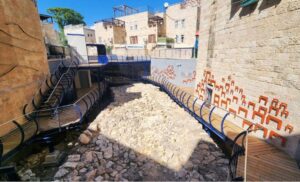
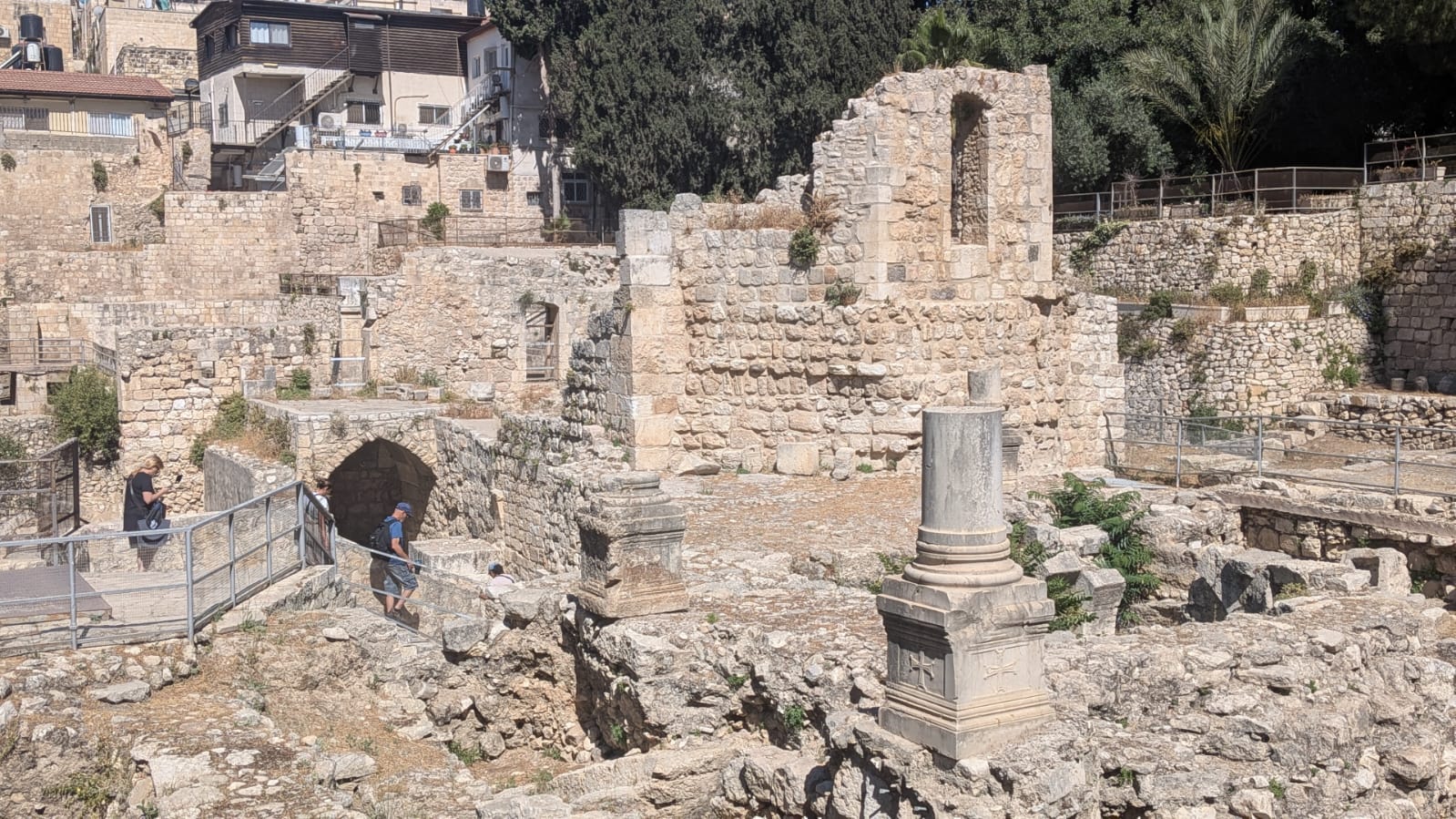
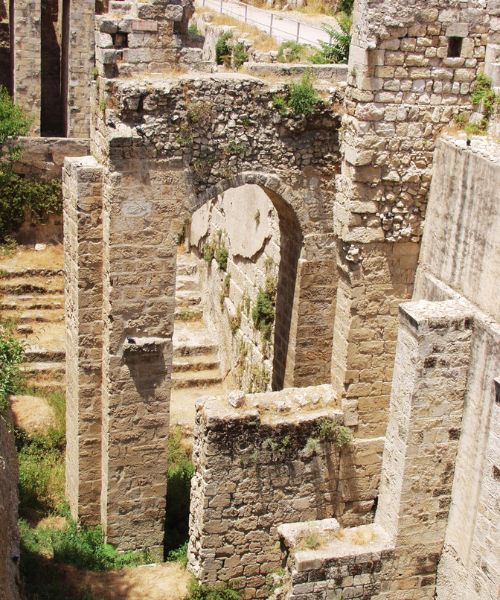
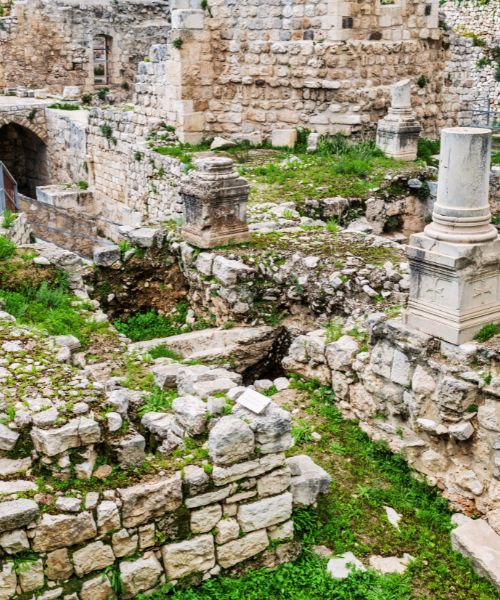
Exposed Twin Pool Basins — Descending into the open archaeological area, visitors look down into the remains of the two large ancient pools. Only a corner of the southern pool has been fully cleared, but even this partial exposure makes the scale clear: the pool floor sits several metres below the modern street, illustrating how completely Jerusalem has been rebuilt on its own ruins over the centuries. The stone walls of the basin retain their ancient coursing, and the broad stepped entries to the southern pool are visible, consistent with their use as a mikveh for ritual immersion before Temple visits.
Central Dam and the Fifth Portico — The stone dam that divided the northern and southern pools is one of the most theologically significant features on the site. For centuries, John 5:2’s reference to five colonnades around a single pool puzzled readers: four sides of a rectangle give only four porticoes. The excavated dam solved the problem. There were four colonnades around the outer perimeter and a fifth running along this central stone partition between the two basins, producing exactly the five covered walkways the Gospel describes. Standing beside the dam, the connection between the text and the physical structure becomes immediate rather than abstract.
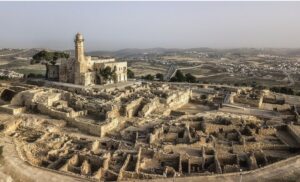
Byzantine Basilica Remains — Stone foundations and support pillars of the fifth and sixth century Byzantine “Church of the Paralytic” are visible suspended dramatically above the pool area. The Byzantines built directly over the water, resting their basilica on arched supports that crossed the pool space below. Several of these arched piers remain, jutting out over the excavated void. The basilica was destroyed by the Persians in 614 AD and never rebuilt, leaving its skeleton hanging in space above the older pool structure in a way that is visually striking and historically legible.
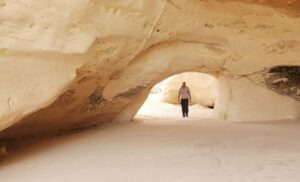
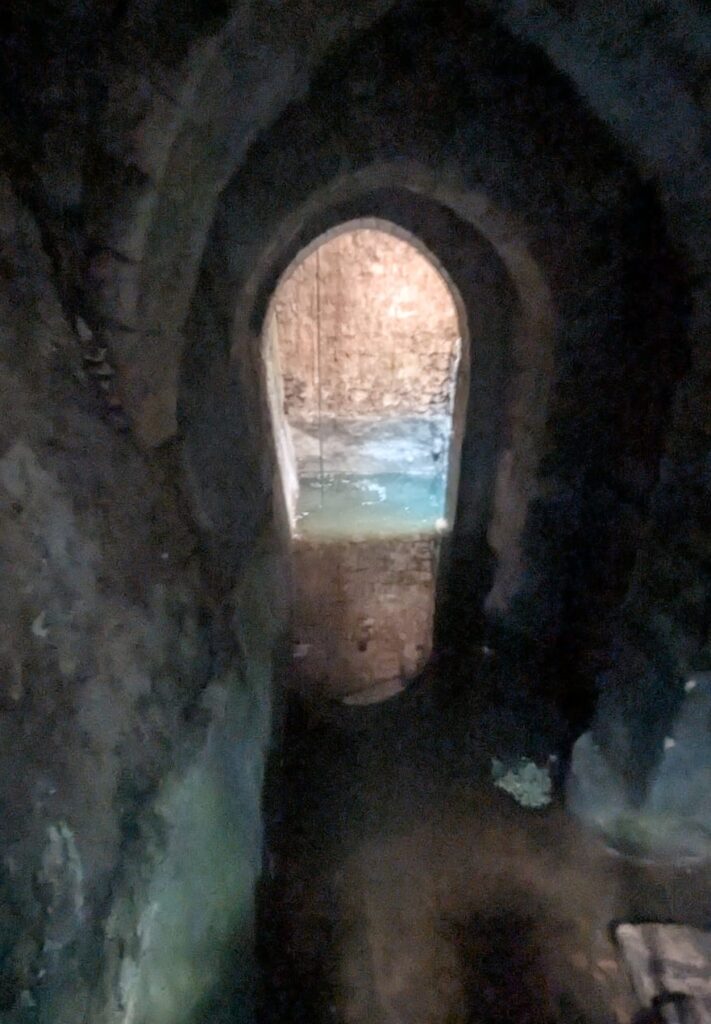
Roman Healing Bath Grottoes — Near the eastern edge of the pools, small cave-cut healing baths remain from the Asclepeion constructed under Hadrian in the second century AD. These grottoes were carved for medicinal bathing and formed part of the Roman temple complex dedicated to Asclepius and Serapis. The votive foot with its dedicatory inscription to Asclepius, discovered above the pool during excavations, is the clearest epigraphic evidence that sick pilgrims were still coming to this site for healing three hundred years after Jesus’ visit, now under a Roman religious framework.
Church of Saint Anne — The Crusader basilica built between 1131 and 1138 stands in remarkably complete condition at the front of the compound. Its plain stone interior, with thick Romanesque piers and a spare barrel-vaulted nave, has survived largely intact because Saladin chose to preserve the structure when he converted it into a madrasa in 1187.
Crypt of the Birthplace of Mary — Beneath the apse of St. Anne’s Church, a grotto-crypt is venerated as the childhood home of the Virgin Mary, the daughter of Anne and Joachim. Byzantine Christians identified this site as Mary’s birthplace, and the crypt has been a place of pilgrimage since at least the fifth century.
Additional Information
Is the Pool of Bethesda still in existence today?
Yes, the Pool of Bethesda still exists and can be visited. The site is located within the compound of the Church of Saint Anne in Jerusalem’s Muslim Quarter, approximately 50 metres inside Lions’ Gate. The pools themselves are not filled with water, but the ancient stone basins are exposed through archaeological excavation and are clearly visible several metres below the modern street level.
What was special about the Pool of Bethesda in the time of Jesus?
In the first century, the Pool of Bethesda served two distinct functions. The northern basin collected fresh rainwater, while the southern basin functioned as a public mikveh, a Jewish ritual immersion bath used for purification before entering the Temple Mount. The broad stepped entries to the southern pool, visible in the excavated remains today, are characteristic of mikveh construction. The pool also carried a reputation for healing. People who were ill or disabled gathered at the water’s edge in the belief that the first person to enter when the water was stirred would be healed, a practice John 5 records directly.
Did anyone get healed at the Pool of Bethesda before Jesus arrived?
The Gospel of John does not record any successful healings at the pool before Jesus’ visit, though it implies that this expectation existed and drew large numbers of sick people to the site. The man Jesus healed had been waiting there for thirty-eight years and had never managed to enter the water in time, because he had no one to help him. Jesus bypassed the pool entirely, healing the man through a spoken command rather than immersion.
What should visitors not miss at the Pool of Bethesda compound?
Beyond the excavated pool basins themselves, three features are worth particular attention. First, the stone dam between the two pools, which physically explains the five-portico count in John 5:2. Second, the interior of the Church of Saint Anne, where the Crusader stonework and barrel vaults create acoustic conditions that make any sung prayer or chant carry through the space with remarkable resonance. Third, the grotto-crypt beneath the church apse, venerated as the birthplace of the Virgin Mary, which is small, candlelit, and lined with handwritten votive notes left by pilgrims from around the world. Allow at least 45 minutes for the full compound.
Nearby Sites
-
Lion’s Gate: This one of the eight gates of the Old City. It is named for the pair of lion figures carved into its façade. The gate is the starting point for the Via Dolorosa.
-
Church of Flagellation: This Roman Catholic church is traditionally believed to be the spot where Jesus was scourged by Roman soldiers before his crucifixion. Next to it is the Church of the Condemnation and the Imposition of the Cross.
-
Ecce Homo Arch: Tradition holds that it’s the place where Pontius Pilate presented Jesus to the crowds with the words “Ecce Homo” meaning “Behold the Man”.
-
Sisters of Zion Monastery: This 19th-century monastery includes a fascinating underground area where visitors can see remnants of the Antonia Fortress, a military barracks built by Herod the Great.
Keep reading
Part of our Christian Pilgrimage Guide →