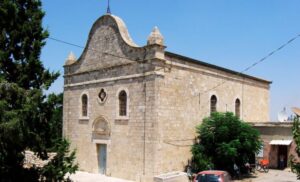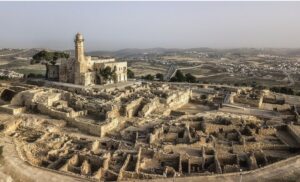
The Scots Memorial Church, also known as St. Andrew's Church, stands in Jerusalem as a memorial to Scottish soldiers who fell in World War I. Built in 1927, this Church of Scotland edifice features distinctive Scottish architecture and design elements. Located near the Old City, it serves as both an active Presbyterian congregation and a guest house for pilgrims visiting the Holy Land.
Southwest of Mount Zion stands a unique memorial to Scottish military sacrifice: The Scots Memorial Church Jerusalem, commonly known as St. Andrew’s Church. This distinctive building honors the Scottish soldiers who fell during the Sinai and Palestine campaign of World War I.
Location
The Scots Memorial Church Jerusalem occupies a commanding position southwest of Mount Zion on David Remez Street, offering panoramic views across the Hinnom Valley to the Old City walls. The strategic location places visitors within walking distance of major attractions including the Jaffa Gate (400 meters northeast) and Mount Zion’s biblical sites.
Historical Context
The vision for the Scots Memorial Church Jerusalem originated with Ninian Hill, an Edinburgh shipowner and Church of Scotland elder who recognized the need for a proper memorial to Scottish casualties of the Palestine campaign. Hill personally raised funds throughout Scotland and the Commonwealth, eventually securing the site through purchase from the Greek Orthodox Patriarchate of Jerusalem. The foundation stone was ceremonially laid by Field Marshal Edmund Allenby on May 7, 1927, the British general who had led the successful campaign against the Ottoman forces.
Construction proceeded through the late 1920s under architect Clifford Holliday’s supervision, incorporating materials that reflected both Scottish heritage and local craftsmanship. The church was formally dedicated in 1930, with Ninian Hill himself serving as the inaugural minister.
Throughout the British Mandate period (1920-1948), the Scots Memorial Church Jerusalem served the sizeable Scottish community in Palestine, including civil servants, military personnel, teachers, and missionaries. Scottish regiments stationed in the region, particularly during World War II, regularly held services here. The church’s guest book from this era records visits from prominent figures including archaeologist Kathleen Kenyon and various British High Commissioners.
The 1948 Arab-Israeli War placed the church directly on the front lines, with the building suffering damage from artillery exchanges. Minister William Clark Kerr demonstrated remarkable dedication by remaining at his post throughout the siege, continuing to ring the church bell and hold Sunday services even under fire.



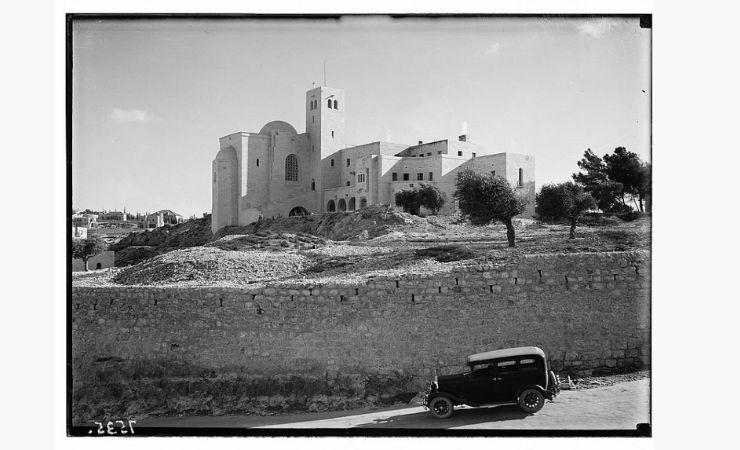
Architectural Marvels of the Scots Memorial Church
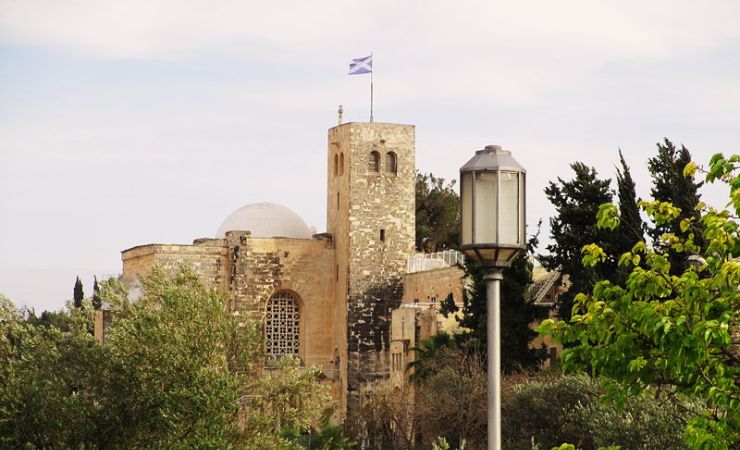
The Scottish saltire flies prominently above the church’s bell tower, its distinctive X-shaped cross commemorating the traditional manner of Saint Andrew’s martyrdom. This heraldic symbol immediately identifies the building’s Scottish origins from considerable distance, visible from various points throughout Jerusalem’s western neighborhoods.
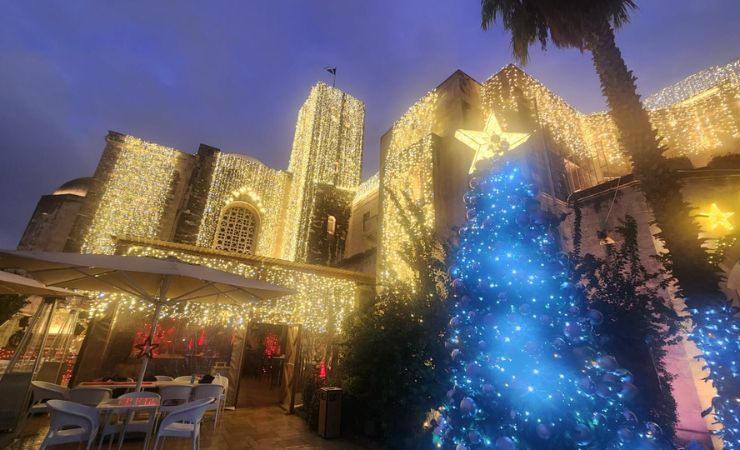
British architect Clifford Holliday designed the Scots Memorial Church Jerusalem in a style deliberately evocative of Scottish baronial architecture, with its silhouette resembling a Highland castle more than a conventional church. The building’s massive stone walls, constructed from local Jerusalem limestone, feature distinctive corner towers and crenellated parapets that echo medieval Scottish fortifications. This architectural approach symbolically represented Scotland’s historical military traditions in the Holy Land.
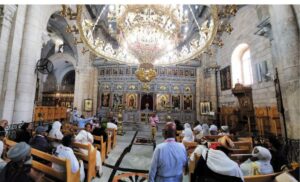
The interior showcases remarkable craftsmanship, particularly the Armenian ceramic tiles that adorn various surfaces. These decorative elements were specially commissioned from local Armenian artisans in 1927, reflecting the multicultural character of Israel Jerusalem while maintaining Scottish Presbyterian simplicity in worship space design. The nave’s wooden furnishings were carved from Lebanese cedar, chosen for its biblical associations.
The church’s Art Deco stained glass windows represent one of its most striking architectural features. Crafted using traditional blue Hebron glass set within geometric stucco panels, these windows ingeniously combine the Latin cross of Christianity with Saint Andrew’s diagonal cross, creating a unique visual symbol of Scottish Christian identity. The geometric patterns reflect the 1920s aesthetic while the blue glass creates an ethereal atmosphere during services.
A particularly moving memorial within the church honors King Robert the Bruce, Scotland’s legendary medieval monarch who expressed a dying wish to have his heart buried in Jerusalem during the Crusades. The floor plaque before the communion table commemorates both Bruce and Sir James Douglas, who attempted to fulfill this sacred mission but died in battle in Spain while carrying the king’s heart toward the Holy Land. This memorial physically connects the Scots Memorial Church Jerusalem to Scotland’s earliest connections with the Holy Land, predating the church itself by six centuries.
Additional Information
What is the Scots Memorial Church Jerusalem also known as?
The Scots Memorial Church Jerusalem is also commonly known as St. Andrew’s Church, reflecting its dedication to Scotland’s patron saint. Both names refer to the same building, though “St. Andrew’s Church” is more frequently used in local signage and casual conversation.
Why was the Scots Memorial Church built in Jerusalem?
The church was built as a memorial to Scottish soldiers who died during World War I’s Palestine campaign (1917-1918). Edinburgh shipowner Ninian Hill spearheaded the project to create a lasting tribute to Scottish casualties while establishing a Presbyterian worship center for the Scottish community in British Mandate Palestine.
What architectural style is the Scots Memorial Church Jerusalem?
The church was designed by British architect Clifford Holliday in a style reminiscent of Scottish baronial architecture, resembling a Highland castle with its stone towers and crenellated walls. The design intentionally evokes Scotland’s medieval military heritage while incorporating local Jerusalem limestone and regional craftsmanship.
What is the significance of the Robert the Bruce memorial inside the church?
The floor plaque commemorates King Robert the Bruce’s dying wish to have his heart buried in Jerusalem during the Crusades. Though his companion Sir James Douglas died attempting to fulfill this mission in Spain, the memorial connects the church to Scotland’s ancient ties to the Holy Land, predating the church by six centuries.
Sources and Additional Reading
Nearby Sites
Mount Zion: Mount Zion is a symbol of the city’s biblical history. It offers panoramic views and is home to several religious landmarks, including the Tomb of King David, the Room of the Last Supper, The Zion Gate, The Roman Cardo, the Broad Wall, and more.
Jaffa Gate: This portal is one of the gates into the Old City of Jerusalem and one of its main entrances.
- Katef Hinnom: A burial site from the era of the First Temple, it holds significant archaeological and historical importance.
Mishkanot Shaananim: Jerusalem’s pioneering Jewish neighborhood outside the Old City walls in 1860.
Keep reading
Part of our Christian Pilgrimage Guide →